
TL;DR:
- California now requires drivers in Santa Rosa to carry at least 30/60/15 liability coverage, which became mandatory in 2026. Premiums vary based on ZIP code, driver profile, and coverage choices, with most policies costing under $2,000 annually. Low-income drivers can access inexpensive coverage through the California Low Cost Automobile program, while high-risk drivers may qualify for the Assigned Risk Plan.
Local auto insurance is the term drivers use to describe personal vehicle coverage that meets California’s state-mandated liability requirements for legal operation on public roads. In Santa Rosa, that means carrying at least the 30/60/15 minimum liability limits that became mandatory in 2026. This guide to local auto insurance walks you through exactly what those limits mean, what coverage typically costs in Sonoma County, which special programs exist for eligible drivers, and how to compare policies with confidence. Whether you are renewing soon or shopping for the first time, the right coverage protects your finances and keeps you on the right side of California law.
What are the California minimum auto insurance requirements for Santa Rosa drivers?
California’s minimum liability limits are now 30/60/15, replacing the older 15/30/5 standard that had been in place for decades. The change came through Senate Bill 1107, known as the Protect California Drivers Act, with a phase-in starting in 2025 and full enforcement in 2026. Every Santa Rosa driver renewing a policy in 2026 is subject to these new limits.
Here is what the 30/60/15 numbers actually mean:
- $30,000 bodily injury liability per person injured in an accident you cause
- $60,000 bodily injury liability per accident, covering all injured parties combined
- $15,000 property damage liability per accident for damage you cause to another vehicle or structure
The good news is that insurers automatically apply the new 30/60/15 floor at your renewal. You do not need to call and request the update. The practical effect, though, is that your premium may increase slightly because you are now carrying more coverage than before.
Driving without meeting these minimums carries real consequences. California can suspend your license, impound your vehicle, and fine you. Beyond the legal penalties, carrying only the old 15/30/5 limits left drivers dangerously exposed in serious accidents. The new floor provides meaningfully better protection, even if it is still not a substitute for higher limits or full coverage.
Pro Tip: Check your declarations page after your next renewal to confirm your policy shows 30/60/15 limits. Some older policy documents still display the previous numbers until the insurer issues a formal endorsement.
How much does local auto insurance cost in Santa Rosa?
Most local policies cost under $2,000 per year, but that figure covers a wide range. A young driver in a high-theft ZIP code with a recent ticket will pay far more than a 45-year-old with a clean record driving a modest sedan. Understanding what moves the price helps you shop more accurately.

Key factors that affect your premium
Your ZIP code inside Santa Rosa matters more than most drivers realize. Higher-theft or crash-prone ZIP codes carry higher premiums because insurers price local risk into every policy. Two drivers with identical records can pay noticeably different rates simply because one lives closer to a high-traffic corridor.
Other major pricing factors include:
- Driver age and experience. Younger drivers pay more. Rates typically drop significantly once a driver reaches their mid-twenties with a clean record.
- Driving history. A single at-fault accident or DUI can raise your premium for three to five years.
- Vehicle make and model. Expensive vehicles cost more to repair. High-theft models also carry higher comprehensive rates.
- Coverage level. Liability-only policies cost less than full coverage, which adds collision and comprehensive protection.
- Credit history. California allows insurers to use credit-based insurance scores in underwriting decisions.
How payment timing affects your cost
Paying annually instead of monthly often yields a discount. Insurers charge installment fees on monthly plans, which can add up over a year. Consumer Reports recommends requesting both monthly and annual quotes for the exact same coverage before you decide. The difference can be meaningful, especially on a full-coverage policy.
Pro Tip: Ask each insurer for a quote at both payment frequencies. Some companies bury the annual discount in fine print rather than advertising it upfront. You can also check auto insurance discounts in California for additional ways to lower your premium.
What special programs help low-income and high-risk drivers in Santa Rosa?
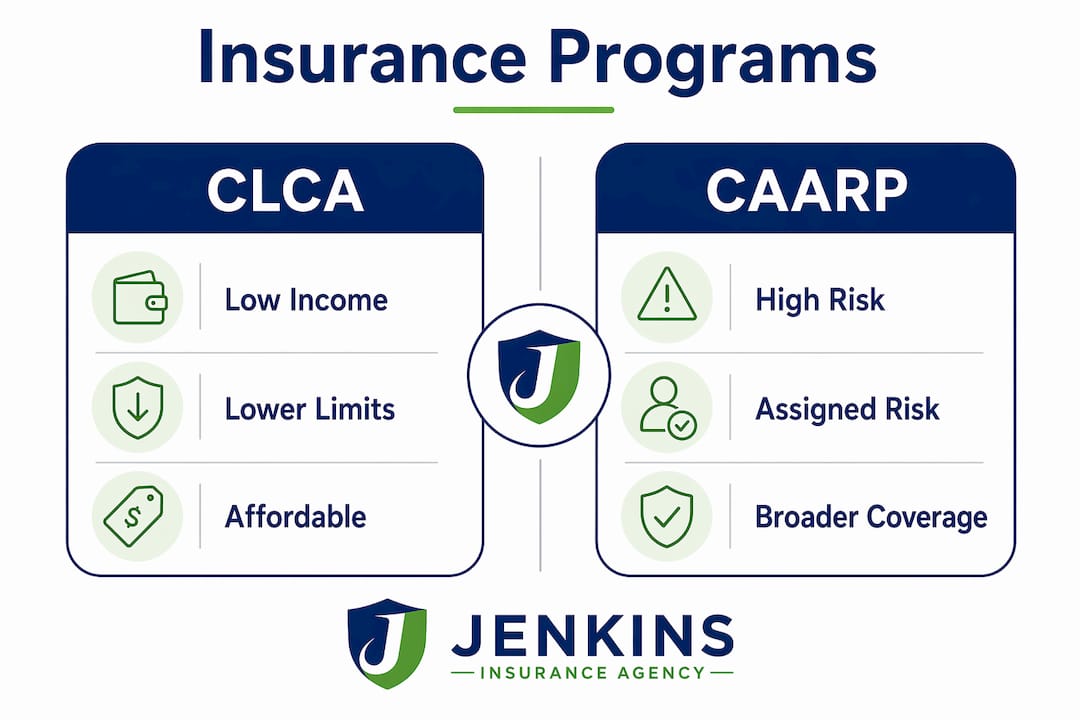
Two state programs exist specifically for drivers who struggle to find affordable or any coverage through standard insurers: the California Low Cost Automobile program and the California Automobile Assigned Risk Plan. They serve different situations, and knowing which applies to you saves time and money.
California Low Cost Automobile (CLCA) program
The CLCA program provides minimum liability coverage starting at around $244 per year for income-eligible drivers. Premiums range from $244 to $966 annually depending on your county, driving record, and household income. The program is designed for drivers who meet California’s income guidelines and own a vehicle valued under a set threshold.
CLCA eligibility requirements include:
- Meet California’s income limits, generally at or below 250% of the federal poverty level
- Be at least 16 years old with a valid California driver’s license
- Own a vehicle valued under the program’s cap (currently around $25,000)
- Have a clean or near-clean driving record
One important caveat: CLCA coverage limits are lower than the standard 30/60/15 floor. CLCA policies carry 10,000/20,000/3,000 limits for bodily injury and property damage. This keeps premiums affordable but means CLCA is a compliance baseline, not a full financial safety net. Treat it as a starting point if cost is your primary barrier.
California Automobile Assigned Risk Plan (CAARP)
CAARP serves drivers denied coverage by standard insurers. If you have a serious driving history, multiple violations, or a record that makes private insurers decline your application, CAARP assigns you to a participating insurance company that is required to cover you. It is a last-resort option, not a preferred one.
| Program | Best for | Coverage level | Cost range |
|---|---|---|---|
| CLCA | Low-income drivers with clean records | 10/20/3 (below state minimum) | $244–$966/year |
| CAARP | High-risk drivers denied by standard insurers | State minimum 30/60/15 | Higher than standard market |
Pro Tip: Always check CLCA eligibility before applying to CAARP. CLCA often provides more affordable options for qualifying low-income drivers than the assigned-risk market. CAARP premiums are typically higher because the pool carries more risk.
How do you compare local auto insurance policies in Santa Rosa?
Comparing policies on price alone is the most common mistake Santa Rosa drivers make. The best auto insurance for locals balances premium cost with claims handling quality and ease of communication. Consumer Reports evaluated insurers on exactly these criteria and found that the companies with the lowest premiums did not always rank highest for claims satisfaction.
What to look at beyond the price
When you receive quotes, verify these elements on every policy:
- Coverage limits. Confirm the declarations page shows 30/60/15 or higher. Mixing old and new limit policies in a comparison leads to inaccurate conclusions. Always compare identical limits.
- Deductibles. A lower premium with a $1,500 deductible may cost you more out of pocket after a claim than a slightly higher premium with a $500 deductible.
- Claims ratings. Look up each insurer’s claims satisfaction score through Consumer Reports or J.D. Power before you commit.
- Agent accessibility. Can you reach a real person when you need help? Local agents familiar with Santa Rosa and Sonoma County conditions provide faster, more relevant service than national call centers.
Working with a local agent
A local agent does more than hand you a quote. They know which carriers write policies competitively in your ZIP code, which discounts apply to your situation, and how to read a declarations page accurately. For drivers comparing coverage after the 2026 limit changes, that local knowledge is genuinely useful. You can review how to choose auto insurance in California for a structured walkthrough of the selection process.
The difference between full coverage and liability is another area where agent guidance pays off. Liability covers damage you cause to others. Full coverage adds collision and comprehensive, protecting your own vehicle from accidents, theft, and weather events. Santa Rosa drivers with newer or financed vehicles almost always need full coverage, not just the state minimum.
Key Takeaways
Choosing the right local auto insurance in Santa Rosa requires meeting California’s 30/60/15 minimum limits, understanding what drives your premium, and comparing policies on both price and claims quality.
| Point | Details |
|---|---|
| 30/60/15 is now the legal minimum | California’s SB 1107 raised minimum liability limits in 2026; verify your declarations page reflects the new amounts. |
| Price varies by ZIP code and driver profile | Location, age, driving record, and vehicle type all affect your Santa Rosa premium significantly. |
| CLCA offers low-cost coverage for eligible drivers | Income-qualifying drivers can access liability coverage starting around $244/year through the CLCA program. |
| Compare on claims quality, not just price | Insurers with the lowest premiums do not always deliver the best claims experience; check ratings before you buy. |
| Annual payment often costs less than monthly | Requesting both payment frequency quotes reveals discounts that monthly billing hides. |
What I’ve learned from helping Santa Rosa drivers navigate coverage changes
The 2026 minimum limit increase caught more drivers off guard than it should have. I talked with people who assumed their renewal was identical to last year’s policy, only to notice a premium bump with no explanation in their renewal notice. The insurer applied the new 30/60/15 floor automatically, which is exactly what the law requires. But nobody told the driver why the price changed.
That gap between what insurers do and what drivers understand is where real problems start. A driver who sees a higher premium and immediately shops for the cheapest alternative may end up with a policy that meets the legal minimum but leaves them financially exposed after a serious accident. The 30/60/15 limits are a floor, not a recommendation. For most Santa Rosa drivers, I would suggest carrying higher limits, especially for bodily injury.
The other thing I see regularly is confusion between CLCA and CAARP. Drivers who qualify for CLCA sometimes apply to CAARP because they heard it was an option for people who couldn’t get coverage. CAARP is a last resort. CLCA is a genuine benefit for income-eligible drivers. Check CLCA first, every time.
My honest advice: treat each renewal as a fresh shopping opportunity. Your circumstances change, the market changes, and the coverage requirements change. Spending 30 minutes comparing quotes at renewal is one of the most practical financial habits a Santa Rosa driver can build. Working with a local agent who knows the Sonoma County market makes that process faster and more reliable than going it alone online.
— Jason
Jenkinsinsuranceagencyinc is here to help you get covered
Finding the right coverage does not have to feel like a solo project. At Jenkinsinsuranceagencyinc, we work with Santa Rosa drivers every day to find policies that meet California’s requirements and fit real budgets. We are affiliated with Farmers Insurance, which gives us access to a wide range of products, and we bring local knowledge of Sonoma County that national websites simply cannot match.

We help drivers navigate CLCA and CAARP eligibility, compare quotes across coverage levels, and understand exactly what their declarations page says. If your renewal is coming up or you have not compared rates recently, we would love to help. Visit our Santa Rosa auto insurance page to request a personalized quote, or reach out directly to talk through your unique situation with a local agent who knows your community.
FAQ
What are California’s minimum auto insurance limits in 2026?
California requires 30/60/15 liability coverage: $30,000 per person, $60,000 per accident for bodily injury, and $15,000 for property damage. These limits replaced the older 15/30/5 standard under Senate Bill 1107.
Does my insurer automatically update my policy to the new limits?
Yes. California insurers apply the 30/60/15 floor automatically at your renewal. Check your declarations page to confirm the update appears correctly on your policy documents.
Who qualifies for the California Low Cost Automobile program?
CLCA is available to income-eligible California drivers who meet household income limits, hold a valid California license, and own a vehicle under the program’s value cap. Premiums start around $244 per year.
What is the difference between CLCA and CAARP?
CLCA is a subsidized program for low-income drivers with clean records. CAARP is an assigned-risk pool for drivers denied coverage by standard insurers. CLCA is the preferred option for qualifying drivers because it typically offers lower premiums.
How can I lower my auto insurance premium in Santa Rosa?
Maintaining a clean driving record, choosing a higher deductible, paying annually instead of monthly, and bundling policies are the most reliable ways to reduce your premium. A local agent can identify discounts specific to your driver profile and ZIP code.
Recommended
- 6 Essential Tips for Basic Auto Insurance Coverage – Jenkins Insurance Agency Inc.
- 7 Types of Home Insurance Every Santa Rosa Homeowner Should Know – Jenkins Insurance Agency Inc.
- Step-by-Step Guide to Insurance Options in Santa Rosa – Jenkins Insurance Agency Inc.
- Business Insurance Guide Santa Rosa: Secure Your Business – Jenkins Insurance Agency Inc.