
TL;DR:
- Updating insurance policies regularly ensures coverage matches changing assets and risk exposures.
- Failure to update can lead to underinsurance, claim denials, and financial liabilities due to inflation.
Updating insurance policies is the process of reviewing, adjusting, and confirming your coverage to match your current assets, life circumstances, and risk exposures. Coverage that felt adequate five years ago is rarely sufficient today due to personal changes and inflation. Jenkinsinsuranceagencyinc works with homeowners, business owners, and individuals across Sonoma County every day, and the most common financial mistake we see is outdated coverage. This guide explains why update insurance policies regularly, what triggers a review, and how to do it right.
What key life and business changes require insurance updates?
Life rarely stays the same for long, and your insurance coverage should move with it. The industry term for this process is a “policy endorsement review,” which simply means confirming that your current policy terms still match your actual situation. Jenkinsinsuranceagencyinc recommends treating any significant change as an automatic trigger for a coverage check.
Life events that require a policy review:
- Marriage or divorce. Your assets, debts, and beneficiaries all shift. Life insurance beneficiaries and homeowners coverage limits need immediate attention.
- Having a child. A new dependent changes your income replacement needs and long-term financial obligations significantly.
- Buying or selling a home. Property value, location, and mortgage requirements all affect what coverage you need.
- Income changes. A raise, a job loss, or a new business venture changes how much coverage you can afford and how much you actually need.
- Retirement. Your income sources change, your mortgage may be paid off, and your life insurance needs often shift. Major life events demand an immediate review to avoid dangerous gaps.
Business events that require a policy update:
- Hiring employees. Workers’ compensation requirements change the moment you bring on staff.
- Signing new leases or client contracts. Contracts often require specific coverage minimums. Contractual gaps can prevent you from closing deals or securing leases.
- Renovations or equipment purchases. New assets increase your replacement cost exposure.
- Opening a second location. A new address means new risks that your current policy may not cover.
Each of these events changes your risk profile. Waiting until renewal to address them leaves you exposed in the meantime.
What are the financial risks of not updating insurance policies?

Outdated coverage is not just an inconvenience. It is a direct financial liability. Insurers pay only up to the coverage limits on file, not the actual current cost of repair or replacement. That gap comes out of your pocket.
Inflation compounds this problem every year. A kitchen remodel that cost $40,000 three years ago may cost $60,000 to rebuild today. If your homeowners policy still reflects the older value, you absorb the difference. The same principle applies to business equipment, inventory, and commercial property.
“Coverage adequate five years ago is rarely sufficient today due to life changes and inflation increasing replacement costs. Life events such as paying off a mortgage or adding children shift financial risks, making regular updates critical to ensure protection matches current needs.”
Claim denials are another serious risk. Agents only know what clients report, and unreported renovations or value changes can result in reduced or denied payouts. Many homeowners assume their agent tracks every change automatically. That assumption is incorrect and costly.
Common financial consequences of outdated policies:
- Out-of-pocket repair costs when coverage limits fall short of actual replacement values
- Denied claims due to unreported property changes or business modifications
- Missed discounts that could have lowered your premium
- Business contract failures when coverage minimums do not meet client or landlord requirements
- Underinsurance on life policies that leaves dependents without adequate income replacement
The difference between being overinsured and underinsured matters too. Overinsurance means you pay more premium than your risk requires. Underinsurance means you pay a claim cost your policy will not cover. Neither is a good outcome, and both are avoidable with regular reviews.
How often and when should you review and update insurance policies?
The right review schedule depends on your policy type and life stage. Here is a practical framework:
- Life insurance: Review every 2–3 years or immediately after major life changes such as marriage or buying a home. Life insurance reviews take 15–60 minutes and prevent families from facing inadequate coverage during critical moments. Use the DIME method (Debt, Income, Mortgage, Education) to recalibrate your coverage needs.
- Homeowners insurance: Review annually and after any renovation, purchase of high-value items, or change in property use. California property values shift quickly, making annual reviews especially important for Sonoma County residents.
- Business insurance: Review before each renewal date and after any operational change. Reviewing before renewal gives you time to shop for competitive rates and leverage discounts or consolidations.
- Auto insurance: Review when you add a driver, purchase a vehicle, or move to a new area with different risk profiles.
Proactive reviews beat reactive ones every time. A reactive update happens after a loss, when it is already too late to close the gap. A proactive update happens before a loss, when you still have the power to fix it.
Pro Tip: Set a calendar reminder 60 days before each policy renewal date. That window gives you enough time to gather documentation, compare options, and make changes without rushing.
What are the benefits of updating insurance policies beyond coverage?
The benefits of regular policy updates go well beyond simply having the right coverage amount. Policy reviews are strategic risk management, not just paperwork. They reduce unseen gaps and align your protection with evolving risks.
Key benefits of keeping your policies current:
- Premium savings. Updating your insurer about positive changes, such as installing a security system or improving your credit score, can qualify you for discounts that lower your premium. Many people avoid calling their insurer because they fear a rate increase. The opposite is often true.
- Compliance with contracts. Business owners who update their coverage stay compliant with lease agreements and client contracts. Outdated policies can disqualify you from bids or renewals.
- Smoother claims experience. Accurate, current policy information means fewer disputes when you file a claim. Insurers process claims faster when documentation matches reality.
- Better deductible alignment. Your financial situation changes over time. A deductible that made sense when you had limited savings may be unnecessarily high now that you have more reserves.
- Coverage consolidation. Annual reviews create an opportunity to bundle policies, which often reduces total premium costs while simplifying your coverage management.
If you are evaluating your life insurance specifically, tools like the life settlement calculator from Accelerated Life Solutions can help you understand the current value of an existing policy before making changes.
Pro Tip: Ask your agent specifically about discounts tied to home improvements, bundling, or claims-free history. These are not always applied automatically.
How to update your insurance policies effectively: a practical guide
Updating a policy is straightforward when you follow a clear process. The most common mistake is assuming the update happened when it did not.
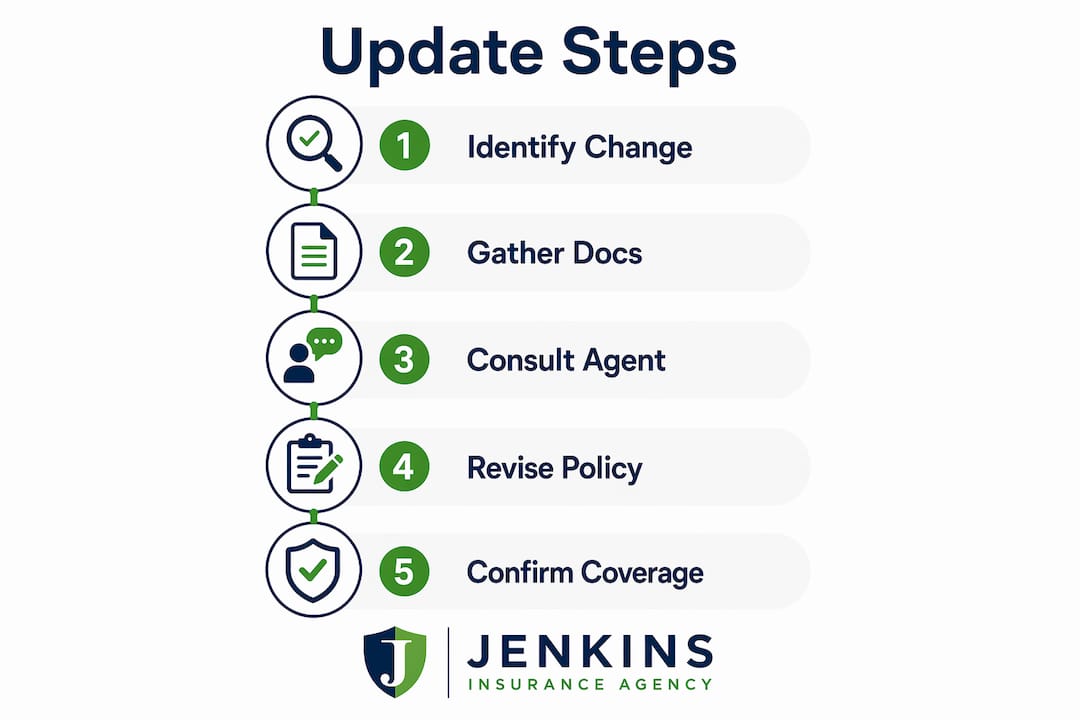
Steps to update your insurance policies:
- Contact your agent directly. Do not rely on online portals alone for major changes. A direct conversation confirms the update is processed correctly.
- Submit documentation. For renovations, provide receipts and contractor invoices. For business changes, provide updated lease agreements or contracts. Documentation must be submitted proactively to avoid reduced claim payouts.
- Request a written confirmation. Every change should produce a policy endorsement or updated declarations page. Do not assume verbal confirmation is enough.
- Review the updated terms. Check that new limits, deductibles, and covered perils match what you discussed. Errors happen, and catching them early costs nothing.
- Keep a personal record. Store your updated policy documents in a secure location, both digital and physical. A home insurance checklist can help you track what you have and what still needs attention.
The table below summarizes the most common update scenarios and what documentation you typically need:
| Update Scenario | Documentation Needed |
|---|---|
| Home renovation | Contractor invoices, before/after photos, permit records |
| New high-value item | Purchase receipt, appraisal if applicable |
| Business growth or new hire | Updated payroll records, new lease or contract |
| Life event (marriage, child) | Marriage certificate, birth certificate |
| Security system installation | Installation receipt, monitoring contract |
Working with a local agent like Jenkinsinsuranceagencyinc means you have a real person confirming each step, not just a chatbot acknowledging your submission.
Key Takeaways
Updating your insurance policies is the single most effective way to prevent coverage gaps, reduce financial risk, and keep your premiums aligned with your actual situation.
| Point | Details |
|---|---|
| Update after every major life event | Marriage, childbirth, home purchase, and retirement all change your coverage needs immediately. |
| Outdated limits create real financial gaps | Insurers pay only up to the limits on file, leaving you responsible for the difference. |
| Review life insurance every 2–3 years | Use the DIME method to recalibrate coverage as debts and family responsibilities change. |
| Positive changes can lower your premium | Security upgrades and credit improvements often qualify for discounts, not rate increases. |
| Always get written confirmation | Every policy change should produce an updated declarations page you can verify and store. |
What I have learned from years of watching clients skip this step
Clients rarely update their policies because they assume nothing has changed. That assumption is almost always wrong. I have seen homeowners file claims after a kitchen remodel only to discover their coverage limit reflected the home’s value from seven years prior. The renovation added real value. The policy never knew about it.
The misconception I hear most often is that calling your insurer will automatically raise your rates. That fear keeps people silent when they should be speaking up. The reality is that many updates, especially security improvements and bundling changes, actually reduce what you pay. The clients who call us regularly tend to pay less over time, not more, because we catch discount opportunities they would have missed.
My honest advice: treat your annual insurance review the same way you treat a yearly checkup. You do not wait until something hurts to see a doctor. You should not wait until you have a denied claim to review your coverage. Build the review into your financial calendar, bring your agent into the conversation early, and keep a simple folder of your policy documents. That habit alone will save you money and stress when it matters most.
— Jason
How Jenkinsinsuranceagencyinc helps you stay covered
Jenkinsinsuranceagencyinc serves homeowners, business owners, and individuals across Santa Rosa and Sonoma County with personalized insurance reviews built around your actual situation, not a generic checklist.

Whether you need to update your homeowners insurance after a renovation, reassess your business insurance after a period of growth, or simply confirm your current coverage still fits your life, our local team is ready to help. We review your policies with you, identify gaps, and make sure every change is confirmed in writing. Reach out to Jenkinsinsuranceagencyinc today for a no-pressure policy review with someone who knows the California market and your neighborhood.
FAQ
Why update insurance policies every year?
Annual reviews catch coverage gaps caused by inflation, life changes, and new assets before a claim reveals them. Insurers only pay up to the limits on file, so outdated limits leave you responsible for the difference.
What life events require an immediate insurance update?
Marriage, divorce, having a child, buying a home, and retirement all change your coverage needs right away. Life insurance reviews after these events take 15–60 minutes and prevent dangerous gaps in protection.
Can updating my policy lower my premium?
Yes. Reporting positive changes such as installing a security system or improving your credit score can qualify you for discounts that reduce your premium. Many people avoid calling their insurer out of fear, but updates often lower costs.
How do I update my homeowners insurance after a renovation?
Contact your agent directly, submit contractor invoices and receipts, and request a written policy endorsement confirming the new coverage limits. Do not assume the update is processed without written confirmation.
How often should business owners review their insurance?
Business owners should review coverage annually and before each renewal date. Contractual gaps from new leases or client contracts can prevent deal closings if insurance minimums are not met.
Recommended
- The Real Role of Insurance Agents: What You Need to Know – Jenkins Insurance Agency Inc.
- Insurance claims explained: secure your payouts in California – Jenkins Insurance Agency Inc.
- California Insurance Guide 2026: Save 25% with Bundling – Jenkins Insurance Agency Inc.
- Why updating life insurance matters for California families – Jenkins Insurance Agency Inc.