
TL;DR:
- Whole life insurance provides lifelong coverage with fixed premiums and a cash value that grows tax-deferred. It offers stability, guaranteed death benefits, and a forced savings component, making it ideal for estate planning and long-term financial security in California. However, it comes with higher premiums and less flexibility compared to term and universal policies, requiring careful consideration for your family’s needs.
Life insurance shopping can feel overwhelming, especially when every policy seems to promise the same thing. Many California families assume that as long as they have some coverage, they’re protected. But not all policies are built the same way, and the differences matter enormously when it comes to long-term financial security. Whole life insurance, in particular, offers a level of stability and permanence that other policy types simply can’t match. In this article, we’ll walk you through what whole life insurance actually is, how it compares to other options, what benefits and trade-offs to expect, and how to make the right call for your family here in California.
Table of Contents
- What is whole life insurance?
- How whole life insurance differs from other types
- Key benefits and drawbacks of whole life insurance
- Choosing and managing whole life insurance in California
- A California perspective: why clarity on whole life insurance matters more than ever
- Find the right life insurance for your California family
- Frequently asked questions
Key Takeaways
| Point | Details |
|---|---|
| Lifelong protection | Whole life insurance provides permanent coverage and peace of mind for your family. |
| Cash value savings | Part of your premium builds savings you can access or borrow against. |
| Higher upfront cost | Expect higher premiums than term life, but with more longevity and guaranteed benefits. |
| California regulations | State protections ensure policies meet local standards and offer consumer safeguards. |
What is whole life insurance?
Whole life insurance is exactly what its name suggests: coverage that lasts your entire life. Unlike other policies that expire after a set number of years, whole life insurance stays in force as long as you continue paying your premiums. That simple fact is what sets it apart from most other options on the market.
When you purchase a whole life policy, you lock in a fixed monthly or annual premium. That premium never increases, regardless of your age or changes in your health over time. At the same time, your policy builds what’s known as a cash value, a savings-like account that grows on a tax-deferred basis over the years. You can think of it as a financial asset that quietly grows in the background while your coverage remains fully intact.
The California Department of Insurance provides consumer guidance on life and annuity products, including clear information on how to evaluate different policy structures before you buy.
Here’s a quick look at how whole life insurance stacks up in terms of its core features:
| Feature | Whole life insurance |
|---|---|
| Coverage duration | Lifelong |
| Premium changes | None (fixed for life) |
| Cash value growth | Yes, tax-deferred |
| Death benefit guarantee | Yes |
| Policy loans available | Yes |
| Flexibility | Limited compared to other types |
California families often turn to whole life insurance for a few specific reasons:
- It serves as a reliable estate planning tool, ensuring a guaranteed payout to heirs
- It creates a forced savings mechanism for people who struggle to invest consistently
- It offers peace of mind knowing coverage won’t lapse after 20 or 30 years
- It can be used to leave a financial legacy for children or grandchildren
If you’re still exploring your types of life insurance, it helps to understand the foundational differences before narrowing down your options. For a broader overview, life insurance basics can give you a solid starting point.
“Whole life insurance offers the kind of long-term certainty that many California families need, especially when planning for retirement, estate transfers, or generational wealth.”
How whole life insurance differs from other types
Now that we’ve established what whole life insurance is, let’s see how it stacks up against the main alternatives.
The most common comparison is between whole life and term life insurance. Term life covers you for a specific period, usually 10, 20, or 30 years, and then it expires. If you outlive the term and still need coverage, you’ll need to buy a new policy, often at significantly higher rates because you’re older. Term life premiums are generally lower upfront, which makes it attractive for younger families on a tight budget.
Universal life insurance sits in a middle ground. It’s permanent like whole life, but it offers more flexibility in how you pay premiums and how your cash value grows. The trade-off is variability. Costs can fluctuate, and the cash value component is often tied to interest rates or market performance. That uncertainty can be stressful for families who prefer predictability.
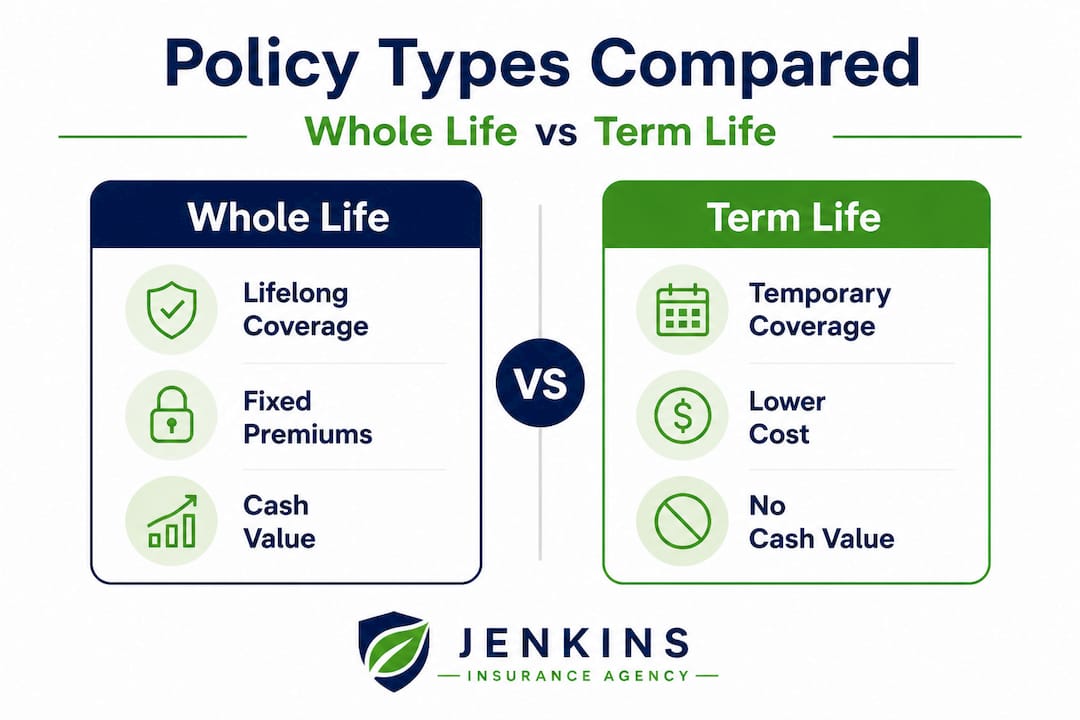
The California Department of Insurance guidance is a valuable resource when comparing policy types for suitable long-term protection. It helps you ask the right questions before signing anything.
Here’s a side-by-side comparison of the three main policy types:
| Policy type | Coverage duration | Premiums | Cash value | Best for |
|---|---|---|---|---|
| Whole life | Lifetime | Fixed | Yes, guaranteed growth | Long-term security, estate planning |
| Term life | Set term (10-30 years) | Lower initially | No | Temporary coverage, budget-focused |
| Universal life | Lifetime | Flexible | Yes, variable growth | Those wanting flexibility |
A few important distinctions to keep in mind:
- Term life is the most affordable option upfront but provides zero return if you outlive the policy
- Universal life can be cost-effective but may require active management as rates shift
- Whole life offers the most predictability, which is especially valuable for families with long-term financial goals
Pro Tip: If you’re a California family with young children, consider pairing a term policy for near-term income replacement with a smaller whole life policy for lifelong estate planning. This combination often gives you both affordability and permanence.
Life circumstances change. A major job shift, a new baby, or a home purchase can all affect what coverage you actually need. That’s why updating your policy regularly is just as important as choosing the right one in the first place.
Key benefits and drawbacks of whole life insurance
With the differences laid out, let’s dig deeper into the benefits and potential downsides specific to whole life insurance.

Whole life insurance is commonly chosen for its guaranteed death benefit and fixed premiums, which provide a dependable foundation for long-term financial planning.
The main benefits of whole life insurance:
- Lifelong coverage. Your family is protected no matter when you pass away, not just during a policy window. This eliminates the risk of outliving your coverage.
- Fixed premiums. Your rate is set when you buy the policy. A 35-year-old in California who locks in a rate today won’t pay more at 60, even if health conditions change.
- Cash value growth. A portion of every premium goes into a tax-deferred savings account. Over 20 or 30 years, this can grow into a meaningful asset.
- Policy loans. You can borrow against your cash value without a credit check or approval process. This can be a helpful resource in financial emergencies.
- Forced savings. For families who find it hard to set aside money consistently, the cash value component acts as an automatic savings vehicle built right into your coverage.
- Estate planning. A whole life policy guarantees a tax-free death benefit to your beneficiaries, which can be used to pay estate taxes, transfer wealth, or cover final expenses.
These benefits make whole life a strong choice for protecting your loved ones in a way that outlasts the unexpected.
The main drawbacks to consider:
- Higher premiums. Whole life can cost five to fifteen times more than an equivalent term life policy. For some families, that difference is significant.
- Less flexibility. Unlike universal life, you can’t adjust your premium payments or death benefit amount easily once you’ve signed on.
- Surrender charges. If you cancel your policy in the early years, you may receive less than you’ve paid in, due to fees built into the policy structure.
- Slower growth. The cash value growth rate on whole life policies is often modest compared to what you might earn investing that same money in the stock market.
Statistic to consider: According to LIMRA, a research organization focused on the financial services industry, more than a third of American families say they would face financial hardship within one month if the primary wage earner died. Permanent coverage like whole life is specifically designed to eliminate that risk entirely.
The key is weighing these trade-offs honestly. Whole life is not the right fit for every budget or every family situation. But for those who value certainty and want a policy that never expires, it’s hard to argue against its core strengths.
Pro Tip: Ask your agent to show you a 30-year illustration of your policy’s cash value growth. Seeing the numbers on paper helps you understand exactly what you’re paying for and when that value becomes accessible.
Choosing and managing whole life insurance in California
Understanding the product’s strengths and weaknesses, the next step is learning how to actually get and manage the right whole life insurance policy in California.
California has specific consumer protections in place that make it one of the better states to shop for life insurance. The state requires insurers to be licensed and financially sound, and the California Department of Insurance offers tools to verify a carrier’s standing before you commit to a policy.
Here’s what to focus on when selecting and managing your whole life policy:
- Check insurer ratings. Look for carriers rated A or higher by agencies like AM Best. A strong rating signals that the company can reliably pay claims, even decades from now.
- Understand the underwriting process. Most whole life policies require a health questionnaire or medical exam. Your health at the time of application determines your premium rate, so applying sooner rather than later generally works in your favor.
- Review your policy annually. Life changes. Marriages, divorces, new children, or significant changes in income can all affect how much coverage you need and who your beneficiaries should be.
- Keep documentation organized. Store a copy of your policy in a safe location and make sure your beneficiaries know where to find it. This makes filing insurance claims much smoother when the time comes.
- Work with a local agent. A California-based agent understands state regulations, local cost-of-living factors, and the specific concerns of families in communities like Sonoma County. That local knowledge is genuinely valuable.
Pro Tip: When you first receive your policy documents, review the “free look” period. In California, you typically have 10 to 30 days to review a policy and cancel it for a full refund if you decide it’s not the right fit.
If you’re ready to explore your local life insurance options, connecting with someone who knows the California market firsthand is the most efficient place to start.
A California perspective: why clarity on whole life insurance matters more than ever
Here’s something we’ve noticed working with California families in Sonoma County and beyond: most people don’t overestimate the value of whole life insurance. They underestimate it, or worse, they avoid it because it sounds complicated.
The economy has been unpredictable. Housing costs in California continue to rise. Many families are supporting aging parents while simultaneously trying to save for their children’s education. In that environment, financial certainty is not a luxury. It’s a foundation. Whole life insurance is one of the few financial products that guarantees a specific outcome regardless of what the market does, what happens to interest rates, or how your health changes in the coming decades.
We also see families make the mistake of following national trends without considering what those trends mean locally. California has its own regulatory framework, its own cost structures, and its own family planning considerations. What works for a family in Texas or Florida may not translate perfectly here. That’s why we encourage every client to look at life insurance options for Californians through a local lens.
The families who feel the most confident in their coverage are the ones who took the time to understand what they were buying before they signed. They asked questions. They compared options. They worked with an agent who took the time to explain things clearly. That process doesn’t need to be long or complicated. It just needs to be intentional.
Whole life insurance won’t be perfect for every family, and we’d never tell you otherwise. But for the family that wants lifelong protection, predictable costs, and a policy that quietly builds value over time, it’s one of the most dependable tools available.
Find the right life insurance for your California family
Choosing a life insurance policy is one of the most important financial decisions your family will make. It’s also one that deserves a real conversation, not just a quick quote from a website.

At Jenkins Insurance Agency Inc., we’re based right here in Santa Rosa and work with families across Sonoma County every day. We know the California market, and we take the time to understand your unique situation before recommending anything. Whether you’re looking to explore local life insurance for the first time or want to review your existing coverage, our team is here to help. If you want to see how life insurance works before diving in, we’ve got resources for that too. Reach out to us today and let’s find the coverage that fits your family, your goals, and your future.
Frequently asked questions
Does whole life insurance cost more than term life in California?
Yes, whole life insurance generally has higher premiums than term life, but it provides permanent coverage and a cash value component that term policies don’t offer. The higher premium cost reflects the lifelong coverage and built-in savings element.
Can I cash out my whole life insurance policy in California?
You may be able to withdraw from or surrender your policy’s cash value, though this can reduce your death benefit and may trigger penalties or tax consequences. The cash value access rules vary by carrier, so review your policy terms carefully before making any withdrawals.
Are whole life insurance policies regulated in California?
Yes, the California Department of Insurance regulates whole life insurance and provides resources to verify policy legitimacy and insurer licensing. The California Department of Insurance also handles consumer complaints if disputes arise with your carrier.
What happens to my whole life insurance if I move out of California?
Your whole life policy remains valid if you move to another state, since the contract stays in force as long as premiums are paid. Some service features or state-specific benefits may shift based on the laws in your new state, so it’s worth notifying your carrier and agent when you relocate.
Recommended
- Life Insurance Explained: Secure Your Family’s Future – Jenkins Insurance Agency Inc.
- Why updating life insurance matters for California families – Jenkins Insurance Agency Inc.
- Types of Life Insurance – Protecting Sonoma Families – Jenkins Insurance Agency Inc.
- Why Choose Life Insurance: Securing Loved Ones in Sonoma – Jenkins Insurance Agency Inc.
- Life & Accident Insurance: Securing Your Team’s Future with Smarter Coverage