
Many Californians think ‘full coverage’ auto insurance protects everything, but that’s misleading. Auto coverage is actually a collection of specific protections required by California law plus optional add-ons you choose based on your needs. This guide breaks down the types of coverage available, what California legally requires, and how to pick the right protections for your situation without overpaying or leaving gaps.
Table of Contents
- California’s Auto Coverage Requirements And Liability Basics
- Understanding Full Coverage And Liability-Only Options In California
- Uninsured And Underinsured Motorist Coverage Explained
- Choosing The Right Auto Coverage For Your California Needs
- Get Personalized Auto Insurance Coverage In California
- Frequently Asked Questions
Key takeaways
| Point | Details |
|——-|———||
| California minimum liability | State law mandates $30,000 per person, $60,000 per accident bodily injury, and $15,000 property damage for policies purchased after January 1, 2025. |
| Liability protects others only | Liability insurance covers damages you cause to other people and their property, not your own vehicle or injuries. |
| Full coverage adds protection | Full coverage includes liability plus collision and comprehensive insurance to repair or replace your vehicle after accidents, theft, or weather damage. |
| Uninsured motorist coverage matters | UM/UIM protection shields you when drivers without insurance or insufficient coverage cause accidents, filling critical gaps in your protection. |
| Choose based on vehicle value | Select coverage by evaluating your car’s worth, savings for repairs, risk tolerance, and whether you can afford out-of-pocket losses. |
California’s auto coverage requirements and liability basics
California drivers must carry liability insurance to legally operate vehicles on public roads. This isn’t optional. State law requires $30,000 bodily injury coverage per person, $60,000 per accident, and $15,000 property damage for policies purchased after January 1, 2025. These minimums increased from previous lower limits to better protect accident victims.
Liability insurance compensates others for damages from your accidents, covering medical bills, lost wages, and vehicle repairs for people you injure or whose property you damage. It does not pay for your own injuries or fix your car. Think of it as protection for everyone else on the road from your mistakes.
You must prove financial responsibility after accidents. Most drivers do this by carrying liability insurance and showing proof when requested by law enforcement or after collisions. Without it, you face license suspension, vehicle impoundment, and personal liability for all damages you cause.
“Liability insurance protects your assets by covering claims against you, but only up to your policy limits. Anything beyond those limits comes from your personal finances.”
Understanding what liability covers helps you grasp its limitations:
- Bodily injury liability pays medical expenses, rehabilitation costs, lost income, and pain and suffering for people you injure.
- Property damage liability covers repairs or replacement for vehicles, buildings, fences, or other property you damage.
- It never covers your own medical bills, vehicle repairs, or injuries to passengers in your car.
For more context on meeting these legal requirements, see the California auto insurance requirements 2026 guide. Local agencies like auto insurance Santa Rosa CA can help you secure compliant coverage quickly. Review California car insurance legal requirements for complete details on state mandates.
Understanding full coverage and liability-only options in California
The term ‘full coverage’ isn’t an official insurance category. It typically means liability plus collision and comprehensive protections, but doesn’t include every possible add-on like rental reimbursement or gap insurance. Many drivers assume full coverage protects everything, but you need to understand exactly what’s included.
Liability-only coverage is the cheapest legal option. It meets California’s minimum requirements but leaves your vehicle completely unprotected. If you cause an accident, you pay all repair costs yourself. If someone else damages your car and lacks insurance, you’re stuck with the bill unless you have other coverage.
Full coverage costs about $2,417 annually in California, while liability-only averages $742. That’s a significant price difference, but the protection gap is even larger.
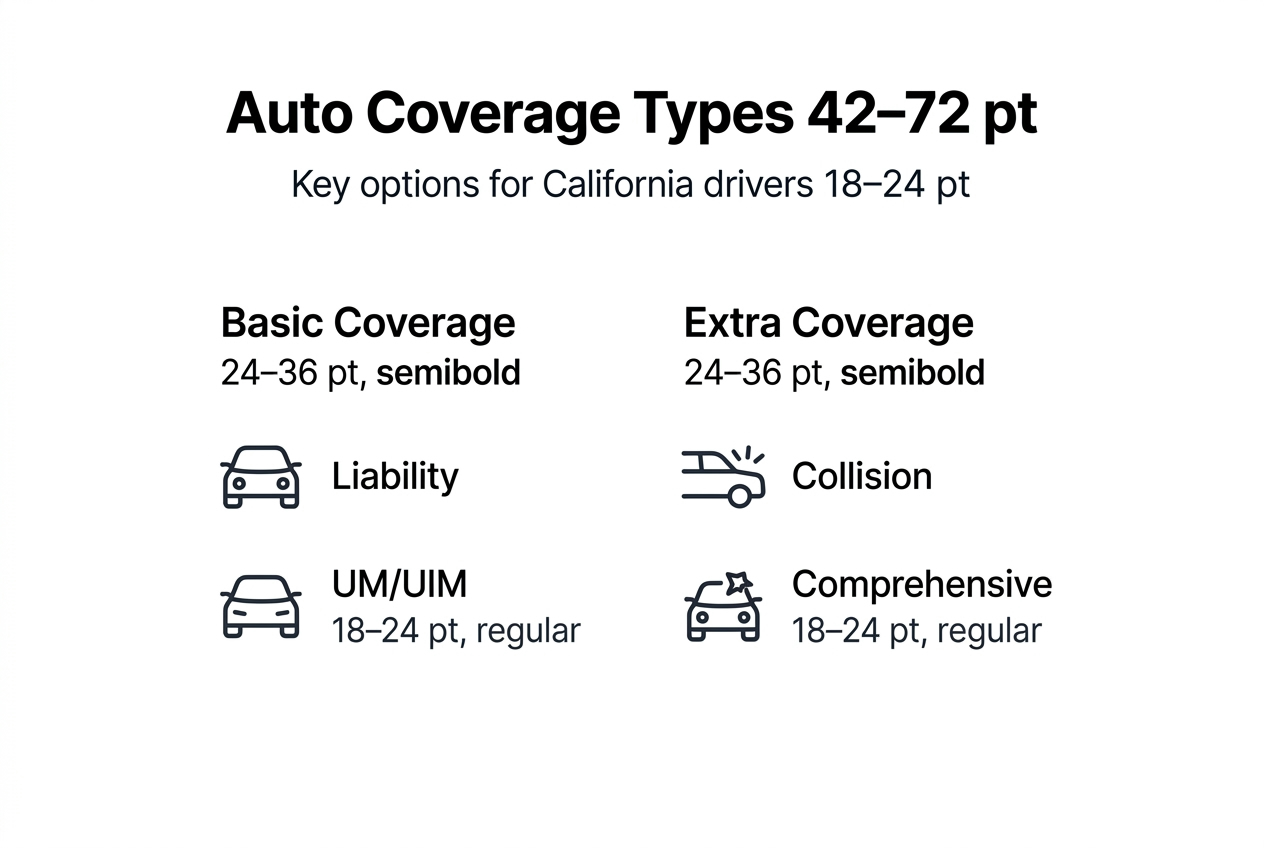
Collision coverage pays to repair or replace your vehicle after accidents, regardless of who’s at fault. Comprehensive coverage handles non-collision damage like theft, vandalism, fire, flood, or hitting an animal. Together with liability, these three components form what most people call full coverage.
| Coverage Type | What It Protects | Average Annual Cost |
|---|---|---|
| Liability-only | Others’ injuries and property | $742 |
| Full coverage | Others plus your vehicle | $2,417 |
| Cost difference | Additional protection for your car | $1,675 |
California’s high repair costs make this decision especially important. Body shop labor rates in cities like San Francisco and Los Angeles can exceed $150 per hour. Even minor fender benders often cost $3,000 to $5,000 to fix.
Consider these factors when choosing:
- Vehicle value: If your car is worth less than $4,000, liability-only might make sense since repair costs could exceed the car’s value.
- Loan or lease requirements: Lenders require full coverage until you pay off the vehicle.
- Savings cushion: Can you afford $5,000 to $15,000 out-of-pocket if your car is totaled or badly damaged?
- Driving environment: Urban areas with higher accident rates and theft may justify comprehensive coverage.
Pro Tip: Compare your annual full coverage premium to your vehicle’s current market value. If the premium exceeds 10% of the car’s worth, consider dropping collision and comprehensive unless you lack emergency savings.
For detailed comparisons, read about full coverage vs liability auto insurance. Learn how to choose auto insurance California residents need based on personal circumstances. Review car insurance full coverage costs California for current pricing trends.
Uninsured and underinsured motorist coverage explained
Uninsured motorist coverage (UM) protects you when drivers without insurance cause accidents. UM applies when the at-fault driver has no insurance or is unknown, like in hit-and-run cases where you never identify the other vehicle. California has thousands of uninsured drivers despite legal requirements, making this coverage valuable.
Underinsured motorist coverage (UIM) fills gaps when at-fault drivers carry insurance but their limits are too low to cover your damages. UIM supplements insufficient insurance limits up to your UIM coverage limits. If someone with minimum $15,000 property damage coverage totals your $30,000 car, UIM pays the remaining $15,000.
Insurers typically bundle UM and UIM as combined coverage expressed as split limits like “UM/UIM 100/300” meaning $100,000 per person and $300,000 per accident. This mirrors how liability limits work but protects you instead of others.
California law requires insurers to offer UM and UIM coverage, but you can waive it in writing. Many drivers decline this protection to save money without realizing the risk they’re taking.
Here’s when UM/UIM coverage pays:
- Another driver causes an accident and has no insurance (UM).
- A hit-and-run driver damages your car or injures you (UM).
- The at-fault driver’s liability limits are lower than your damages (UIM).
- You’re injured as a pedestrian or bicyclist hit by an uninsured vehicle (UM).
Stacking refers to combining UM/UIM limits from multiple vehicles on your policy to increase available coverage. California generally prohibits stacking UM/UIM coverage except in specific situations depending on policy language. Most policies explicitly forbid stacking, so you can only claim up to the limits for the vehicle involved in the accident.
Pro Tip: Match your UM/UIM limits to your liability limits. If you carry $100,000/$300,000 liability because you want that protection level, you should have equal UM/UIM limits to protect yourself from others who lack adequate coverage.
Key points about UM/UIM in California:
- UM covers bodily injury and sometimes property damage depending on your policy.
- UIM only pays after exhausting the at-fault driver’s liability coverage.
- You typically pay a deductible for UM property damage but not for bodily injury.
- UM/UIM claims don’t increase your premiums since you’re not at fault.
Explore essential auto insurance coverages California drivers should consider. Get local help from auto insurance Santa Rosa CA to customize your UM/UIM protection. Learn more about underinsured motorist coverage in California, review UM and UIM claims California procedures, and understand California UM/UIM stacking laws.
Choosing the right auto coverage for your California needs
Selecting appropriate coverage requires evaluating your specific financial situation, vehicle value, and risk tolerance. No single answer works for everyone, but these factors guide smart decisions.
Start with your vehicle’s current market value. Check Kelley Blue Book or similar services for accurate estimates. Dropping full coverage might save money but risks significant out-of-pocket loss if your car is worth more than $4,000 or you lack savings. Older vehicles worth $3,000 or less might justify liability-only coverage since repair costs often exceed the car’s value.
Evaluate your emergency savings. Ask yourself: Could I replace my car tomorrow if it’s totaled? If the answer is no, you need collision and comprehensive coverage. If you have $15,000 in savings and drive a $10,000 car, you might self-insure by skipping these coverages and accepting the risk.
California’s high percentage of uninsured drivers makes UM/UIM coverage particularly wise. Roughly 15% of California drivers operate without insurance despite legal requirements. Your likelihood of encountering an uninsured driver in an accident is substantial, especially in urban areas.
Consider these specific scenarios:
- New or expensive vehicles: Always carry full coverage including UM/UIM with high limits.
- Financed or leased vehicles: Lenders require comprehensive and collision coverage.
- High-value assets to protect: Increase liability limits to $250,000/$500,000 or higher to shield your home and savings from lawsuits.
- Low-value older cars: Liability-only may suffice if you can afford replacement.
- Limited savings: Full coverage protects you from financial catastrophe after accidents.
Pro Tip: Review your coverage annually. As your car depreciates, you might drop collision and comprehensive when the vehicle’s value falls below 10 times your annual premium for those coverages.
Regularly reassess as circumstances change:
- Pay off your car loan (no longer required to carry full coverage).
- Vehicle ages and loses value (consider dropping collision/comprehensive).
- Income or savings increase (might self-insure or raise deductibles).
- Move to higher-risk areas (add or increase coverage).
For personalized guidance, read how to choose auto insurance California drivers need based on individual factors. Review the California auto insurance requirements 2026 guide for current legal minimums. Compare full coverage vs liability cost and risk to make informed financial decisions.
Get personalized auto insurance coverage in California
Choosing the right auto coverage shouldn’t feel overwhelming. Jenkins Insurance Agency specializes in helping California drivers navigate coverage options and build policies that match their unique situations. Whether you need to meet minimum legal requirements or want comprehensive protection with UM/UIM coverage, our team provides clear guidance without pressure.

We help you understand the trade-offs between liability-only and full coverage, evaluate appropriate limits based on your assets and vehicle value, and identify money-saving opportunities through bundling. Local expertise matters when California’s insurance landscape changes. Get personalized quotes and expert recommendations from auto insurance services in Santa Rosa. Review the California auto insurance requirements guide for legal minimums, and discover how the California insurance guide with bundling savings can reduce your premiums by up to 25%.
Frequently asked questions
What does auto coverage include in California?
Auto coverage in California includes liability insurance (required by law), collision and comprehensive coverage (optional), and uninsured/underinsured motorist protection. Liability covers damages you cause to others, while collision and comprehensive protect your vehicle. UM/UIM shields you from drivers without adequate insurance.
Can I legally drive in California with only liability insurance?
Yes, liability-only coverage meets California’s legal requirements if you carry minimum limits of $30,000 per person, $60,000 per accident for bodily injury, and $15,000 for property damage. However, this leaves your own vehicle unprotected after accidents.
How much does full coverage cost compared to liability-only in California?
Full coverage averages $2,417 annually in California, while liability-only costs about $742 per year. The $1,675 difference buys collision and comprehensive protection for your vehicle, which may be worthwhile if your car is valuable or you lack savings for repairs.
What happens if I waive uninsured motorist coverage in California?
Waiving UM/UIM coverage is legal in California but risky. If an uninsured or underinsured driver causes an accident, you’ll pay your own medical bills and vehicle repairs unless you have other coverage. Given California’s high rate of uninsured drivers, most experts recommend keeping this protection.
Does California allow stacking uninsured motorist coverage?
California generally prohibits stacking UM/UIM coverage across multiple vehicles on your policy. Most policies explicitly limit claims to the coverage amount for the specific vehicle involved in the accident, preventing you from combining limits from other insured vehicles you own.
When should I drop collision and comprehensive coverage?
Consider dropping collision and comprehensive when your vehicle’s value falls below 10 times your annual premium for those coverages, typically when cars age and depreciate significantly. Ensure you have adequate savings to replace your vehicle before making this decision. For personalized advice, contact auto insurance options in Santa Rosa.
Recommended
- How to Choose Auto Insurance for California Residents – Jenkins Insurance Agency Inc.
- California auto insurance requirements 2026 guide – Jenkins Insurance Agency Inc.
- 7 Essential Auto Insurance Coverages for Californians – Jenkins Insurance Agency Inc.
- Auto Insurance for Business Owners in California – Jenkins Insurance Agency Inc.