
TL;DR:
- Insurance brokers represent clients, not insurers, offering access to multiple carriers and tailored coverage. They provide valuable services like risk assessment, policy negotiation, claims advocacy, and ongoing management without charging upfront fees. Brokers are especially useful for complex, non-standard, or growing coverage needs and operate based on commissions from insurers.
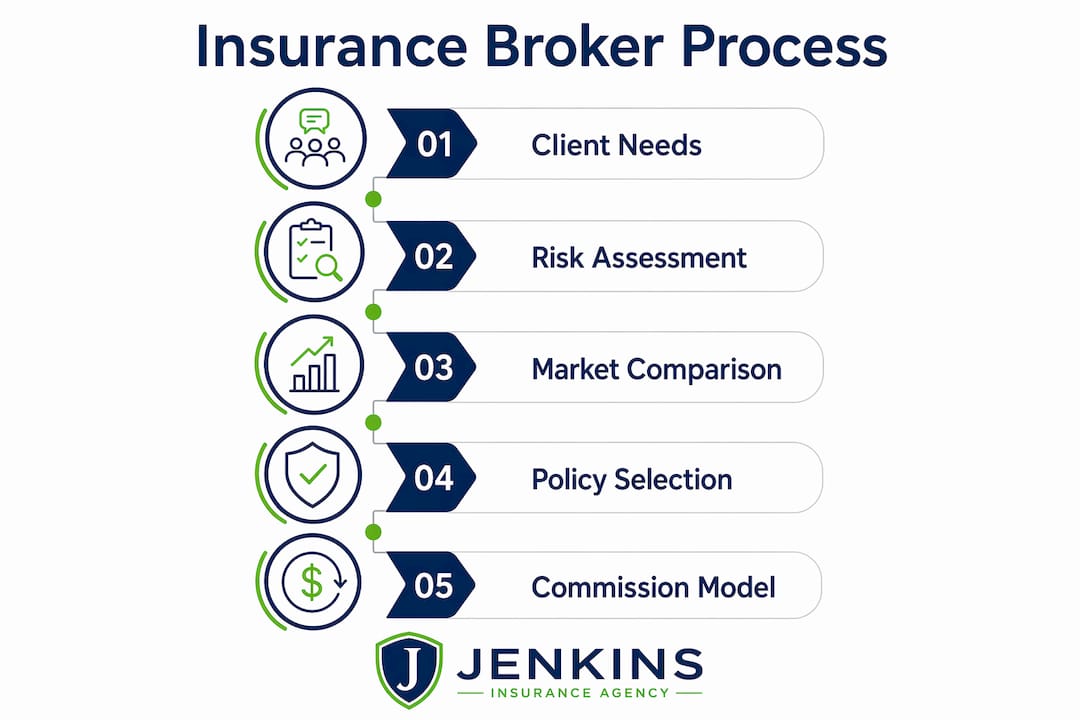
An insurance broker is a licensed intermediary who represents you, the client, not the insurer. Brokers shop across multiple carriers, compare policy terms, and negotiate coverage on your behalf. That single distinction changes everything about the advice you receive. Unlike buying direct or working with a captive agent, a broker’s legal duty runs to you. The role of insurance brokers covers everything from initial risk assessment to claims advocacy, making them one of the most underused resources available to individuals and business owners in California.
What do insurance brokers actually do?
Insurance brokers perform six core functions that most clients never see behind the scenes. Understanding each one helps you get more value from the relationship.
-
Market research and carrier comparison. Brokers evaluate price, coverage limits, exclusions, and deductibles across multiple insurers before recommending a policy. That comparison work alone can take hours when done properly, and most individuals simply do not have access to the same carrier relationships.
-
Risk assessment. A broker reviews your specific situation, whether that is a single-family home in Sonoma County, a small restaurant in Santa Rosa, or a fleet of commercial vehicles. They identify gaps in your current coverage before a claim reveals them.
-
Policy negotiation. Brokers use their carrier relationships to negotiate terms. Insurer-placed business through a broker is often perceived as lower risk, which can translate into better premium pricing for you.
-
Ongoing policy management. A broker does not disappear after the sale. They track renewal dates, flag coverage changes, and advise you when your situation changes, such as adding a new employee or purchasing a second property.
-
Claims advocacy. When a claim is filed, a broker uses their policy knowledge to make sure it is handled fairly. Expert brokers advocate during disputes to help ensure proper policy application and fair treatment.
-
Regulatory compliance. Licensed brokers operate under state insurance regulations and consumer protection standards, giving you a formal layer of accountability that direct online purchases do not provide.
Pro Tip: Before your first broker meeting, write down every asset you own, every liability you carry, and any claims you have filed in the past five years. Brokers build better coverage recommendations from complete information.
The key distinction from an insurance agent is legal alignment. Brokers represent the insured whereas agents represent the insurer. That difference shapes every piece of advice you receive. You can read more about how that plays out day to day in this breakdown of the real role of insurance agents.

How do insurance brokers benefit individuals and business owners?
The benefits of using insurance brokers go well beyond convenience. Here is what you actually gain.
-
Access to more options. Brokers work with multiple carriers, including specialty and surplus lines markets that are unavailable through direct platforms. If you own a historic property, run a high-risk business, or need coverage that standard carriers decline, a broker is often the only path to placement.
-
Cost savings. Broker-placed business is frequently priced more competitively because insurers view it as better-screened risk. The savings are not guaranteed, but the comparison process alone removes the risk of overpaying for coverage you could have found cheaper elsewhere.
-
Tailored coverage. A broker matches policy terms to your actual risk profile, not a generic product tier. For a California small business owner, that might mean combining general liability, commercial property, and workers’ compensation in a way that eliminates overlap and fills gaps. The importance of tailored business coverage is especially clear when a claim hits an uncovered exposure.
-
Time savings. Comparing multiple carriers, reading exclusion language, and tracking renewal deadlines is a part-time job. Brokers handle that work so you do not have to.
-
Better claims outcomes. When a claim is disputed or underpaid, most policyholders do not know where to push back. A broker who knows your policy and the insurer’s claims process can make a measurable difference. Knowing how to secure your insurance payout in California starts with having an advocate who understands the process.
-
Personalized relationships. Brokers tailor advice to individual client circumstances, building understanding of your unique risk profile over time. That relationship compounds in value as your life or business grows.
How do insurance brokers operate and get paid?
Brokers are licensed professionals who maintain independence from any single insurer. That independence is what makes their market access valuable.
| Compensation element | How it works |
|---|---|
| Commission from insurer | Brokers receive a percentage of the premium paid to the insurer |
| Commission range | Average commissions range from 2% to 8% of premiums for small group health insurance |
| Direct client fees | Typically none; broker services carry no upfront cost to the client |
| Specialty market access | Brokers can place risks in surplus lines markets most clients cannot reach independently |
| Limitations | Brokers cannot override insurer underwriting decisions |
The commission model means you receive expert guidance without paying a separate consulting fee. The insurer funds the broker’s compensation as part of the distribution cost. That structure removes a common barrier, especially for individuals who assume professional advice always comes with a bill.
The limitation worth knowing: a broker cannot force an insurer to accept a risk or change its underwriting rules. What a broker can do is access a broader set of markets until the right fit is found. The advantages of independent agencies come directly from that market breadth.
Pro Tip: Ask your broker to show you at least three carrier quotes side by side, with coverage limits and exclusions listed, not just premiums. Price comparisons without coverage comparisons are incomplete.
When should you use an insurance broker?
Not every insurance purchase requires a broker, but several situations make professional guidance worth seeking out.
-
Complex or multiple coverage needs. If you own a home, run a business, and have employees, your exposures interact in ways a single direct policy cannot address cleanly. A broker maps those interactions and builds a coverage structure that holds together.
-
Starting or growing a business. Coverage needs change fast when a business scales. A broker tracks those changes and adjusts your program before a gap becomes a claim. California small business owners can find a strong starting point in this guide to business insurance in Santa Rosa.
-
Hard-to-place risks. Older homes, properties in wildfire zones, businesses with unusual liability exposures, and other non-standard risks often get declined by direct carriers. Brokers with surplus lines access can find markets that standard channels cannot.
-
Active claims or disputes. If a claim is being delayed, underpaid, or denied, a broker’s policy knowledge and carrier relationships become your most practical resource.
-
Choosing a broker. Look for a licensed professional in your state, ask how many carriers they work with, and confirm they have experience with your specific type of coverage. A broker who specializes in homeowners insurance in Sonoma County brings different value than a generalist who handles mostly commercial accounts.
When you meet a broker for the first time, bring your current policy documents, a list of your assets, and any recent claims history. That preparation lets the broker identify gaps immediately rather than spending your first meeting gathering basic information.
Key Takeaways
Insurance brokers represent clients, not insurers, making their advice structurally different from what you receive through a captive agent or direct purchase.
| Point | Details |
|---|---|
| Brokers work for you | Brokers legally represent the insured, not the insurer, shaping every recommendation they make. |
| No upfront cost | Brokers earn commissions from insurers, so clients receive expert guidance without paying direct fees. |
| Broader market access | Brokers reach specialty and surplus lines markets that direct buyers cannot access on their own. |
| Claims advocacy matters | A broker’s policy knowledge helps ensure claims are handled fairly and disputes are resolved faster. |
| Best for complex needs | Brokers add the most value when coverage needs are layered, non-standard, or tied to a growing business. |
What working with brokers has taught me about insurance decisions
People often assume that buying insurance directly is simpler and cheaper. In my experience, that assumption holds only for the most straightforward situations, a single standard auto policy, a new home in a low-risk area. The moment complexity enters, the direct path starts costing more than it saves.
The part most people overlook is claims. You can buy a policy without a broker and never notice the difference until something goes wrong. At that point, the policy language matters enormously, and most policyholders are not equipped to read it the way a broker can. I have seen clients receive significantly better claim outcomes simply because their broker knew which coverage clause applied and how to present the claim correctly.
The other misconception I run into regularly is that brokers only help with business insurance. Homeowners in wildfire-prone areas of California, families with multiple vehicles, and individuals with rental properties all have layered exposures that benefit from professional placement. The insurance market has grown more complex, not less, and that complexity is exactly where a broker’s value compounds.
My honest recommendation: treat a broker the same way you treat an accountant or an attorney. You do not need one for every transaction, but when the stakes are real, the cost of not having one is always higher than the cost of the relationship.
— Jason
How Jenkinsinsuranceagencyinc can help you find the right coverage
Jenkinsinsuranceagencyinc is a local agency based in Santa Rosa, serving individuals, families, and business owners throughout Sonoma County and broader California. The team works with multiple carriers through its Farmers Insurance affiliation, giving clients access to a wide range of coverage options without the work of shopping alone.

Whether you need homeowners insurance in Santa Rosa or business coverage tailored to your operations, Jenkinsinsuranceagencyinc brings the personal attention that online platforms cannot replicate. The agency focuses on real relationships, clear explanations, and coverage that fits your actual situation. Reach out to the local team for a personalized review of your current coverage and a comparison of your options.
FAQ
What is the main role of an insurance broker?
An insurance broker is a licensed professional who represents the client, not the insurer, shopping across multiple carriers to find the best coverage fit. Their legal duty runs to the insured, which separates them from captive agents who represent a single company.
Do insurance brokers charge clients a fee?
Brokers typically receive commissions from insurers rather than charging clients direct fees, so their expert guidance comes at no upfront cost to you.
What is the difference between an insurance broker and an agent?
Brokers represent the insured while agents represent the insurer. That distinction changes the nature of the advice and whose interests are prioritized in every recommendation.
Can a broker help me during a claim?
Yes. Brokers use their policy knowledge to advocate for fair claims handling and can help resolve disputes by applying the correct coverage terms on your behalf.
When does using a broker make the most sense?
Brokers add the most value when your coverage needs are complex, your risk is non-standard, or you are managing multiple policies across a home, vehicles, and a business.
Recommended
- Business Insurance – Jenkins Insurance Agency Inc.
- Local Insurance vs National Carriers: Which Is Right for You? – Jenkins Insurance Agency Inc.
- How insurance safeguards your California business assets – Jenkins Insurance Agency Inc.
- The Real Role of Insurance Agents: What You Need to Know – Jenkins Insurance Agency Inc.