
TL;DR:
- Insurance agents primarily represent insurers and assist with needs assessment, policy explanations, and claims support, acting within their company’s product offerings. Brokers, contrastingly, represent clients and offer access to broader markets, providing stronger advocacy, especially during complex claims. Despite digital alternatives, agents remain vital for personalized, trust-based guidance and effective claim management, particularly for business owners with intricate coverage needs.
Most people spend more time comparing coffee subscriptions than they do understanding their insurance coverage. That’s not a criticism. It’s just the reality of how confusing insurance can be. The role of insurance agents exists precisely because of that gap. 83% of consumers find buying insurance complex, and that number includes plenty of smart, financially savvy people. Whether you’re a homeowner in Santa Rosa trying to protect your property or a business owner managing liability risks, understanding what an agent actually does for you makes a real difference in how well covered you end up being.
Table of Contents
- Key takeaways
- The role of insurance agents in everyday coverage
- Agents vs. brokers: who actually represents you
- Why agents still matter in the age of insurance apps
- How to choose and work with an agent effectively
- Why agents matter for business owners especially
- My take on where this is all headed
- Get the personalized coverage you deserve
- FAQ
Key takeaways
| Point | Details |
|---|---|
| Agents represent insurers | Insurance agents are licensed to sell on behalf of specific companies, not to shop the whole market for you. |
| Brokers represent you | Brokers carry a fiduciary duty to act in your interest, giving them stronger authority in disputes. |
| Agents add value beyond selling | Daily functions include needs assessment, policy explanation, renewals, claims assistance, and ongoing support. |
| Digital tools don’t replace agents | Only a fraction of direct-purchase buyers feel fully satisfied; agents fill the gap during complex claims. |
| Relationship quality matters most | Choosing an agent with strong carrier connections and a proactive approach protects you when it counts. |
The role of insurance agents in everyday coverage
At its core, an insurance agent is a licensed professional authorized to sell insurance products on behalf of one or more insurance companies. That licensing matters. It means they have passed state-required exams and are accountable to regulatory bodies for how they conduct business.
The daily duties of agents center on client interaction, policy management, and supporting claims. In practice, that looks like this:
- Conducting client interviews to understand your coverage needs, assets, and risk profile
- Explaining policy terms in plain language so you know exactly what you are and aren’t covered for
- Selling and binding coverage on behalf of the insurance company, often immediately upon agreement
- Processing renewals and flagging any changes in your situation that might affect your coverage
- Maintaining records and updating policies when your life or business circumstances change
- Assisting with claims by helping you file correctly and navigate the process within the company’s framework
One thing worth understanding: an agent’s primary loyalty is to the insurer, not to you. That doesn’t make them untrustworthy. It just means their guidance operates within the products and policies their company offers. A good agent will tell you honestly when their company’s product isn’t the right fit. A less scrupulous one won’t.
Pro Tip: Ask any agent upfront which insurance companies they represent. If they represent only one carrier, that limits your options. Knowing this early saves time and sets realistic expectations.
Agents vs. brokers: who actually represents you
This distinction trips people up more than almost anything else in insurance. The difference is not just technical. It affects the advice you get, the options on the table, and who goes to bat for you if a claim gets complicated.
Here’s a direct comparison:
| Characteristic | Insurance Agent | Insurance Broker |
|---|---|---|
| Who they represent | The insurance company | The client |
| Policy options | Products from one or a few carriers | Access to the broader market |
| Fiduciary duty | Owed to the insurer | Legally owed to the client |
| Coverage binding | Can bind coverage immediately | Advises first, then binds with a carrier |
| Claims support | Assistance within company framework | Stronger advocacy in disputes |
| Best for | Straightforward coverage needs | Complex or multi-carrier situations |
Agents can be “captive” (representing a single insurer like Farmers Insurance) or “independent” (representing multiple carriers). Captive agents typically have deeper product knowledge and tighter relationships with their carrier’s claims and underwriting teams. Independent agents offer more variety but sometimes with less depth on any single product.
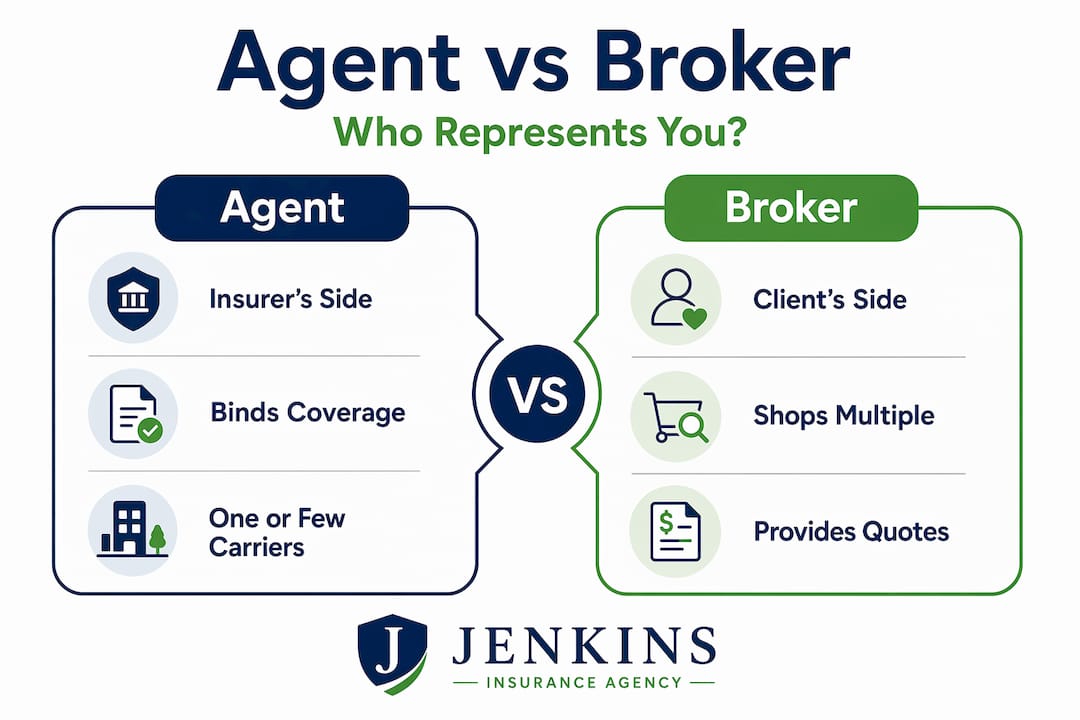
Agent loyalty to the insurer means that when a claim dispute arises, an agent will advocate for you within the bounds of what their company allows. A broker, on the other hand, can push harder on your behalf because their obligation runs directly to you.
Pro Tip: If you have complex needs spanning multiple insurers, a broker might serve you better. But if you want deep carrier knowledge, fast claim processing, and a single point of contact who knows your policy inside and out, a captive agent can be an excellent choice.
Why agents still matter in the age of insurance apps
You can get an auto insurance quote in 90 seconds on your phone. You can buy a renters policy at midnight without speaking to a single human being. So why do nearly 80% of new motor and health policies still come through intermediaries like agents and brokers?
Because buying a policy and actually being protected are two very different things.
Only 35% of motor buyers and 28% of health buyers who purchased directly were fully satisfied with the experience. The gaps show up not at purchase time but at claim time, when the fine print matters and someone needs to help you understand what you’re entitled to.
The best agents have adapted to this reality. They’ve stopped competing with apps on quoting speed and instead focused on what technology genuinely cannot replace:
- Claim-time advocacy. The most valued agents maintain relationships with specific adjusters and restoration companies, allowing them to advocate during complex claims in ways an app simply cannot.
- Personalized needs assessment. An algorithm asks you how many cars you own. An agent asks about your teenage driver, your home-based business, and the gap in coverage you didn’t know you had.
- Policy literacy. Most people don’t read their policies. Agents bridge that gap, explaining exclusions and limits before a loss makes those details urgent.
- Ongoing relationship. Life changes. An agent who knows you notices when your coverage needs updating. An app waits for you to notice first.
“The insurance distribution future is hybrid: technology increases efficiency, but agents will remain the foundation for protection products requiring human trust and advice.”
That hybrid future is already here. Smart consumers use digital tools to educate themselves and then work with an agent to make the final call. The agent’s role has evolved from salesperson to trusted advisor and local insurance agent.
How to choose and work with an agent effectively
Finding the right agent is part research, part gut check. Here’s a practical process that protects you from the start.
-
Verify their license. Every state has an insurance department website where you can confirm an agent is licensed and check for complaints. State insurance websites provide licensure validation and complaint histories. Look before you commit.
-
Understand who they represent. Ask directly: are you captive or independent? Which carriers do you work with? The answer shapes everything from the products they can offer to how claims get handled.
-
Watch for red flags. High-pressure tactics, requests for unusual payment methods, or unsolicited calls pushing you to decide quickly are all warning signs. A trustworthy agent gives you time to think and ask questions.
-
Ask about their claims process. This is where most people drop the ball. Ask specifically: “If I have a major claim, what do you do for me?” An agent who can describe a clear, personal process has done it before. Vague answers mean you’re mostly on your own.
-
Plan for an annual review. The best agent relationships are ongoing. A lot changes in a year: home renovations, new vehicles, business growth, family additions. Schedule a check-in at renewal time every year to make sure your coverage still fits.
Pro Tip: Ask your agent whether they have direct relationships with claims adjusters at their carrier. Agents who can advocate during claims with specific contacts in place deliver measurably better outcomes than those who simply submit paperwork and wait.
Why agents matter for business owners especially
Business insurance is more complicated than personal coverage. A homeowner needs to protect a house. A business owner needs to protect property, liability, employees, vehicles, income continuity, and professional reputation, often across multiple policies.

This is where the importance of insurance agents becomes most obvious. Agents drive nearly 80% of new motor and health insurance sales precisely because complexity demands a human guide. For business owners, the stakes are higher and the complexity is greater.
Here’s how agents specifically serve business clients:
- Cross-selling multiple products. About 40 to 50% of consumers buy multiple financial products through the same agent. For a business owner, that might mean bundling commercial auto, general liability, and a business owner’s policy with one trusted contact.
- Tailored risk assessment. A good agent who understands your industry knows what risks your policy needs to cover. A restaurant owner and a contractor face very different exposures, and a generic online form won’t catch the difference.
- Policy retention support. About 53% of clients drop policies within 24 months, often because they don’t feel the value. Agents who stay in contact and provide ongoing guidance dramatically improve retention, which means businesses stay protected longer.
- Regulatory guidance. Industries like construction, healthcare, and food service have insurance requirements that change. An agent who specializes in your sector helps you stay compliant without having to track it yourself.
For business insurance needs, the agent relationship isn’t a convenience. It’s a risk management strategy.
My take on where this is all headed
I’ve worked with enough clients to say this with confidence: the agents who thrive aren’t the ones who are best at selling. They’re the ones who show up when something goes wrong.
The technology shift has actually been clarifying in a useful way. When any consumer can get a quote in under two minutes, the value of an agent can’t live in the quoting process anymore. It has to live in the relationship, the expertise, and the claim-time response. The agents I’ve seen build genuinely loyal client bases are the ones who act as advocates first and salespeople second.
One thing I’d encourage every consumer to push for: ask your agent about their carrier relationships specifically. Agents who know specific adjusters and can make direct calls during a claim aren’t just being friendly. They’re delivering a concrete, measurable advantage that a direct-to-consumer app cannot match. That’s not a soft benefit. That’s the difference between a claim settling in three weeks versus three months.
Compensation structures in the industry are shifting too, with regulatory changes pushing toward trail commissions that reward long-term client relationships over one-time sales. For consumers, that’s actually a good thing. It means agents are increasingly incentivized to keep you happy and covered over time, not just to close a deal.
Think of your agent as a strategic partner, not a salesperson who got your number. The best ones earn that distinction every year.
— Jason
Get the personalized coverage you deserve
If reading this has made you realize your current coverage could use a second look, we’d love to help. At Jenkinsinsuranceagencyinc, we work with individuals, families, and business owners across Santa Rosa and Sonoma County to make sure their insurance actually does what it’s supposed to do.

We’re not here to sell you a policy and move on. We’re here to be the agent who picks up the phone when something goes wrong. Whether you need homeowners insurance, auto coverage, or a complete business insurance review, our local team is ready to walk you through your options with the kind of honest, personal guidance that makes a real difference. Reach out today and let’s find coverage that fits your unique situation.
FAQ
What does an insurance agent actually do for you?
An insurance agent assesses your coverage needs, explains policy options, sells and binds coverage on behalf of an insurer, and supports you through renewals and claims assistance. Their ongoing role includes keeping your policies updated as your life or business changes.
What is the difference between an agent and a broker?
Agents represent the insurance company and can bind coverage immediately, while brokers represent the client and carry a fiduciary duty to act in your best interest. Brokers can search across the full market; agents work within their carrier’s product offerings.
Are insurance agents still worth using when you can buy online?
Yes. While digital platforms make quoting fast and easy, only 35% of direct buyers report full satisfaction. Agents provide irreplaceable support during complex claims and policy reviews that digital tools cannot replicate.
How do I verify that an insurance agent is legitimate?
Check your state’s insurance department website to confirm their license and review any complaint history. Legitimate agents will not pressure you to decide quickly or ask for unusual payment methods.
Why are insurance agents especially important for business owners?
Business insurance involves multiple overlapping policies, industry-specific risks, and compliance requirements that are difficult to manage without expert guidance. Agents help business owners identify coverage gaps, bundle policies efficiently, and stay protected as their operations grow.
Recommended
- Why Choose a Local Insurance Agent | Jenkins Insurance
- Why insurance matters for California families: protect what counts – Jenkins Insurance Agency Inc.
- Insurance regulation in California: essential guide – Jenkins Insurance Agency Inc.
- Why Local Insurance Agencies Matter in Sonoma County – Jenkins Insurance Agency Inc.