
Selecting the right business insurance in California feels overwhelming when you’re juggling operations, employees, and growth plans. With mandatory Workers’ Compensation for any business with employees and unique California risks like wildfire exposure and litigation, making the wrong choice can cost you thousands or leave gaps in protection. This guide walks you through each decision clearly, from assessing your specific risks to customizing coverage and managing policies year after year, so you protect your business without overpaying or missing critical endorsements.
Table of Contents
- Step 1: Assess Your Business Risks And Insurance Needs In California
- Step 2: Identify Required And Recommended Coverages For Your Business
- Step 3: Gather Business Details And Compare Insurance Quotes
- Step 4: Select Your Policy, Customize Endorsements, And Review Annually
- Protect Your California Business With Jenkins Insurance Agency
- Frequently Asked Questions
Key takeaways
| Point | Details |
|---|---|
| Risk assessment informs coverage | Evaluate industry hazards, employee count, location risks, and contractual requirements to identify necessary policies. |
| Workers’ Compensation is mandatory | California requires coverage for any business with employees, with penalties exceeding $100,000 for non-compliance. |
| Compare multiple quotes | Shop 3-5 providers including independent brokers and State Fund to find the best rates and coverage options. |
| Review policies annually | Update coverage when your business changes to prevent gaps and ensure endorsements match current exposures. |
Step 1: assess your business risks and insurance needs in California
Before you request a single quote, you need a clear picture of what your business actually faces. Start by evaluating your industry’s typical hazards. Construction firms deal with jobsite injuries and equipment damage, while tech startups worry about data breaches and professional errors. Your industry risk profile shapes which small business insurance policies you prioritize.
Next, count your employees. If you employ even one person in California, Workers’ Compensation becomes mandatory. This isn’t optional. Penalties for skipping it can exceed $100,000, plus you’ll face legal liability if an employee gets injured on the job. Document your current headcount and any plans to hire, since coverage needs scale with your team.
Location matters more in California than almost anywhere else. Wildfire risk zones, earthquake exposure, and coastal flooding all influence your property insurance needs and premiums. If you operate in Sonoma County, for example, wildfire endorsements aren’t just smart, they’re essential. Check your business location risks including proximity to fire zones and seismic activity, then factor these into your coverage decisions.
Review any contracts you’ve signed with clients, landlords, or vendors. Many require specific insurance minimums, especially General Liability coverage. A commercial lease might demand $1 million in liability protection, while a client contract could require Errors & Omissions insurance. Gather these documents now so you don’t scramble later trying to meet unexpected requirements.
Finally, list your business assets and annual revenue. This includes equipment, inventory, office space, and intellectual property. Your revenue figure helps insurers calculate appropriate coverage limits, while your asset list ensures you’re not underinsuring valuable property. Understanding small business insurance in California starts with knowing exactly what you need to protect and why it matters to your operations.
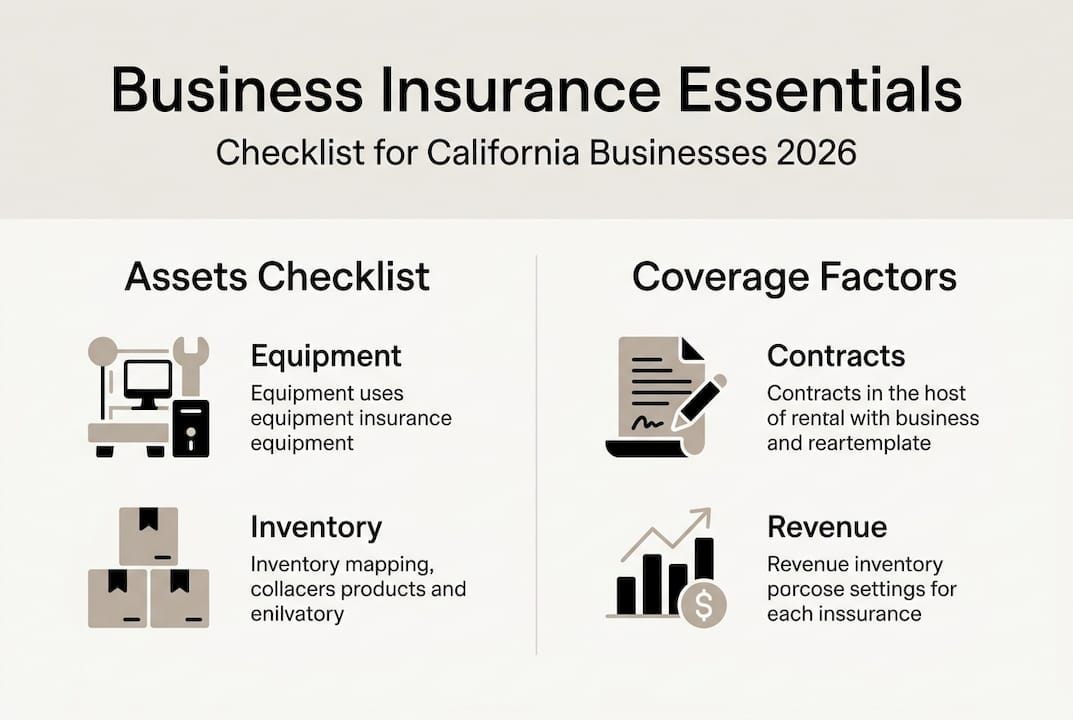
Pro Tip: Create a simple spreadsheet listing every asset, its replacement cost, and any contracts requiring insurance. This document becomes your foundation for every quote request and policy review.
Step 2: identify required and recommended coverages for your business
California law doesn’t leave much room for debate on Workers’ Compensation. If you have employees, you must carry it. Period. Penalties exceed $100,000 for non-compliance, and you’ll face criminal charges in severe cases. This coverage pays medical bills and lost wages when employees get hurt at work, protecting both them and your business from devastating lawsuits. Even part-time workers count, so don’t assume you’re exempt just because your team is small.
Commercial Auto insurance becomes mandatory the moment you use a vehicle for business purposes. Your personal auto policy won’t cover accidents during deliveries, client visits, or equipment transport. If you or your employees drive for work, you need a dedicated business auto policy. This applies whether you own the vehicles or employees use their own cars for company errands. Check your business auto insurance options to understand coverage limits and requirements.

General Liability isn’t legally required by California, but you’ll struggle to operate without it. Contracts commonly demand proof of General Liability coverage before clients sign agreements or landlords approve leases. This policy covers bodily injury, property damage, and advertising injury claims. If a customer slips in your office or you accidentally damage a client’s property during a service call, General Liability steps in. Most businesses carry $1 million per occurrence and $2 million aggregate as a baseline.
A Business Owner’s Policy (BOP) bundles General Liability with commercial property insurance, often at a discount compared to buying separately. This package suits retail shops, restaurants, and office-based businesses perfectly. You get liability protection plus coverage for your building, equipment, and inventory in one policy. BOPs typically cost less than standalone policies while simplifying renewals and claims.
Beyond the basics, consider endorsements that match your specific exposures. Cyber Liability insurance protects against data breaches and ransomware attacks, critical for any business handling customer information digitally. Employment Practices Liability Insurance (EPLI) defends against wrongful termination, discrimination, and harassment claims. Professional Liability or Errors & Omissions covers mistakes in your services or advice. Explore top insurance policies for small businesses to see which endorsements fit your operations.
Pro Tip: Don’t buy coverage you don’t need just because a broker suggests it. Match every policy to a specific risk you’ve identified in your assessment, and skip anything that doesn’t align with your actual exposures.
Step 3: gather business details and compare insurance quotes
Insurers need accurate data to price your coverage correctly. Start by collecting business revenue figures, total payroll, employee counts, and a detailed asset inventory. Include your business structure (LLC, corporation, sole proprietorship), years in operation, and any prior insurance claims. The more precise your information, the more accurate your quotes will be. Vague estimates lead to coverage gaps or overpayment.
Consider working with an independent insurance broker rather than going directly to a single carrier. Independent brokers access multiple insurers, comparing rates and coverage options across the market. They shop on your behalf, saving you hours of repetitive form-filling. A good broker also explains policy differences you might miss, like whether a General Liability policy includes product liability or requires a separate endorsement.
Request quotes from at least three to five providers. This includes national carriers, regional insurers, and California’s State Fund for Workers’ Compensation. Shopping multiple providers reveals price variations that can reach 30% or more for identical coverage. State Fund offers Workers’ Compensation as a guaranteed option when private insurers decline coverage or quote excessively high premiums, making it a valuable backup.
When comparing quotes, look beyond the premium. Check coverage limits, deductibles, exclusions, and endorsements included in the base policy. A cheaper quote might exclude cyber liability or cap property coverage too low. Compare apples to apples by requesting identical limits and deductibles across all quotes, then adjust based on your budget and risk tolerance.
Ask about bundling discounts. Carriers often reduce premiums when you purchase multiple policies together, such as combining General Liability, Commercial Property, and Business Auto under one insurer. These discounts can save 10% to 25% compared to buying each policy separately. Review California business insurance options to understand local bundling opportunities and carrier availability in your area.
Step 4: select your policy, customize endorsements, and review annually
Once you’ve compared quotes, choose the policy that balances coverage quality, price, and insurer reputation. Don’t automatically pick the cheapest option. Research the carrier’s financial strength rating (look for A- or better from AM Best) and claims service reviews. A low premium means nothing if the insurer drags out claims or denies legitimate coverage when you need it most.
Customize your policy with endorsements that address California-specific risks. Earthquake coverage isn’t included in standard commercial property policies, so add it if you operate in a seismic zone. Wildfire endorsements protect businesses in high-risk areas from fire damage and business interruption. Cyber liability and EPLI endorsements guard against modern threats like data breaches and employment lawsuits. Tailor your policy to your actual exposures rather than accepting a generic package.
Consider raising your deductibles to lower premiums. A higher deductible means you pay more out of pocket when filing a claim, but it can reduce your annual premium by 15% to 30%. This strategy works best when you have emergency cash reserves to cover the deductible if needed. Run the numbers to see if the premium savings justify the increased financial responsibility.
Request your certificate of insurance (COI) immediately after binding coverage. This document proves you carry insurance and lists your policy details, limits, and effective dates. Clients and landlords will ask for it regularly, so keep digital and physical copies accessible. Update your COI whenever you renew or modify coverage to ensure it reflects current policy terms.
Schedule an annual policy review with your broker or agent. Your business changes, new risks emerge, and coverage needs evolve. An annual review catches gaps before they become problems. Did you hire more employees? Add a new service line? Move to a different location? Each change might require coverage adjustments. Explore California insurance bundling savings during your review to maximize discounts and streamline policies.
| Review Trigger | Coverage Action |
|---|---|
| Hired employees | Increase Workers’ Comp limits |
| New equipment purchase | Update property coverage |
| Expanded service area | Review General Liability territory |
| Contract requirements changed | Add or increase specific endorsements |
Pro Tip: Set a calendar reminder 60 days before your renewal date. This gives you time to shop competitors, negotiate with your current carrier, or adjust coverage without a last-minute scramble.
Protect your California business with Jenkins Insurance Agency
Navigating California’s business insurance landscape doesn’t have to feel like guesswork. Jenkins Insurance Agency brings local expertise and personalized service to business owners throughout Sonoma County and beyond. Our team understands the unique challenges you face, from mandatory Workers’ Compensation requirements to wildfire and earthquake exposures that impact your premiums and coverage needs.

We connect you with multiple carrier options, compare quotes on your behalf, and explain policy differences in plain language. Whether you need comprehensive business insurance coverage, business auto protection, or guidance on bundling strategies that save up to 25%, we tailor solutions to your industry, location, and budget. Get a free consultation today and protect your business with confidence.
Frequently asked questions
What types of business insurance are mandatory in California?
Workers’ Compensation is mandatory if you employ one or more workers, with penalties exceeding $100,000 for non-compliance. Commercial Auto insurance is required if you use vehicles for business purposes, whether company-owned or employee-owned. General Liability isn’t legally required by the state, but contracts with clients or landlords often demand it. Review essential business insurance policies to understand which coverages apply to your specific situation.
How often should I review and update my business insurance policy?
Review your policy at least annually, ideally 60 days before renewal. You should also update coverage immediately after significant business changes like hiring employees, purchasing expensive equipment, expanding service areas, or signing new contracts with insurance requirements. Regular reviews prevent coverage gaps and ensure your limits match current exposures and asset values.
Can a sole proprietor skip Workers’ Compensation insurance in California?
Sole proprietors without employees generally aren’t required to carry Workers’ Compensation for themselves. However, clients or general contractors may demand proof of coverage before awarding contracts, especially in construction and trades. Some sole proprietors voluntarily purchase Workers’ Comp to protect themselves from injury-related medical costs and lost income, even when not legally required.
What are common mistakes to avoid when buying business insurance?
Skipping Workers’ Compensation or underestimating wildfire exposure ranks among the costliest errors. Many business owners confuse General Liability with Errors & Omissions, leaving professional service mistakes uncovered. Another frequent mistake is assuming personal auto insurance covers business use, when in reality you need dedicated commercial coverage. Avoid common business insurance mistakes by thoroughly assessing your risks and matching policies to actual exposures rather than guessing at coverage needs.
Recommended
- Why business insurance matters for California SMBs in 2026 – Jenkins Insurance Agency Inc.
- Small business insurance California 2026: 30% underinsured – Jenkins Insurance Agency Inc.
- Auto Insurance for Business Owners in California – Jenkins Insurance Agency Inc.
- Step-by-Step Guide to Property Insurance California – Jenkins Insurance Agency Inc.
- How to Find Business Insurance UK: Step-by-Step Guide – Kefihub