
California small business owners juggle countless responsibilities, but getting insurance wrong can cost you everything. Between mandatory workers’ compensation, State Disability Insurance, and liability coverage, navigating requirements feels overwhelming. This guide walks you through every insurance mandate, shows you how to choose the right policies, helps you avoid expensive mistakes, and keeps your business compliant and protected.
Table of Contents
- Understanding California Small Business Insurance Requirements
- Essential Types Of Small Business Insurance In California
- Preparing To Get Insured: Prerequisites And What You Need
- Step-By-Step Process To Obtain Small Business Insurance In California
- Common Mistakes Small Business Owners Make With Insurance And How To Avoid Them
- Maintaining Your Insurance: Updates, Reviews, And Compliance
- Expected Outcomes And Benefits Of Proper Small Business Insurance
- Secure Your California Small Business With Jenkins Insurance Agency
- Frequently Asked Questions
Key takeaways
| Point | Details |
|---|---|
| Mandatory coverage | California requires workers’ compensation and State Disability Insurance for all employers to protect employees and comply with state law. |
| Comprehensive protection | Liability, commercial auto, and business interruption insurance safeguard your operations beyond minimum legal requirements. |
| Risk assessment matters | Working with local agents ensures your policies match California’s unique regulatory environment and your specific business risks. |
| Avoid common mistakes | Underestimating coverage needs and neglecting policy updates leads to claim denials and legal exposure affecting 30% of businesses. |
| Annual reviews essential | Regular policy reviews and agent communication keep coverage current as your business grows and regulations change. |
Understanding California small business insurance requirements
California imposes specific insurance mandates that protect employees and ensure business accountability. Workers’ compensation is legally required for all employers, regardless of size, covering medical costs and wage replacement for workplace injuries. Additionally, California mandates employer participation in the State Disability Insurance program, which provides wage replacement benefits when employees cannot work due to non-work-related disabilities or family care needs.
General liability insurance, while not always legally mandated, is expected or required by landlords, lenders, and clients depending on your industry. Retail stores, restaurants, and service businesses face substantial exposure without it. Local regulations add another layer, with counties and cities imposing additional obligations unique to their jurisdictions.
Failure to maintain proper coverage triggers severe consequences. You risk substantial fines from the state, personal liability for employee injuries, and invalidated insurance claims. California’s Division of Workers’ Compensation actively audits businesses and penalizes non-compliance.
Key compliance requirements include:
- Obtaining workers’ compensation coverage before hiring your first employee
- Registering for State Disability Insurance through the Employment Development Department
- Posting required notices about insurance coverage at your workplace
- Maintaining continuous coverage without lapses to avoid penalties
- Verifying your insurance carrier is licensed and authorized in California
Essential types of small business insurance in California
Beyond mandatory coverage, California small business owners need multiple insurance types to protect against common operational risks. General liability insurance protects your business when customers or third parties suffer bodily injury or property damage on your premises. A customer slipping in your store or damage from your work at a client’s site becomes your financial responsibility without this coverage.
Workers’ compensation remains your most critical employee protection, covering medical treatment, rehabilitation, and wage replacement for injured workers. Commercial auto insurance protects vehicles used for business purposes, whether you own a delivery fleet or employees drive personal cars for work-related tasks. Personal auto policies exclude business use, leaving you exposed during accidents.

Business interruption insurance safeguards revenue when disasters, fires, or other covered events force temporary closures. This coverage replaces lost income and covers ongoing expenses like rent and payroll while you rebuild. Professional liability insurance protects service businesses against claims of errors, omissions, or negligence in professional advice.
| Insurance Type | Primary Protection | Typical Cost Range |
|---|---|---|
| General Liability | Third-party injuries, property damage | $400-$1,500/year |
| Workers’ Compensation | Employee workplace injuries | $0.75-$2.50 per $100 payroll |
| Commercial Auto | Business vehicle accidents | $1,200-$2,400/year per vehicle |
| Business Interruption | Lost revenue during closures | $500-$2,000/year |
| Professional Liability | Errors and omissions claims | $500-$3,000/year |
Working with local insurance agents who understand California’s regulatory environment ensures your policies address state-specific requirements. Local insurance agencies serve 85% of California small businesses by providing customized policies that meet regional risk factors and compliance standards.
Pro Tip: Bundle multiple insurance types with one carrier to reduce premiums by 15 to 25% while simplifying policy management and claims processes.
Preparing to get insured: prerequisites and what you need
Before contacting insurance agents, gather essential business information that determines your coverage needs and premium costs. Your legal business structure matters significantly. Sole proprietorships, partnerships, LLCs, and corporations face different requirements and liability exposures. Have your Employer Identification Number ready, as insurers verify your business registration and tax status.
Employee information drives workers’ compensation premiums and coverage calculations. Document your total employee count, including full-time, part-time, and seasonal workers. Prepare detailed payroll records showing total compensation by job classification, since insurance rates vary dramatically based on job risks. Office workers cost far less to insure than construction laborers.
Your business location introduces specific risk factors that insurers evaluate carefully. California’s wildfire-prone areas, earthquake zones, and flood plains affect property and liability coverage availability and cost. Gather information about your building’s construction, security systems, and safety features.
Essential documentation includes:
- Business license and registration documents
- Previous insurance policies and claims history from the past five years
- Detailed descriptions of business operations and services provided
- List of business assets, including equipment, inventory, and vehicles
- Lease agreements or property deeds for business locations
- Annual revenue and projected growth figures
Pro Tip: Create a digital folder with all insurance documents before shopping for coverage to streamline applications and ensure accurate quotes from multiple carriers.
Claims history significantly impacts your premiums and coverage availability. Insurance companies view businesses with frequent claims as higher risks. If you’ve experienced claims, prepare explanations of what happened and corrective actions taken to prevent future incidents.
Step-by-step process to obtain small business insurance in California
Securing proper insurance requires a methodical approach starting with comprehensive risk assessment. Walk through your business operations identifying everything that could go wrong. Consider customer interactions, employee activities, equipment failures, and external threats like theft or natural disasters. Document specific risks unique to your industry and location.
Contact trusted local insurance agents who specialize in California small business coverage. Working directly with knowledgeable local insurance agents helps align coverage with California regulations and business-specific risks. Schedule consultations with three agents to compare recommendations and pricing. Quality agents ask detailed questions about your operations rather than rushing to quote prices.
Select appropriate insurance types based on your risk assessment and legal requirements. Determine coverage limits by evaluating your maximum potential loss scenarios. A retail store with $500,000 in inventory needs substantially higher property limits than a consulting business. Consider deductibles carefully, as higher deductibles reduce premiums but increase out-of-pocket costs during claims.
Follow this insurance acquisition timeline:
- Complete comprehensive business risk assessment (3-5 days)
- Gather and organize all required documentation (2-3 days)
- Consult with local insurance agents and request quotes (5-7 days)
- Compare coverage options, limits, and premium costs (2-3 days)
- Submit formal applications with complete documentation (1 day)
- Undergo underwriting review and inspections if required (3-7 days)
- Review policy terms, exclusions, and conditions carefully (1-2 days)
- Bind coverage and arrange payment (1 day)
| Timeline Stage | Duration | Key Actions |
|---|---|---|
| Risk Assessment | 3-5 days | Identify all business risks and potential losses |
| Documentation | 2-3 days | Gather business records, EIN, payroll data |
| Agent Consultation | 5-7 days | Meet agents, request quotes, compare options |
| Application | 3-7 days | Submit paperwork, complete underwriting |
| Policy Review | 1-2 days | Verify coverage terms before binding |
Pro Tip: Request certificate of insurance holders be added to your policy before binding coverage, ensuring landlords, lenders, and clients receive immediate proof of insurance without delays.
Review policy details meticulously before signing. Verify coverage limits match your needs, understand exclusions that deny claims, and confirm all business locations and operations are properly described. Typical insurance application preparation takes two to four weeks from initial consultation to bound coverage.
Common mistakes small business owners make with insurance and how to avoid them
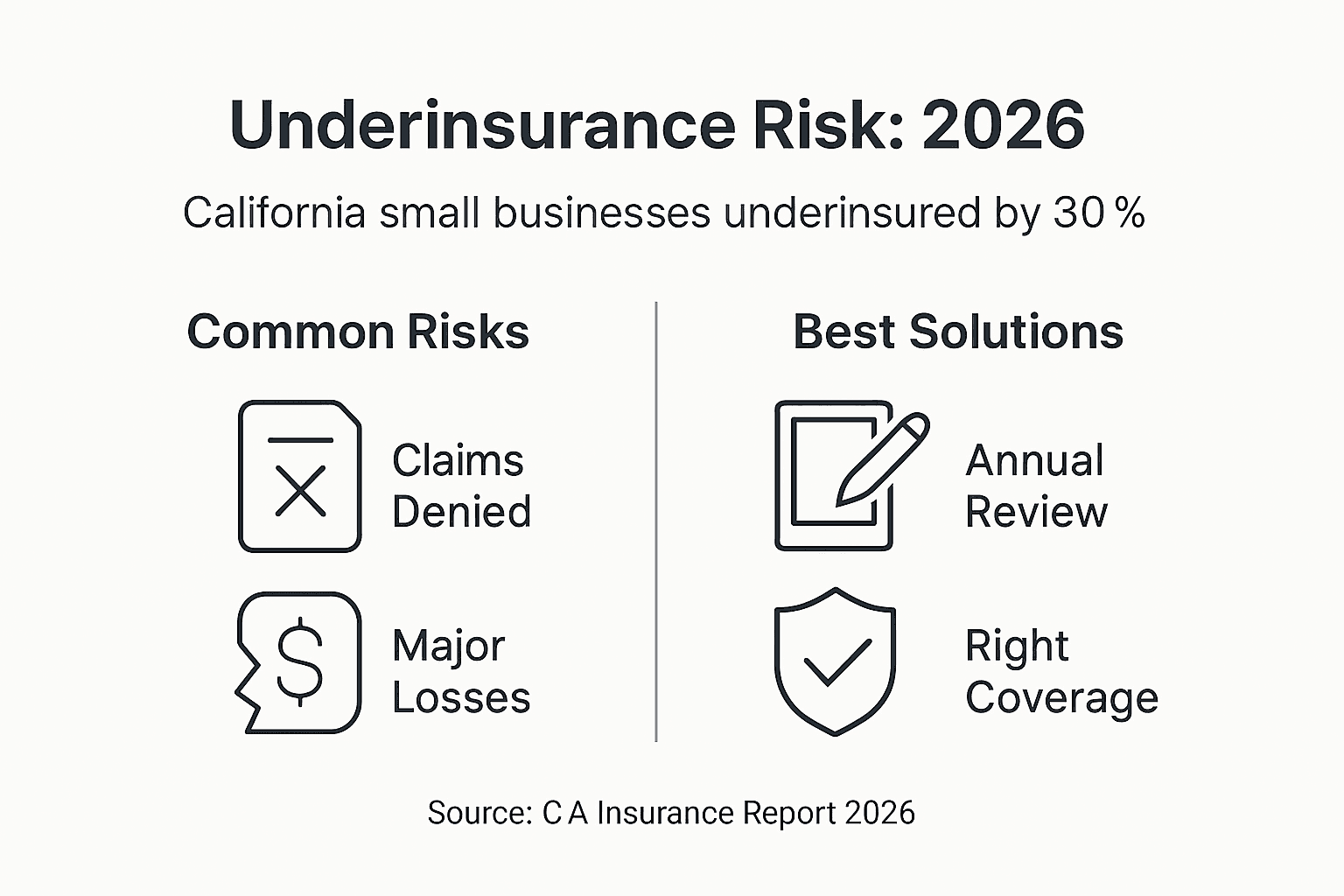
Underestimating legally mandatory coverage creates the most dangerous exposure. Some business owners delay workers’ compensation until after hiring employees, risking immediate fines and personal liability for injuries. Others incorrectly believe independent contractors eliminate the need for coverage, but misclassification triggers severe penalties. About 30% of California small businesses are underinsured, leading to costly legal exposure and uncovered claims.
Choosing coverage limits too low ranks as another costly mistake. Business owners often select minimum limits to reduce premiums, then face financial devastation when claims exceed coverage. A single serious injury claim can reach hundreds of thousands of dollars. Your liability limit should match your maximum potential loss, not your comfort with premium payments.
Failing to update insurance policies after business changes leads to claim denials and coverage gaps. You expand operations, hire more employees, purchase new equipment, or move locations without notifying your insurer. These changes alter your risk profile and may void coverage if undisclosed. Insurance companies deny claims when actual operations differ from policy applications.
Avoid these critical mistakes:
- Purchasing coverage from unlicensed agents or carriers not authorized in California
- Relying solely on online quotes without professional risk assessment
- Canceling policies before securing replacement coverage to avoid lapses
- Ignoring policy renewal notices and allowing coverage to expire
- Mixing personal and business assets without proper insurance separation
“Small business owners who conduct annual insurance reviews with their agents reduce coverage gaps by 40% and avoid claim denials that devastate unprepared businesses.”
Using unlicensed agents or providers creates severe risks beyond just inadequate coverage. Unlicensed individuals cannot legally sell insurance in California, meaning your policy may be invalid. Verify your agent’s license through the California Department of Insurance website before purchasing any coverage.
Regular policy reviews and verification of agent credentials prevent these issues. Schedule annual meetings with your insurance professional to discuss business changes, reassess risks, and adjust coverage accordingly.
Maintaining your insurance: updates, reviews, and compliance
Proper insurance maintenance requires consistent attention throughout the year, not just at renewal time. Conduct annual insurance policy reviews every 12 months minimum, scheduling meetings with your agent to evaluate coverage adequacy. Your business evolves constantly, and yesterday’s coverage may not protect today’s operations.
Document every significant business change immediately and notify your insurance carrier within 30 days. Adding employees, purchasing equipment, expanding locations, or changing services all affect your coverage needs and premium calculations. Insurers require prompt notification to maintain valid coverage and accurate pricing.
Maintain open communication channels with your insurance agent, treating them as ongoing advisors rather than transaction processors. Quality agents proactively contact clients about coverage adjustments, regulatory changes, and claim prevention strategies. Share your business plans, growth projections, and operational changes so agents can recommend timely coverage modifications.
Stay informed about changes in California insurance laws and regulations that affect your business. The state regularly updates workers’ compensation requirements, minimum coverage limits, and reporting obligations. Subscribe to updates from the California Department of Insurance and your industry associations.
Key maintenance activities include:
- Reviewing and updating business valuations annually for property coverage
- Adjusting liability limits as revenue and exposure increase
- Verifying all locations, vehicles, and employees remain properly listed
- Documenting safety improvements that may reduce premiums
- Maintaining organized records of all insurance correspondence and certificates
Pro Tip: Set quarterly calendar reminders to review your insurance needs, even between annual renewals, catching changes before they create coverage gaps or compliance issues.
Proper record keeping supports smooth claims processes and audit responses. Store current policies, certificates of insurance, claims documentation, and premium payment records in secure, accessible locations. Digital backups protect against loss during disasters that trigger claims.
Expected outcomes and benefits of proper small business insurance
Maintaining compliant, comprehensive insurance coverage delivers measurable financial and operational advantages beyond avoiding penalties. You significantly reduce legal and financial risks from lawsuits, with general liability coverage protecting personal assets from business claims. Adequate coverage means sleeping soundly knowing a customer injury or property damage claim won’t bankrupt your business.
Improved business continuity during disruptions represents another critical benefit. Business interruption insurance keeps revenue flowing when fires, natural disasters, or other covered events force temporary closures. You continue paying employees, meeting lease obligations, and maintaining customer relationships while rebuilding.
Avoiding costly fines and penalties through compliance saves substantial money and protects your business license. California workers’ compensation violations trigger fines starting at $10,000, plus potential criminal charges for willful non-compliance. State Disability Insurance penalties add thousands more in back payments and interest.
Additional benefits include:
- Access to professional claims support and legal defense from your insurance carrier
- Faster recovery processes with experienced adjusters guiding restoration
- Enhanced business credibility when bidding contracts or securing financing
- Peace of mind knowing your California business meets all insurance mandates
- Protection of personal assets from business-related legal judgments
Quality insurance coverage also improves vendor and client relationships. Many contracts require proof of insurance before engagement, and adequate limits demonstrate financial responsibility. Landlords mandate tenant liability coverage, while general contractors require subcontractor insurance meeting specific minimums.
Your insurance investment protects years of hard work building your business, ensuring one accident or disaster doesn’t erase everything you’ve created.
Secure your California small business with Jenkins Insurance Agency
Protecting your business requires more than checking compliance boxes. You need comprehensive coverage tailored to your unique operations and California’s specific requirements. Jenkins Insurance Agency specializes in business insurance throughout Santa Rosa and Sonoma County, providing personalized guidance that matches your risk profile.

Our experienced local agents understand California regulations inside and out, ensuring your policies meet every mandate while closing coverage gaps. We provide workers’ compensation, general liability, commercial auto insurance, business interruption coverage, and specialized policies for your industry. Our affiliation with Farmers Insurance gives you access to comprehensive products backed by national carrier strength with local service.
Contact Jenkins Insurance Agency today to secure coverage that protects your business, employees, and future. We build long-term relationships focused on your success, not just selling policies.
Frequently asked questions
What types of insurance are legally required for small businesses in California?
Workers’ compensation insurance is mandatory for all California employers, even with just one employee. Businesses must also participate in the State Disability Insurance program administered by the Employment Development Department. Other coverage requirements depend on your specific industry, contracts, and business structure, with many landlords and lenders mandating general liability insurance.
How can I avoid underinsurance risks for my small business?
Conduct thorough risk assessments identifying maximum potential losses, then select coverage limits matching those scenarios. Work with experienced local insurance agents who understand California-specific risks and regulations. About 30% of California small businesses face underinsurance, with uncovered claims averaging $25,000. Never choose coverage based solely on premium cost, as inadequate limits create devastating financial exposure.
What documentation do I need before applying for small business insurance in California?
Prepare your business legal structure documents and Employer Identification Number for verification. Gather detailed employee counts, payroll records by job classification, and previous insurance policies with claims history. Document your business location, including building details and security features. Complete information ensures accurate quotes and faster application processing, typically reducing timeline by one to two weeks.
Why should I work with a local insurance agent in California?
Local agents understand California’s specific regulations, regional risk factors like wildfires and earthquakes, and county-level requirements. Local insurance agencies serve 85% of small businesses in California by providing customized policies aligned with state compliance standards. Local relationships enable faster policy adjustments, personalized service, and expert guidance that prevents costly mistakes common with online-only purchases.
Recommended
- Auto Insurance for Business Owners in California – Jenkins Insurance Agency Inc.
- California Insurance Guide 2026: Save 25% with Bundling – Jenkins Insurance Agency Inc.
- Why Insure Your Business: Protecting Sonoma County Owners – Jenkins Insurance Agency Inc.
- The Best Small Business Insurance Plans in Sonoma County – Jenkins Insurance Agency Inc.