
TL;DR:
- Homeowners insurance covers risks called perils, but coverage gaps often surface after filing a claim. Most policies distinguish between open perils for structures and named perils for belongings, affecting claim outcomes. Renters insurance covers personal property and liability but does not insure the building itself, requiring tenants to seek separate coverage.
Homeowners insurance covers predefined risks called perils, and your financial protection depends entirely on which perils your specific policy includes or excludes. Most Americans carry an HO-3 policy, the industry standard for owner-occupied homes, yet many discover gaps in their coverage only after filing a claim. The risks covered by homeowners insurance fall into two broad categories: open perils (anything not explicitly excluded) for your home’s structure, and named perils (a defined list) for your personal belongings. Knowing this distinction before disaster strikes is the difference between a covered claim and an out-of-pocket loss that could cost tens of thousands of dollars.
What are the main coverage types in a homeowners policy?
A standard HO-3 policy is organized into six coverage sections, labeled A through F. Reading Coverage A and Coverage C together is vital, because open-perils protection on your dwelling can contrast sharply with named-perils limits on your belongings, and that contrast directly affects claim outcomes.
Here is what each section covers:
- Coverage A (Dwelling): Protects the physical structure of your home, including walls, roof, and attached garage, on an open-perils basis. Any cause of loss is covered unless the policy specifically excludes it.
- Coverage B (Other Structures): Covers detached structures on your property such as fences, sheds, and detached garages, typically at 10% of your dwelling coverage limit.
- Coverage C (Personal Property): Covers your furniture, electronics, clothing, and other belongings, but only for named perils on a defined list. Most HO-3 policies include 16 standard named perils for personal property.
- Coverage D (Loss of Use): Pays your additional living expenses if a covered peril makes your home uninhabitable. This includes hotel stays, meals, pet boarding, and storage costs while repairs are completed.
- Coverage E (Personal Liability): Pays for legal defense and damages if someone is injured on your property or if you accidentally damage someone else’s property.
- Coverage F (Medical Payments to Others): Covers minor medical bills for guests injured on your property, regardless of fault, typically up to $5,000.
Together, these six sections create a layered protection system. Most homeowners focus only on Coverage A, but Coverage E and F are what protect your savings when a neighbor slips on your walkway and decides to sue.
Which risks are typically covered by homeowners insurance policies?
Standard homeowners insurance covers fire, lightning, explosion, theft, vandalism, aircraft or vehicle impact, and windstorm or hail damage, though some of these come with regional and policy-specific conditions. These perils form the core of what most homeowners expect their policy to handle, and for good reason. They represent the most statistically common causes of property damage claims across the United States.
Here is a closer look at the most common covered perils:
- Fire and smoke: One of the most financially devastating perils, fire damage to both the structure and personal belongings is covered under virtually every standard policy. For Sonoma County homeowners, wildfire coverage is a particularly critical component given the region’s fire history.
- Windstorm, hail, and tornadoes: Covered in most states, though coastal states often apply separate percentage-based deductibles for hurricane damage. Percentage-based wind deductibles in coastal states can cause unexpectedly high out-of-pocket costs compared to standard flat deductibles.
- Theft and vandalism: Covers stolen property and malicious damage to your home or belongings, subject to your deductible and any sublimits on high-value items like jewelry or electronics.
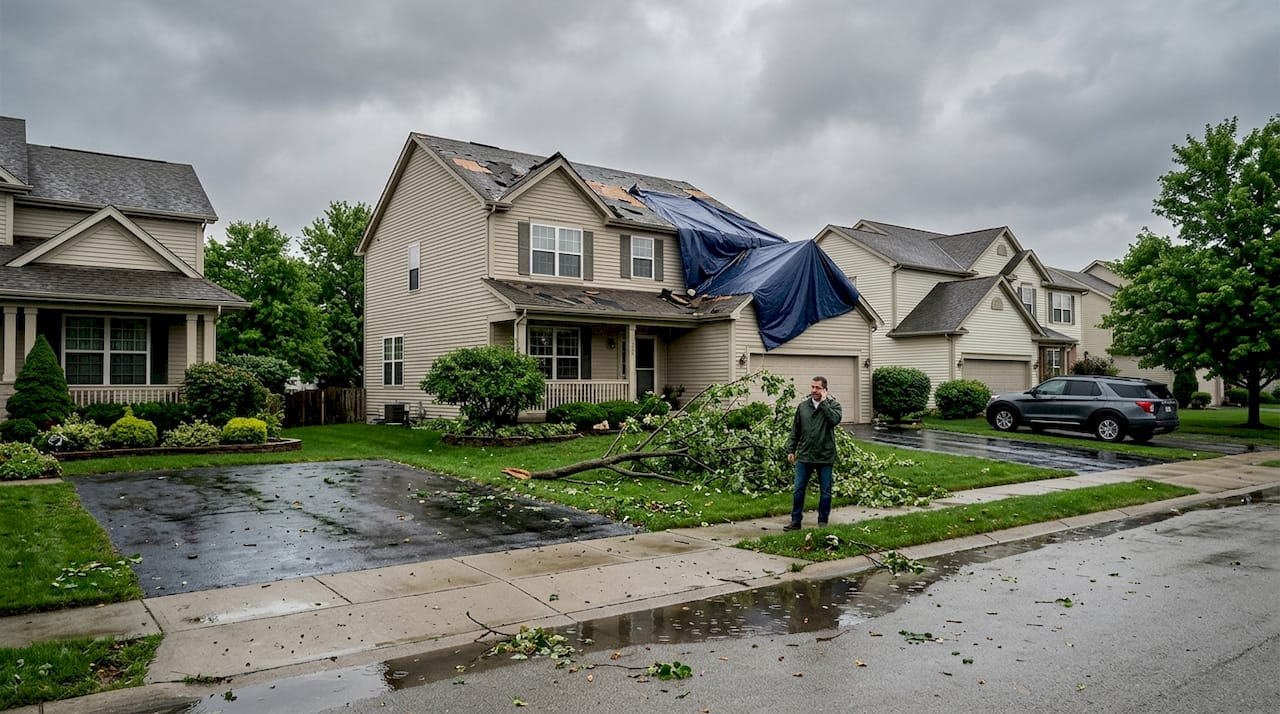
- Falling objects: Covers damage from trees, branches, or debris that fall onto your home, a more common claim than most homeowners realize after major storms.
- Sudden accidental water damage: Burst pipes, a washing machine hose that fails, or an accidental overflow from a bathtub are covered. The key word is sudden. Water damage coverage excludes gradual leaks and mold from maintenance issues, covering only sudden accidental water releases.
- Liability risks: If your dog bites a visitor or a guest breaks an arm falling down your stairs, Coverage E steps in to cover legal costs and settlements.
The open-perils structure of Coverage A means your home’s physical structure has broad protection. Your belongings, however, only qualify for a claim if the cause of loss appears on the named perils list in your policy documents.
Pro Tip: Check your policy’s declarations page to confirm whether your personal property is covered on a replacement cost basis or actual cash value basis. Actual cash value deducts depreciation, which means a five-year-old laptop worth $1,200 new might only pay out $400 after a theft claim.
What are the common exclusions in homeowners insurance coverage?
Homeowners policy exclusions are where most claim surprises happen. Understanding what your policy does not cover is just as important as knowing what it does. The Texas Department of Insurance confirms that flood damage is excluded from all standard homeowners policies and requires separate coverage through the National Flood Insurance Program (NFIP) or a private flood insurer. Critically, about 40% of flood insurance claims come from properties outside designated flood zones, meaning flood risk is not limited to waterfront homes.
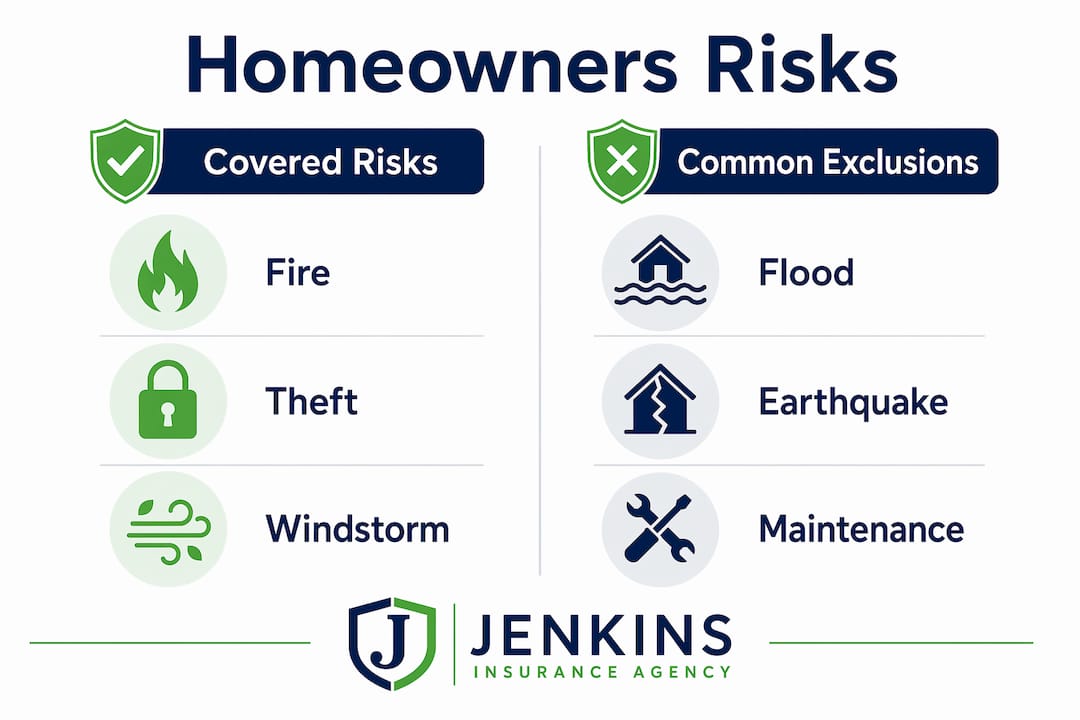
Earthquake and earth movement damage follows the same pattern. Seismic activity affects 45 states, yet standard policies exclude it entirely. California homeowners face particular exposure here, and a separate earthquake policy or endorsement through the California Earthquake Authority is the standard solution.
Other common exclusions include:
- Gradual damage and wear and tear: Slow roof deterioration, long-term water seepage, and general aging of your home are maintenance issues, not insurable events. Many claim denials result from this distinction between sudden accidental damage and gradual damage.
- Mold: Coverage is limited and often subject to sublimits of $5,000 to $10,000. Mold resulting from a covered peril like a burst pipe may be partially covered, but mold from long-term humidity or neglect is excluded.
- Sewer backup and sump pump failure: Sewer backup damage is excluded in standard policies but can be added as an endorsement. Given that sewer remediation can easily exceed $10,000, this endorsement is worth the modest annual premium.
- High-value personal property: Standard Coverage C sublimits for jewelry, fine art, firearms, and collectibles are often $1,500 or less. A scheduled personal property endorsement or floater provides full replacement value for these items.
Pro Tip: Policy exclusions apply even when an excluded peril combines with a covered one. If a windstorm damages your roof and subsequent flooding enters through that opening, the flood damage is still excluded. This concurrent causation rule catches many homeowners off guard.
| Excluded risk | Solution |
|---|---|
| Flood damage | Separate NFIP or private flood insurance policy |
| Earthquake damage | California Earthquake Authority policy or endorsement |
| Sewer backup | Sewer backup endorsement added to existing policy |
| High-value jewelry or art | Scheduled personal property floater |
| Gradual water damage | Preventive maintenance; no insurance solution available |
How does renters insurance differ in risk coverage?
Renters insurance, formally called an HO-4 policy, covers personal belongings, personal liability, and additional living expenses, but it does not cover the building structure. HO-4 renters insurance is specifically designed for tenants because the landlord’s policy insures the building itself. This is one of the most misunderstood distinctions in personal insurance. Renters often incorrectly assume their landlord’s insurance covers their personal belongings, which leads directly to underinsurance.
Key points renters should know:
- Named perils apply to belongings: Like the personal property section of an HO-3, HO-4 covers belongings only for perils on the named list, typically including fire, theft, vandalism, and sudden water damage.
- Liability coverage protects you personally: If a guest is injured in your apartment or you accidentally cause a kitchen fire that damages neighboring units, your HO-4 liability coverage responds.
- Additional living expenses are included: If a covered peril makes your rental uninhabitable, your policy pays for temporary housing and related costs while you wait for repairs.
- Attached fixtures can create gaps: Differentiating between personal property and attached fixtures matters for renters. Improvements you make to a rental, like custom shelving or upgraded lighting, may not be covered without a specific endorsement.
- Flood and earthquake exclusions still apply: The same major exclusions that affect homeowners policies apply to HO-4 policies. Renters in flood-prone or seismically active areas need separate coverage.
Renters insurance is typically one of the most affordable policies available, often under $20 per month, making the coverage gaps from going uninsured difficult to justify.
Key takeaways
Homeowners insurance protects your property and liability through six defined coverage sections, but the scope of that protection depends on whether your policy uses open-perils or named-perils rules, and which exclusions apply.
| Point | Details |
|---|---|
| Open vs. named perils | Dwelling coverage is open perils; personal property coverage is named perils only. |
| Major exclusions | Flood, earthquake, and sewer backup require separate policies or endorsements. |
| Gradual damage is not covered | Only sudden, accidental damage qualifies; maintenance issues are always excluded. |
| Renters need HO-4 policies | Landlord insurance never covers a tenant’s belongings or personal liability. |
| Review your declarations page | Confirm coverage limits, deductibles, and sublimits before a claim occurs. |
What I’ve learned from helping homeowners read their policies
I have sat across from a lot of homeowners who were confident they were fully covered, right up until they filed a claim and found out otherwise. The most common blind spot is not flood or earthquake. It is the gradual damage exclusion. A slow leak under a sink that goes unnoticed for months is a maintenance issue in the eyes of your insurer, not a covered peril. That distinction has cost homeowners I know tens of thousands of dollars in out-of-pocket repairs.
The second thing I always tell people is to look at their Coverage C sublimits before they assume their belongings are protected. A standard policy might cap jewelry claims at $1,500. If you have an engagement ring worth $8,000, that gap is real and fixable with a scheduled floater, but only if you catch it before the loss happens.
For Sonoma County homeowners specifically, the local risk profile matters. Wildfire is a named peril on most standard policies, but coverage availability and terms have shifted significantly in recent years. Knowing how your policy handles fire, smoke, and debris removal is not optional here. It is the core of what you are paying for.
My honest advice: read your declarations page once a year, map your local risks (fire, flood zone, seismic activity), and call your agent when something changes, whether that is a home renovation, a new piece of jewelry, or a change in your neighborhood’s flood zone designation. A policy review takes 20 minutes and can prevent a six-figure surprise. You can also explore how to choose homeowners insurance in California to make sure your coverage fits your specific situation.
— Jason
Get the right coverage for your home in Santa Rosa
At Jenkins Insurance Agency Inc., we help homeowners and renters throughout Sonoma County understand exactly what their policy covers and where the gaps are. We work with Farmers Insurance to offer a full range of homeowners insurance options tailored to your home’s specific risk profile, including endorsements for sewer backup, scheduled personal property, and wildfire coverage. We are a local team with real relationships in this community, and we take the time to walk you through your policy so there are no surprises at claim time.

Whether you own your home or rent, we will help you find coverage that fits your situation and your budget. Reach out to our Santa Rosa office today for a personalized policy review. You deserve to know exactly what you are protected against before you ever need to file a claim.
FAQ
What perils does a standard homeowners policy cover?
A standard HO-3 policy covers the dwelling on an open-perils basis, meaning all causes of loss are covered unless specifically excluded. Personal property is covered only for named perils, which typically include fire, theft, vandalism, windstorm, and sudden water damage.
Does homeowners insurance cover flood damage?
No. Flood damage is excluded from all standard homeowners policies and requires a separate policy through the NFIP or a private flood insurer. About 40% of flood claims come from properties outside designated flood zones, so flood risk is not limited to obvious waterfront locations.
What is the difference between open perils and named perils?
Open perils coverage protects against any cause of loss not explicitly excluded in the policy, while named perils coverage only pays for losses caused by perils specifically listed in the policy. HO-3 policies apply open perils to the dwelling structure and named perils to personal property.
Does renters insurance cover the building I live in?
No. HO-4 renters insurance covers your personal belongings, personal liability, and additional living expenses only. Your landlord’s insurance policy covers the building structure, making renters insurance specifically designed to fill the gap for tenants.
Can I add coverage for risks my policy excludes?
Yes. Endorsements and separate policies can fill most major gaps. Sewer backup coverage, scheduled personal property floaters, earthquake policies, and flood insurance are all available additions that extend protection beyond a standard homeowners policy.
Recommended
- Homeowners Insurance – Jenkins Insurance Agency Inc.
- Wildfire Insurance: What Every Sonoma County Homeowner Should Know – Jenkins Insurance Agency Inc.
- Why insurance matters for California families: protect what counts – Jenkins Insurance Agency Inc.
- How to choose homeowners insurance in California: 5 steps – Jenkins Insurance Agency Inc.