
Many Californians believe that simply having an insurance policy means they’ll be taken care of after a disaster. The reality is harder. Thousands of homeowners and business owners across the state face denied or underpaid claims every year, not because their losses aren’t real, but because they missed a step, misunderstood their coverage, or waited too long to act. In this guide, we walk you through exactly how California’s insurance claim process works, what documents you need, how to avoid being underinsured, and what to do when your insurer pushes back.
Table of Contents
- How insurance claims work in California
- Step-by-step process for filing and documenting a claim
- Common coverage gaps and how to avoid underinsurance
- Navigating disputes, denials, and special cases
- Our perspective: What most Californians miss about insurance claims
- Take the next step: Protect your property and your claims
- Frequently asked questions
Key Takeaways
| Point | Details |
|---|---|
| Know your policy | Read and keep a copy of your full insurance policy to understand what’s covered before disaster strikes. |
| Document thoroughly | Take photos, save receipts, and keep an inventory to maximize your chances of a successful insurance claim. |
| Address disputes quickly | Appeal denials, use the appraisal process, and contact regulators promptly for claim issues. |
| Avoid underinsurance | Regularly check your coverage limits to ensure you have enough protection for total losses. |
How insurance claims work in California
Now that you understand why many claims are denied or delayed, let’s break down how California’s insurance claim system is designed to work from start to finish.
Every property insurance claim starts the same way: you notify your insurer about a loss. But what happens after that notification matters just as much. California has specific consumer protections built into its insurance laws, and knowing them gives you real leverage. Insurers must acknowledge your claim within 15 days, begin an investigation promptly, and accept or deny your claim within 40 days of receiving proof of loss.
Under California law, insurers must provide a complete copy of your policy within 30 days of your request after a loss, and for disaster claims, they must also supply the Department of Insurance’s official consumer notice on key legal protections. This is something many policyholders don’t know to ask for.
Understanding the roles involved helps too. The adjuster is hired to evaluate your loss. They work for the insurer, not for you. The insurer makes the final coverage decision. And you, the policyholder, are responsible for proving your loss. That’s a critical point most people overlook.
Here’s a quick overview of the standard claim timeline in California:
| Stage | Insurer’s deadline |
|---|---|
| Acknowledge claim receipt | 15 days |
| Accept or deny claim | 40 days after proof of loss |
| Pay accepted claim | 30 days after agreement |
| Provide policy copy after loss | 30 days after request |
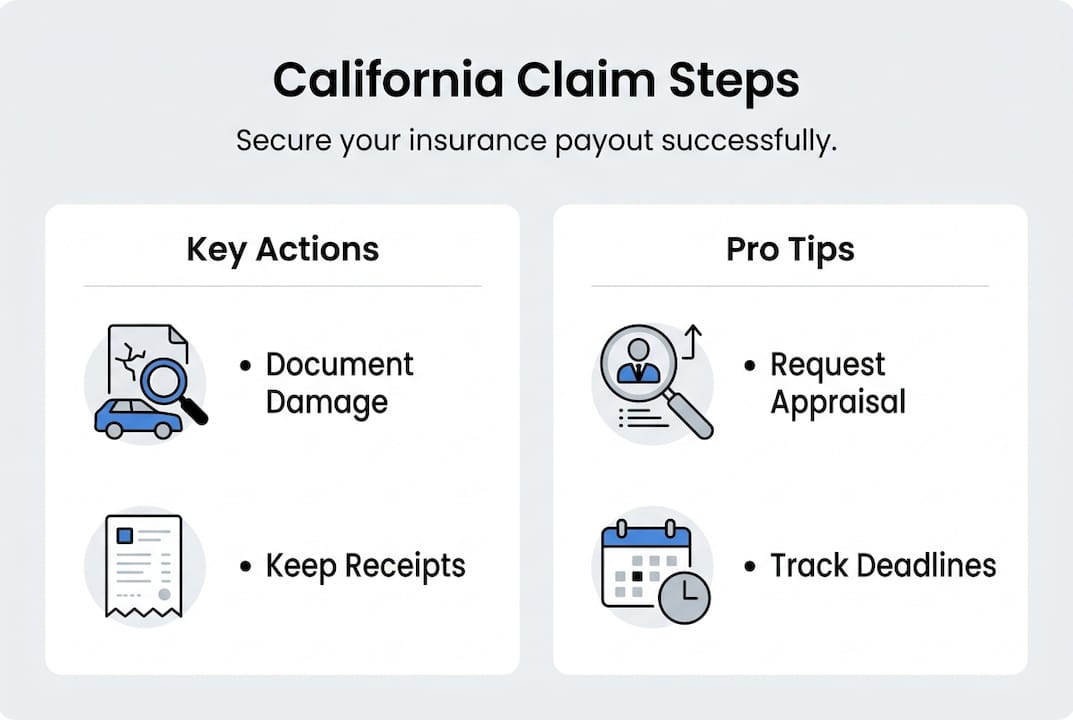
The key documents you’ll need to support your claim include:
- Your full insurance policy, including all endorsements and exclusions
- A detailed inventory of damaged or lost items
- Photos and videos taken immediately after the loss
- All written and verbal communication with your insurer
- Receipts, estimates, and contractor quotes for repairs
For a deeper look at how property policies are structured, our property insurance guide covers the key terms and protections you should know. If your loss involves fire, our wildfire insurance guide is especially relevant for Sonoma County homeowners. You can also review California insurance regulations to understand the broader legal framework.
Step-by-step process for filing and documenting a claim
With a grasp of legal basics and expectations, let’s walk through each step required to build a solid insurance claim.
Timing matters more than most people realize. Filing promptly after a loss protects you legally and gives your insurer less room to question the cause or extent of damage. Delays can raise red flags and complicate your case.
Here are the steps to follow for a well-supported claim:
- Notify your insurer immediately. Call your agent or file through your insurer’s app as soon as the loss occurs. Document the date and time of your notification.
- Photograph and video everything. Capture damage from multiple angles before any cleanup begins. This visual record is often your strongest evidence.
- Create a detailed inventory. List every damaged or destroyed item, including the approximate age, original cost, and estimated replacement value. Use receipts, bank statements, or online purchase histories to support your list.
- Do not discard damaged items. Wait until the adjuster has inspected your property before removing or replacing anything. Throwing away damaged goods can weaken your claim significantly.
- Track all additional living expenses (ALE). If you’re displaced from your home, keep every receipt for temporary housing, meals, and other costs. ALE coverage can reimburse these, but only if you document them.
- Keep a communication log. Write down every call, email, and in-person meeting with your insurer. Note the date, the name of the person you spoke with, and what was discussed.
These key steps for filing homeowners claims, including documenting damage, filing promptly, keeping ALE receipts, and preserving damaged items, are consistently cited as the difference between approved and denied claims.
Pro Tip: Create a dedicated folder, physical or digital, for every document related to your claim. Label it by date and category. If your claim ever goes to dispute, organized records can make or break your case.
For guidance on the full process from coverage selection to claims, visit our property insurance steps resource. The California disaster insurance guidance from the Department of Insurance is also a practical reference to keep handy.
Common coverage gaps and how to avoid underinsurance
Once you’ve filed your claim, you’ll need to be confident your coverage is adequate. But many Californians discover too late that they’re underinsured.
The two most common payout types in property insurance are actual cash value (ACV) and replacement cost value (RCV). ACV pays what your damaged property is worth today, after depreciation. RCV pays what it would cost to replace that property with a new equivalent. The difference can be enormous, especially after a major loss.
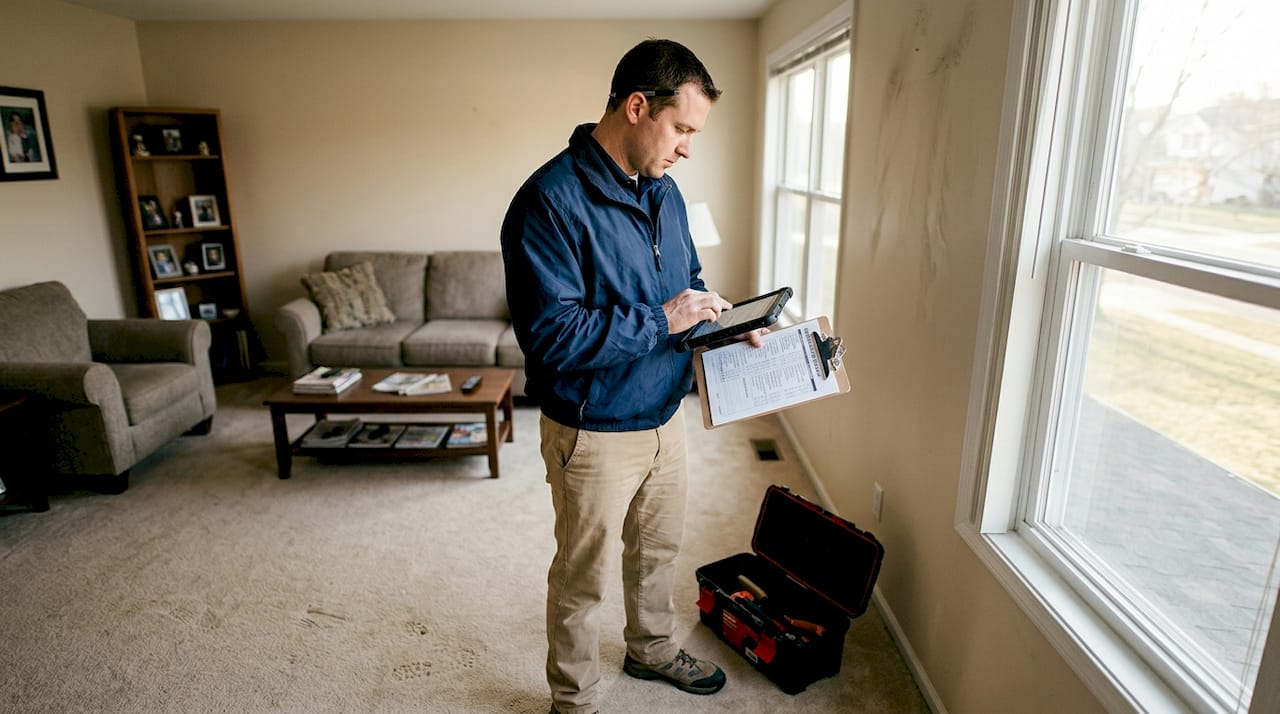
Here’s a simple comparison:
| Coverage type | What you receive | Best for |
|---|---|---|
| Actual cash value | Depreciated market value | Lower premiums, older property |
| Replacement cost value | Cost to rebuild or replace new | Full recovery after major losses |
| Extended replacement cost | RCV plus a percentage buffer | High-risk areas like wildfire zones |
Underinsurance is one of the most common problems in total loss situations. Underinsurance is common in total losses, and the gap between what you’re owed and what your policy pays often comes down to outdated coverage limits, inflation in construction costs, or misunderstood exclusions.
Here’s how to protect yourself:
- Review your policy limits every year, especially after renovations or major purchases
- Ask your agent about inflation guard endorsements, which automatically adjust your coverage as costs rise
- Understand your policy’s sub-limits, which cap payouts for specific categories like jewelry, electronics, or detached structures
- Know what’s excluded, including flood, earthquake, and certain mold situations, which typically require separate policies
If you and your insurer disagree on the value of your loss, California law allows you to request an appraisal process. Each side hires an independent appraiser, and a neutral umpire resolves the dispute. It’s a formal but effective tool. Also note that the statute of limitations for property claims in California is two years, so don’t let disputes drag on without taking action.
Pro Tip: Ask your agent to run a replacement cost estimator for your home every two to three years. Construction costs in California have risen sharply, and your original coverage limit may no longer reflect what it would actually cost to rebuild.
For a full breakdown of policy types, visit our guide on types of home insurance for Santa Rosa homeowners.
Navigating disputes, denials, and special cases
Even well-prepared claims may be delayed, partially paid, or disputed, especially with complex disasters and coverage details.
When a claim is denied, most policyholders give up. That’s a costly mistake. Property appeals overturn 40 to 60 percent of denials when taken to external review, yet fewer than 1 percent of denied claims are ever appealed. That gap represents real money left on the table by people who didn’t know they had options.
Here’s what to do if your claim is denied or underpaid:
- Request a written explanation. Insurers must tell you exactly why your claim was denied. Get it in writing.
- Review your policy carefully. Compare the denial reason against your actual policy language. Adjusters make mistakes.
- File a formal appeal. Submit a written appeal with supporting documentation, including photos, contractor estimates, and your communication log.
- Use the appraisal process. For valuation disputes, this is often faster than litigation.
- Contact the California Department of Insurance. If you believe your insurer is acting in bad faith, file a complaint at 800-927-4357.
Smoke and ash damage deserves special attention. After California wildfires, many homeowners in nearby areas assume their home is fine because it didn’t burn. That’s often wrong.
According to Bulletin 2025-7 from the California Department of Insurance, smoke damage from wildfires is typically covered under standard homeowners policies if properly investigated. Insurers cannot deny these claims without conducting a fair and thorough investigation.
Hidden damage from smoke, ash, and mold in partial fire losses is a major source of underpaid claims. Document it carefully and push back if your insurer dismisses it without inspection. For more on disputing insurance claims, our property guide walks through your rights in detail. You can also access the California disaster claims help resource directly from the Department of Insurance.
Our perspective: What most Californians miss about insurance claims
By now, you know the processes and pitfalls. But based on our experience, there’s a deeper reality most guides don’t address.
Having insurance is not the same as being protected. We’ve seen clients in Sonoma County with solid-looking policies walk away from disasters with far less than they expected, not because their insurer was dishonest, but because their coverage hadn’t been updated in years, their documentation was thin, or they accepted the first settlement offer without question.
The uncomfortable truth is that insurers are not your advocate. They have financial incentives to settle claims quickly and at the lowest defensible amount. That doesn’t make them villains. It makes them businesses. And it means you need to be your own advocate.
Our most successful clients do three things consistently: they keep detailed records before a loss occurs, they challenge valuations they don’t agree with, and they know their appeal rights. The policyholders who struggle are the ones who assumed their agent or adjuster would handle everything. Explore real-life claim lessons to see how preparation changes outcomes. Being proactive is the single most important thing you can do.
Take the next step: Protect your property and your claims
Navigating insurance claims is stressful enough without doing it alone. The good news is you don’t have to.

At Jenkins Insurance Agency Inc., our local team in Santa Rosa is here to help you review your current coverage, identify gaps before they become problems, and support you through the claims process when the unexpected happens. Whether you’re a homeowner looking at your homeowners insurance options, a business owner exploring business insurance solutions, or someone in a wildfire-prone area who needs to understand their wildfire insurance information, we’re ready to help. Reach out to us today and let’s make sure your coverage actually works when you need it most.
Frequently asked questions
How long does an insurance company have to pay a claim in California?
Insurers must pay accepted claims within 30 days of reaching an agreement on the amount, though complex cases requiring additional documentation may take longer.
What if my claim is denied or underpaid?
You can request a written explanation, appeal with supporting evidence, use the appraisal process for valuation disputes, and contact the California Department of Insurance. External appeals overturn 40 to 60 percent of denied claims, so it’s always worth pursuing.
Does insurance cover smoke and ash damage from wildfires?
Yes, smoke damage is covered under most standard homeowners policies if it’s properly documented and investigated. Insurers are required to conduct a fair investigation before denying these claims.
What is the difference between actual cash value and replacement cost?
Actual cash value pays the depreciated worth of your property today, while replacement cost pays what it would cost to buy or rebuild a new equivalent. Underinsurance often stems from not understanding this difference when selecting a policy.
How can I get help with my insurance claim?
Contact your local agent for personalized guidance or reach the California Department of Insurance directly. You can file a complaint or get claims help by calling the DOI hotline at 800-927-4357.
Recommended
- California Insurance Guide 2026: Save 25% with Bundling – Jenkins Insurance Agency Inc.
- Insurance regulation in California: essential guide – Jenkins Insurance Agency Inc.
- Small business insurance California 2026: 30% underinsured – Jenkins Insurance Agency Inc.
- Unlock California auto insurance discounts to save more – Jenkins Insurance Agency Inc.