
TL;DR:
- The insurance claim process involves reporting losses promptly, documenting damages thoroughly, and working with adjusters to ensure a fair settlement. Legally mandated deadlines for acknowledgment, investigation, and payment protect policyholders from delays and denial. Success depends on careful documentation, understanding coverage, and timely responses to maximize claim outcomes.
The insurance claim process is the formal procedure by which a policyholder requests compensation for a covered loss under their policy. Approval is never automatic. Insurers verify timely reporting, valid coverage, and proper documentation before paying out. Claims are contractual rights, not favors granted at the insurer’s discretion. Understanding each phase of the process, from the First Notice of Loss through final settlement, gives you the best chance at a fair outcome. At Jenkinsinsuranceagencyinc, we help clients in Santa Rosa and throughout Sonoma County get through this process with confidence.
What are the essential steps in the insurance claim process?
The claim process follows a clear sequence. Skipping or rushing any step creates problems that are hard to fix later.
Step 1: Report the loss immediately
File your First Notice of Loss within 24–72 hours for auto and home incidents. That window is not a suggestion. Late reporting is one of the most common reasons insurers complicate or deny claims. Call your insurer or agent as soon as the scene is safe and any emergency needs are handled.

Step 2: Document everything before cleanup
Photograph all damage from multiple angles before moving anything. Collect police reports, medical records, contractor assessments, and receipts for any emergency expenses. This documentation is your evidence. Repairs made before documentation is complete can leave you with no proof of the original damage.
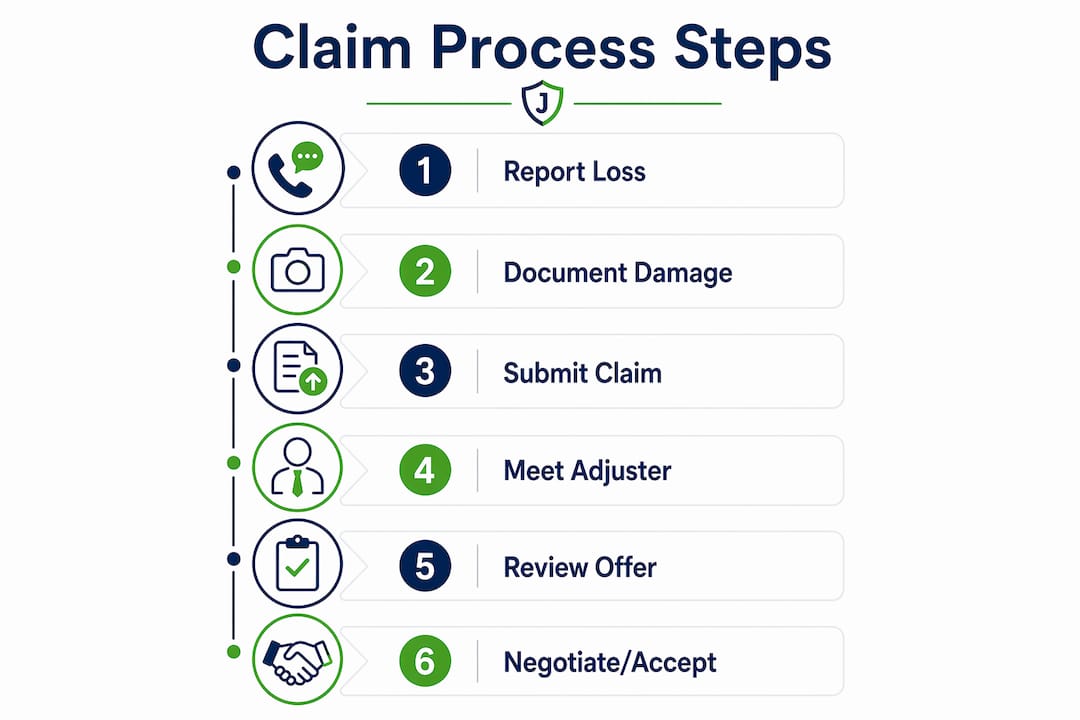
Step 3: Submit your formal claim and Proof of Loss
Your insurer will send claim forms to complete. Many policies also require a Proof of Loss, which is a sworn written statement describing the damage and its estimated value. Missing the Proof of Loss deadline can void your entire claim. Deadlines are often around 60 days after the incident, so confirm the exact date with your insurer in writing.
Step 4: Work with the adjuster
An insurer’s adjuster investigates your claim by reviewing damage reports, visiting the site, and comparing losses against your policy terms. The adjuster’s findings directly inform whether your claim is approved, partially approved, or denied. Be present during the inspection when possible and take your own notes.
Step 5: Review the settlement offer
Once the investigation is complete, the insurer presents a settlement offer. Read it carefully. Confirm whether the payout is based on Actual Cash Value or Replacement Cost coverage. Replacement Cost typically pays more because it does not deduct for depreciation, while Actual Cash Value accounts for the age and wear of your property.
Step 6: Accept, negotiate, or appeal
If the offer is fair, accept it. If it is low, gather independent contractor estimates and pre-repair photos to support a counteroffer. You have the right to push back with evidence.
Pro Tip: Get at least two independent repair estimates before accepting any settlement offer. Insurers often start low, and documented contractor quotes give you a concrete basis for negotiation.
What timelines and legal requirements govern the claim process?
State insurance regulations set firm deadlines that insurers must follow. Knowing these timelines protects you from unnecessary delays.
Key regulatory requirements include:
- Acknowledgment window: Most states require insurers to acknowledge a new claim within 10–15 business days of receiving it. That acknowledgment should come in writing.
- Coverage decision timeline: Insurers generally must make a coverage decision within 15–45 days after receiving all required documentation. The clock starts when your file is complete, not when you first call.
- Proof of Loss deadline: This sworn statement is typically due within 60 days of the loss. Missing it can void your claim entirely, even if you filed the initial notice on time.
- Payment after approval: Once a claim is approved, most states require payment within a set number of days, often 5–15 business days.
- Bad faith protections: Unreasonable delay by insurers can be deemed bad faith under state law. In some states, policyholders can recover damages beyond the original claim value if the insurer stalls without cause.
Document every communication with your insurer. Keep a log with dates, names, and summaries of each call or email. If deadlines pass without response, follow up in writing and reference the specific regulatory requirement.
Stat to know: Insurers are typically required to acknowledge claims within 10–15 business days and issue a coverage decision within 15–45 days of receiving complete documentation. Missing these windows without cause can trigger bad faith liability.
How can policyholders maximize their claim outcomes?
Getting a fair settlement requires more than just filing paperwork. The choices you make in the first 48 hours after a loss shape the entire outcome.
The most important steps to protect your payout:
- Document before you repair. Take photos and video of all damage before any cleanup or temporary fixes. Courts and adjusters rely on pre-repair evidence. Once you clean up, that evidence is gone.
- Understand your coverage type. Actual Cash Value pays what your property was worth at the time of loss, after depreciation. Replacement Cost pays what it costs to replace the item new. If your policy uses Actual Cash Value, expect a lower payout on older items.
- Mitigate further damage. You are contractually required to take reasonable steps to prevent additional loss. Board up broken windows, tarp a damaged roof, or shut off a leaking water line. Failing to do so can result in denial of any damage that occurred after the initial incident.
- Submit independent estimates. Challenge low settlement offers by providing independent contractor quotes and detailed photos. This is your strongest negotiation tool.
- Weigh the cost of filing. Filing a claim can trigger premium increases at renewal, sometimes lasting two to three years. If the damage is only slightly above your deductible, paying out of pocket may cost less over time.
- Understand subrogation. If your insurer pays your claim and then recovers funds from the at-fault party, you may be entitled to deductible reimbursement through subrogation. Cooperate fully with your insurer’s recovery efforts to stay eligible.
Pro Tip: Keep a dedicated folder, physical or digital, for every document related to your claim. Include photos, receipts, contractor quotes, and a written log of every conversation with your insurer. This record is your best defense if a dispute arises.
What causes claim denials and how do you fight them?
Claim denials are common, and most are reversible with the right response. Understanding why denials happen is the first step to addressing them.
Common reasons for denial include:
- Late notification. Reporting a loss outside the required window gives the insurer grounds to deny the claim entirely.
- Coverage exclusions. Your policy may exclude specific causes of loss, such as flood damage under a standard homeowners policy. Reviewing your policy exclusions before filing helps you understand what is and is not covered.
- Insufficient documentation. Claims without photos, receipts, or supporting reports are easy to dispute. Adjusters need evidence to approve payment.
- Disputed cause of loss. The insurer may argue the damage resulted from a cause not covered by your policy, such as wear and tear instead of a storm.
When you receive a denial, request the insurer’s written explanation immediately. Review it against your actual policy language. Then file an internal appeal with supporting evidence: photos, contractor reports, and any expert opinions that contradict the insurer’s findings.
If the internal appeal fails, most states offer external review options. For health insurance, state-mandated external medical review is a legal right in many cases. For property claims, you can request mediation or file a complaint with your state’s Department of Insurance. Persistent, documented follow-up resolves most disputes faster than waiting.
Key Takeaways
Filing a claim correctly from the start is the single most effective way to protect your payout and avoid delays.
| Point | Details |
|---|---|
| Report losses within 24–72 hours | Late notification is a leading cause of claim denial; file your First Notice of Loss immediately. |
| Document before any repairs | Photos and receipts taken before cleanup are your strongest evidence during adjuster review. |
| Know your coverage type | Replacement Cost pays more than Actual Cash Value; confirm which applies before accepting a settlement. |
| Meet all legal deadlines | Proof of Loss is typically due within 60 days; missing it can void your claim even after initial filing. |
| Weigh filing against premium impact | Claims can raise your premium for two to three years; compare total cost before deciding to file. |
What I’ve learned after years of watching claims go wrong
The biggest mistake I see policyholders make is treating a claim like a customer service request. It is not. It is a legal process with deadlines, documentation requirements, and financial consequences that can follow you for years.
The second mistake is cleaning up before documenting. People want to fix things fast, which is completely understandable. But the moment you throw away damaged materials or patch a wall before photographing it, you lose your most persuasive evidence. Adjusters work from what they can see. Give them something to work with.
I also want to be direct about premium impact. Filing a claim for a small loss can cost you more in rate increases over the next two to three years than the payout was worth. That math is uncomfortable, but it is real. We always encourage clients to call us before filing, not after, so we can help them think through whether filing actually makes financial sense in their situation.
The policyholders who get the best outcomes are the ones who treat the process seriously from day one. They report promptly, document thoroughly, meet every deadline, and push back with evidence when an offer is low. That is not aggressive. That is just knowing your rights.
If a claim becomes complex, get help early. Waiting until you are deep in a dispute to ask for guidance makes everything harder.
— Jason
How Jenkinsinsuranceagencyinc supports you through a claim
Filing a claim is stressful enough without doing it alone. Jenkinsinsuranceagencyinc works with homeowners, drivers, and business owners across Santa Rosa and Sonoma County to make the process as clear as possible.

Whether you need help understanding your homeowners insurance coverage before a loss occurs or guidance on what to do after one, our local team is here with real answers. We are affiliated with Farmers Insurance, which gives our clients access to a wide range of policy options backed by a recognized national carrier. We also help clients review their auto insurance coverage and understand what their policy actually covers before they need to file. Reach out to us directly. We know your name, not just your policy number.
FAQ
What documents are needed for an insurance claim?
Most claims require photos of the damage, a completed claim form, a Proof of Loss statement, and supporting records such as police reports, receipts, or contractor estimates. Your insurer will specify any additional requirements after you file your First Notice of Loss.
How long does the insurance claim process take?
Insurers must typically acknowledge a claim within 10–15 business days and issue a coverage decision within 15–45 days of receiving complete documentation. Simple claims often resolve faster; complex or disputed claims can take longer.
Can a denied claim be appealed?
Yes. Request the insurer’s written denial explanation, then file an internal appeal with supporting evidence such as photos and independent contractor reports. If the internal appeal fails, you can escalate to your state’s Department of Insurance or request mediation.
Does filing a claim raise my insurance premium?
Filing a claim, especially for at-fault auto damage or home losses, can increase your premium at renewal and the effect can last two to three years. Compare the payout against your deductible and potential rate increase before deciding to file.
What is subrogation and how does it affect my deductible?
Subrogation is the process by which your insurer recovers claim costs from the at-fault party’s insurer. If the recovery is successful, you may receive your deductible back. Full cooperation with your insurer during the recovery process is required to stay eligible.
Recommended
- California Business Insurance Workflow: 2026 Guide – Jenkins Insurance Agency Inc.
- Step-by-step guide to business insurance in California 2026 – Jenkins Insurance Agency Inc.
- Step-by-Step Guide to Property Insurance California – Jenkins Insurance Agency Inc.
- Auto Insurance for Families: Your 2026 Coverage Guide – Jenkins Insurance Agency Inc.