
Getting ready to purchase your first car in Santa Rosa comes with plenty of excitement, but sorting through auto insurance options can feel overwhelming for many California drivers. With state law requiring auto insurance on any vehicle you operate or park on public roads, making sense of coverage types, costs, and local requirements is crucial. This guide will break down each step so you can confidently choose protection that truly fits your vehicle, driving habits, and budget.
Table of Contents
- Step 1: Assess Your Vehicle And Driving Needs
- Step 2: Gather Essential Personal And Local Information
- Step 3: Explore Available Auto Insurance Coverage Options
- Step 4: Compare Local Policy Quotes And Discounts
- Step 5: Verify Coverage Details And Confirm Your Final Choice
Quick Summary
| Essential Insight | Explanation |
|---|---|
| 1. Assess vehicle and driving needs | Evaluate vehicle type, value, and driving habits to determine appropriate coverage levels. |
| 2. Gather personal and local information | Compile documentation like identification, vehicle details, and residence information to streamline the process. |
| 3. Understand various coverage types | Familiarize yourself with liability, collision, and comprehensive insurance options to select the best fit. |
| 4. Compare local policy quotes effectively | Analyze premium rates, deductibles, and coverage limits across quotes to find optimal balance between cost and protection. |
| 5. Verify final policy details thoroughly | Confirm coverage limits, deductibles, and all named drivers to ensure your policy meets needs and legal requirements. |
Step 1: Assess your vehicle and driving needs
Choosing the right auto insurance starts with understanding your unique vehicle and driving profile. This crucial first step helps California drivers determine exactly what coverage they need to stay protected on the road.
Begin by carefully evaluating your vehicle’s characteristics and your personal driving habits. The California Department of Motor Vehicles specifies minimum insurance requirements, but your ideal coverage goes beyond those basic standards. Consider these key factors:
- Vehicle type: Is it a new car, used vehicle, sports car, or family sedan?
- Vehicle value: Higher-value vehicles typically require more comprehensive coverage
- Annual mileage: Do you commute long distances or drive occasionally?
- Driving history: Recent accidents or traffic violations can impact insurance needs
Your insurance strategy should balance protection and affordability. A federal study on auto insurance highlights how local factors like urban density and traffic patterns influence insurance options. Analyze your specific situation to find the right coverage level.

Here’s a summary of how different vehicle and driver profiles can impact insurance coverage needs:
| Vehicle/Driver Profile | Typical Coverage Recommendation | Why This Coverage Matters |
|---|---|---|
| New or high-value car | Comprehensive, collision, full liability | Protects investment and financial risk |
| Older, low-value car | Basic liability, optional collision | Focus on legal compliance, reduced cost |
| Frequent commuter | Higher liability, possibly uninsured | Increased risk exposure on road |
| Occasional driver | Minimum liability, limited extras | Lower risk, modest protection |
| Drivers with accident history | Higher liability, more coverage | Offsets greater chance of claims |
Remember that minimum liability coverage might not provide sufficient protection in all scenarios. Carefully assess your personal risk factors and potential financial exposure when selecting insurance.
Pro tip: Request insurance quotes for multiple coverage levels to understand how different options impact your monthly premium and overall protection.
Step 2: Gather essential personal and local information
After assessing your vehicle and driving needs, the next critical step is collecting all necessary personal and local information to streamline your auto insurance selection process. This detailed preparation will help you navigate California’s insurance landscape more effectively.
Start by compiling a comprehensive personal profile that insurance providers will require. The California DMV mandates specific documentation for insurance verification. Your information gathering should include:
- Personal identification: Driver’s license number and expiration date
- Vehicle details: Current registration documents
- Driving history: Record of accidents, violations, and claims
- Residence information: Proof of current address
Next, research local insurance conditions specific to your California county. The California Low Cost Automobile Insurance program highlights how regional factors dramatically influence insurance options. Different counties have unique premium rates, eligibility standards, and regulatory environments that can significantly impact your coverage choices.
Thorough documentation preparation can save you time and potentially reduce your insurance costs by presenting a clear, low-risk profile to insurers.
Additionally, collect financial documents that might qualify you for special insurance programs or discounts. Income verification, employment details, and credit information can help insurance providers assess your risk level and potentially offer more competitive rates.
Pro tip: Create a digital folder with all necessary documents scanned and organized to streamline your insurance application process and make comparisons easier.
Step 3: Explore available auto insurance coverage options
Navigating California’s auto insurance landscape requires understanding the various coverage types that protect you beyond basic requirements. Your goal is to find a comprehensive insurance package that balances protection and affordability.
California offers multiple insurance options to meet different driver needs. The California DMV outlines acceptable insurance types that go far beyond simple liability coverage. Understanding these options will help you make an informed decision:
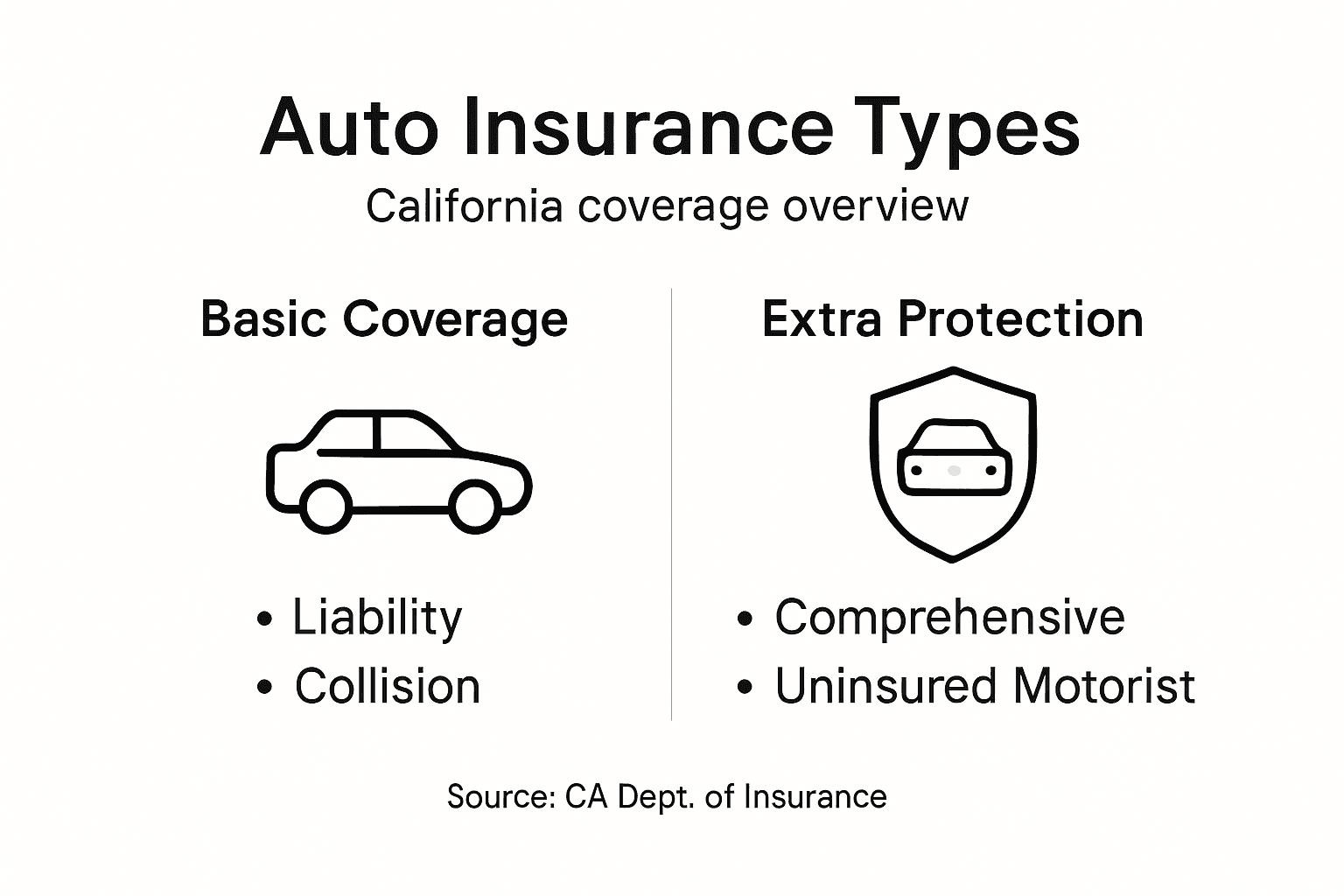
- Liability Coverage: Mandatory minimum protection for injury and property damage
- Comprehensive Coverage: Protects against non-collision incidents like theft, natural disasters
- Collision Coverage: Repairs your vehicle after accidents with other vehicles or objects
- Uninsured/Underinsured Motorist Coverage: Protects you if hit by a driver without adequate insurance
Not all insurance policies are created equal. Your unique driving profile determines the most appropriate coverage level.
For income-qualified drivers, the California Low Cost Automobile Insurance program provides specialized liability coverage options. This program helps ensure that even budget-conscious drivers can meet state insurance requirements while maintaining meaningful protection.
Consider your personal risk factors, vehicle value, and financial situation when selecting coverage. Some drivers might need robust protection, while others can opt for more basic plans. Your goal is finding a policy that provides adequate security without overextending your budget.
Compare key differences among popular California auto insurance coverage types:
| Coverage Type | What It Covers | Commonly Needed For | Typical Cost Impact |
|---|---|---|---|
| Liability | Injuries, property damage | All drivers (required) | Most affordable option |
| Comprehensive | Non-collision incidents | New/valuable vehicles | Adds moderate premium |
| Collision | Vehicle damage in accidents | Drivers with new cars | Increases monthly rate |
| Uninsured Motorist | Damages from uninsured drivers | High-risk locations | Slightly raises premium |
Pro tip: Compare at least three different insurance quotes to understand the range of coverage options and pricing in your specific California county.
Step 4: Compare local policy quotes and discounts
Comparing auto insurance quotes is more than just finding the lowest price. It’s about discovering the right balance of coverage, cost, and protection tailored to your specific California driving profile.
California offers multiple resources to help you navigate insurance comparisons. The California Department of Insurance Automobile Insurance Comparison Tool enables residents to evaluate rates across different scenarios and coverage levels. When comparing quotes, focus on these key elements:
- Base Premium Rates: Total cost of the policy
- Coverage Limits: Maximum protection amounts for different scenarios
- Deductible Options: Out-of-pocket expenses before insurance kicks in
- Potential Discounts: Reduced rates for safe driving, multiple policies, or vehicle safety features
Your location within California significantly impacts insurance pricing. Rates can vary dramatically between counties and even neighborhoods.
The California Low Cost Automobile Insurance program provides additional opportunities for budget-conscious drivers to find affordable coverage. Premium rates are designed to reflect local market conditions, giving you more precise pricing based on your specific county and driving history.
Don’t just look at the monthly premium. Evaluate the total value of the policy, including coverage depth, customer service reputation, and claim response times. A slightly higher premium might offer substantially better protection and peace of mind.
Pro tip: Request quotes during different times of the year, as insurance rates can fluctuate seasonally and insurers often have varying promotional periods.
Step 5: Verify coverage details and confirm your final choice
The final step in choosing auto insurance is meticulously reviewing your selected policy to ensure it meets all your protection needs and legal requirements. This careful verification protects you from potential future complications.
Utilize the California DMV Insurance Verification tool to confirm your policy meets state standards. When reviewing your documentation, focus on these critical elements:
- Policy Effective Dates: Confirm exact start and end dates
- Coverage Limits: Double-check maximum protection amounts
- Deductible Amounts: Verify out-of-pocket expenses
- Named Drivers: Ensure all regular vehicle operators are listed
Your insurance policy is a legal contract. Reading the fine print isn’t optional – it’s essential protection.
The California Department of Insurance consumer protection services recommend thoroughly verifying your agent’s licensing and the insurance company’s reputation. This extra step provides additional peace of mind and ensures you’re working with a legitimate, trustworthy provider.
Don’t rush through the final review. Take time to understand each section of your policy, ask questions about anything unclear, and make sure the coverage truly matches your initial assessment and needs.
Pro tip: Request a complete copy of your policy documents and store digital and physical backups in separate, secure locations for quick access during emergencies.
Secure the Right Auto Insurance Coverage for California Drivers Today
Choosing the best auto insurance in California can feel overwhelming with all the coverage options, local factors, and legal requirements involved. This article highlighted how important it is to carefully assess your vehicle type, driving habits, and local insurance conditions to find a policy that truly fits your needs. Many drivers hesitate because they worry about finding affordable coverage without sacrificing protection or understanding all the fine print.
At Jenkins Insurance Agency Inc., we understand those challenges and provide personalized support to help you navigate them with confidence. Our local expertise in Santa Rosa and throughout Sonoma County means we know exactly how regional rates and programs like the California Low Cost Automobile Insurance program affect your options. We work closely with you to tailor coverage that balances liability limits, collision, and comprehensive protection while keeping your budget in mind.
Take the next step toward peace of mind by getting expert guidance on your California auto insurance needs. Visit our Uncategorized – Jenkins Insurance Agency Inc. page to explore customized solutions designed specifically for you.

Don’t wait until an accident or uninsured motorist claim leaves you vulnerable. Contact Jenkins Insurance Agency Inc. today at https://jenkinsinsuranceagencyinc.com to receive honest advice and competitive quotes tailored to your unique driving profile. Protect your vehicle, your finances, and your future now.
Frequently Asked Questions
What factors should I consider when assessing my vehicle and driving needs for auto insurance?
To choose the right auto insurance, evaluate your vehicle type, its value, your annual mileage, and your driving history. Begin by listing these characteristics so you can better understand the coverage required for your specific situation.
How can I ensure I have all the necessary personal information when selecting auto insurance?
Gather your driver’s license number, registration documents, and details about your driving history. Organize these documents in a digital folder to streamline the application process and make comparisons easier.
What types of auto insurance coverage are available for California residents?
California offers several coverage types, including liability coverage, comprehensive coverage, collision coverage, and uninsured/underinsured motorist coverage. Review each option based on your vehicle value and personal risk factors to choose the best mix of protection.
How do I compare auto insurance quotes effectively?
To compare auto insurance quotes, focus on base premium rates, coverage limits, deductibles, and available discounts. Request quotes from at least three different providers to understand the coverage options and pricing relative to your specific needs.
What should I verify in my chosen auto insurance policy before finalizing it?
Before finalizing your auto insurance policy, check the policy effective dates, coverage limits, deductible amounts, and named drivers. Take the time to read through the fine print to ensure it aligns with your assessment and provides adequate protection.
Can I qualify for discounts on my auto insurance coverage in California?
Yes, many insurance providers offer discounts for safe driving, bundling policies, or having vehicle safety features. Inquire about potential discounts when requesting quotes to reduce your premium by as much as 20%.
Recommended
- What’s the Difference Between Full Coverage and Liability Auto Insurance? – Jenkins Insurance Agency Inc.
- Auto Insurance – Jenkins Insurance Agency Inc.
- The Best Small Business Insurance Plans in Sonoma County – Jenkins Insurance Agency Inc.
- Blog – Jenkins Insurance Agency Inc.
- Car Accidents | Serendib Law Firm