
TL;DR:
- Standard HO-3 policies exclude earthquake, flood, and mudslide coverage, requiring separate policies.
- Supplemental coverage for earthquake, flood, and earth movement is essential due to Sonoma County’s risks.
- Regular policy reviews and mitigation efforts are crucial to maintain adequate protection and save costs.
Living in Sonoma County means loving rolling hills, wine country, and tight-knit communities. It also means facing real risks that most California homeowners never deal with at the same scale. Wildfires, earthquakes, and seasonal floods can turn a beautiful home into a costly disaster overnight. A standard HO-3 policy covers fire, wind, theft, liability, and additional living expenses, but it leaves out earthquake, flood, and mudslide coverage entirely. That gap matters enormously here. This checklist walks you through every key step, from building your base policy to reviewing it each year, so nothing critical slips through the cracks.
Table of Contents
- The essentials: What your base policy should cover
- Don’t forget: Essential supplemental coverages
- Checklist for home insurance renewal (annual review)
- Comparing your options: FAIR Plan vs. private market
- Our take: What most Sonoma homeowners miss about insurance risk
- Next steps: Get personal guidance with your Sonoma County policy
- Frequently asked questions
Key Takeaways
| Point | Details |
|---|---|
| Standard policy gaps | Typical policies miss earthquake and flood risks requiring extra coverage. |
| Annual policy review | Update coverage every year for rebuild costs, valuables, and local hazards. |
| Private vs. FAIR Plan | Mitigation steps and updates help you qualify for better private market insurance. |
The essentials: What your base policy should cover
Now that you see why a clear list is essential, let’s start with the must-have coverage. Most Sonoma County homeowners begin with an HO-3 policy, which is the standard form for owner-occupied homes in California. Think of it as your insurance foundation. Everything else builds on top of it.
An HO-3 policy basics typically protects your home against what insurers call “open perils,” meaning it covers most causes of damage unless specifically excluded. Here’s what a solid base policy includes:
- Dwelling coverage: Pays to repair or rebuild your home’s structure after covered damage.
- Personal property: Replaces belongings like furniture, electronics, and clothing.
- Liability protection: Covers legal costs if someone is injured on your property.
- Additional Living Expenses (ALE): Pays for temporary housing and living costs if your home becomes uninhabitable.
- Other structures: Covers detached garages, fences, and sheds.
Here’s what it does NOT cover, and this is critical for Sonoma County residents:
Standard homeowner policies exclude earthquake, flood, and mudslide damage. Each of these requires a separate policy, and in Sonoma County, all three are genuine risks worth taking seriously.
Understanding types of home insurance helps you see where your base policy ends and where supplemental coverage must begin. Many homeowners assume that because fire is covered, wildfire damage is fully handled. That’s often not the case when it comes to the full scope of losses, especially debris removal, code upgrades, and extended rebuilding timelines.
Pro Tip: Check that your ALE limit is at least 20% of your dwelling coverage. Sonoma County rental rates are high, and a lengthy rebuild could leave you covering the gap out of pocket if your ALE cap is too low.
Don’t forget: Essential supplemental coverages
With a solid core policy analyzed, the next priority is closing the gaps most Sonoma County residents can’t afford to overlook. Standard policies leave out three major categories of risk that are especially relevant here.
-
Earthquake insurance: Sonoma County sits near several active fault lines. A separate earthquake policy through the California Earthquake Authority (CEA) or a private carrier is the only way to protect against quake damage. CEA earthquake policies typically run $800 to $3,000 per year, with deductibles ranging from 5% to 15% of your dwelling value.
-
Flood insurance: Heavy rains and atmospheric river events have flooded neighborhoods across Sonoma County in recent years. Flood insurance through the National Flood Insurance Program (NFIP) or a private carrier is separate from your home policy and must be purchased in advance.
-
Mudslide and earth movement coverage: Properties near hillsides or creek beds face elevated landslide risk. Standard policies exclude earth movement entirely, so a separate endorsement or policy is needed.
-
Extended replacement cost coverage: If a wildfire destroys multiple homes in your area at once, construction costs surge. Extended replacement cost coverage adds a buffer, typically 25% to 50% above your dwelling limit, to cover those spikes.
Wildfire risk is the defining factor for most Sonoma County homeowners. Reviewing your wildfire insurance guide can clarify exactly what additional protection you need and whether your current policy’s fire coverage is truly adequate. The state’s reforms are also making choosing supplemental coverage more navigable than it was just a few years ago.
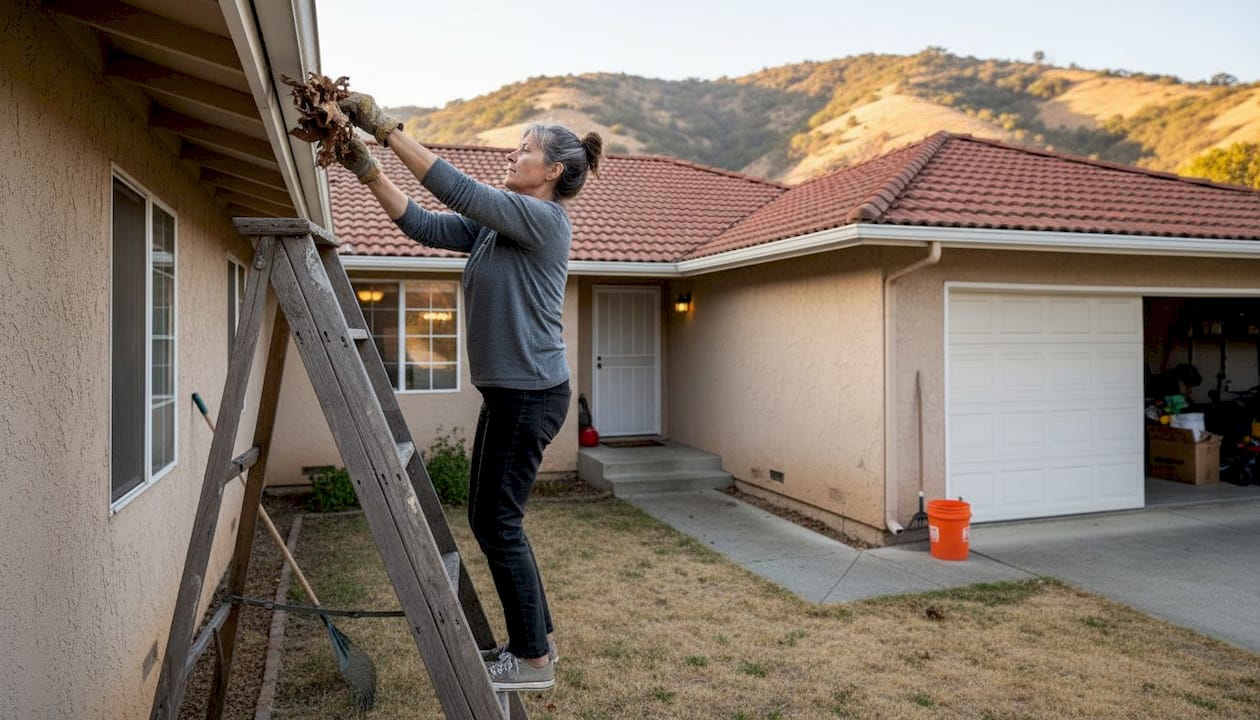
Pro Tip: If your property is within a quarter mile of a creek, canyon, or hillside, treat flood and mudslide coverage as non-negotiable. Many homeowners discover this gap only after filing a claim that gets denied.
Checklist for home insurance renewal (annual review)
Protection isn’t set-and-forget. Here’s how to make sure your policy matches your real-world needs each year. Life changes fast, and so do home values, construction costs, and local fire risk maps.
- Update your rebuild value. Construction costs in Sonoma County have risen sharply. Make sure your dwelling coverage reflects the current cost to rebuild, not what you paid for the home.
- Report major renovations. Added a new kitchen, deck, or ADU (accessory dwelling unit)? These improvements increase your home’s value and must be disclosed to your insurer.
- Inventory new valuables. Jewelry, art, musical instruments, and high-end electronics often exceed standard personal property limits. A scheduled endorsement protects individual high-value items.
- Review your fire risk classification. Cal Fire updates Hazard Severity Zone maps regularly. Your home may have shifted into a higher-risk category, affecting both coverage requirements and available carriers.
- Check your mitigation steps. Have you cleared defensible space or installed ember-resistant vents? Mitigation work is now a key factor in whether private carriers will write your policy under CDI reforms.
| Annual review task | Recommended timing |
|---|---|
| Rebuild cost update | Every January |
| Renovation disclosure | Within 30 days of completion |
| Valuables inventory | Each spring |
| Fire risk zone check | After Cal Fire map updates |
| Mitigation documentation | Before renewal date |
Following an insurance process checklist each year keeps you organized and reduces the chance of an unpleasant surprise during a claim. You can also look at insurance bundling tips and property insurance review steps to strengthen your overall approach.
Pro Tip: Trigger a mid-year policy review any time you spend more than $10,000 on home improvements. That’s often the threshold where coverage gaps start to open up.
Comparing your options: FAIR Plan vs. private market
After checking your renewal process, you’ll likely face a common Sonoma dilemma: which insurer is right for you? For many homeowners in high-risk areas, this comes down to two paths.
When the FAIR Plan makes sense:
- Your home is in a high-risk fire zone and private carriers have non-renewed your policy.
- You’ve been denied by multiple private insurers despite mitigation efforts.
- You need a temporary backstop while working toward private market eligibility.
When private market coverage is the better fit:
- Your home has documented mitigation measures (defensible space, fire-resistant roofing).
- Your property is in a moderate-risk zone with competitive carrier options.
- You want broader coverage limits, lower deductibles, or bundling discounts.
| Feature | FAIR Plan | Private market |
|---|---|---|
| Coverage breadth | Limited | Broad |
| Average cost | Higher | Varies, often lower |
| Deductible options | Limited | Flexible |
| Wildfire coverage | Basic | Extended options available |
| Availability | Last resort | Requires qualification |
The FAIR Plan is expensive and limited, but it serves as a necessary backstop for homeowners who have exhausted private options. That said, mitigation work is now the clearest path back to private market access, thanks to CDI reforms reshaping how California insurers calculate risk.
Understanding California insurance regulation helps you see how these rules affect your options. Staying informed on insurance compliance strategies can also help you position your home more favorably with private carriers.
Our take: What most Sonoma homeowners miss about insurance risk
We’ve worked with homeowners all across Sonoma County, and we see the same pattern again and again. People spend a lot of energy comparing premiums and not enough time on documentation, communication, and mitigation.
Here’s the uncomfortable truth: a claim that goes sideways is rarely because the policy was wrong. It’s usually because the homeowner couldn’t prove the value of what was lost, didn’t report a renovation, or didn’t know their risk zone had changed.
CDI reforms have made mitigation a real policy tool, not just a safety tip. Defensible space and home hardening now directly influence whether you qualify for the private market and what you’ll pay. That changes the whole game. Treating your annual insurance claim strategies review as an active, hands-on process, rather than a quick signature, is what separates homeowners who recover well from those who don’t. We believe a good insurance checklist isn’t just paperwork. It’s your best financial defense.
Next steps: Get personal guidance with your Sonoma County policy
Sonoma County’s insurance landscape is genuinely complex. Wildfire risk, CDI reforms, FAIR Plan limitations, and rising rebuild costs all interact in ways that make a one-size-fits-all policy impossible.

At Jenkins Insurance Agency, we work with homeowners right here in Santa Rosa and throughout Sonoma County. We’ll help you work through every item on this checklist, find the right coverage for your unique situation, and make sure nothing important gets missed. Whether you need a homeowners insurance review or want local expert advice on which supplemental coverages fit your home, we’re ready to help. Reach out to us today and let’s go through your policy together.
Frequently asked questions
What coverages are standard in a California HO-3 home policy?
A California HO-3 policy typically covers fire, wind, theft, liability, and additional living expenses, but excludes earthquake, flood, and mudslide damage.
Do I need earthquake insurance in Sonoma County?
Yes. Earthquake coverage is not included in standard policies and requires a separate purchase, with CEA premiums ranging from $800 to $3,000 per year depending on your home and location.
How can I reduce my home insurance costs in Sonoma County?
Completing mitigation measures like defensible space clearing and home hardening can improve your eligibility for private carriers and lower your premium, and bundling policies can save up to 25%.
What’s the difference between the FAIR Plan and a private insurer?
The FAIR Plan offers limited coverage at higher costs and serves as a last resort, while private insurers provide broader coverage options for homes that meet eligibility requirements.
Recommended
- Step-by-Step Guide to Property Insurance California – Jenkins Insurance Agency Inc.
- Wildfire Insurance: What Every Sonoma County Homeowner Should Know – Jenkins Insurance Agency Inc.
- Why Insure Your Business: Protecting Sonoma County Owners – Jenkins Insurance Agency Inc.
- 7 Types of Home Insurance Every Santa Rosa Homeowner Should Know – Jenkins Insurance Agency Inc.
- 7 Smart Steps for a Home Safety Checklist Every Buyer Needs | ReVroom