
Wildfires and earthquakes are real concerns for Sonoma County homeowners who want to protect their property. Understanding your home’s structure and evaluating local hazards like wildfire zones or flood risk can make a big difference in securing the right coverage. This guide makes it easier to identify essential policies, compare trusted insurance providers, and customize protection for Sonoma County’s unique risks. Whether you are new to homeownership or updating your policy, clear steps help you safeguard your assets with confidence.
Table of Contents
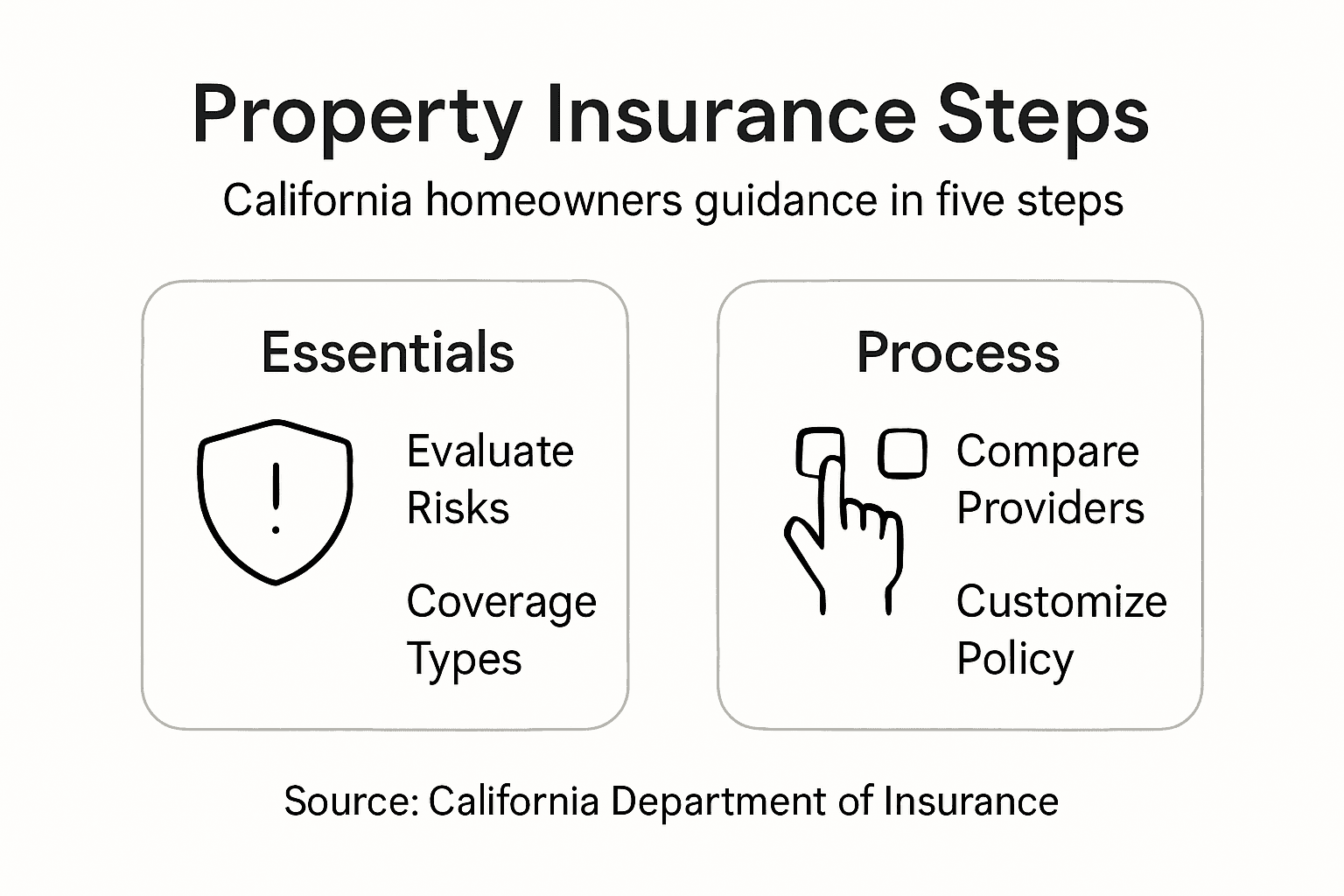
- Step 1: Evaluate Your Home And Local Risks
- Step 2: Identify Essential Property Coverage Types
- Step 3: Compare And Select Insurance Providers
- Step 4: Customize Your Policy For Sonoma County Needs
- Step 5: Verify Coverage And Complete Documentation
Quick Summary
| Key Insight | Explanation |
|---|---|
| 1. Assess Unique Risks | Evaluate your home’s specific vulnerabilities and local hazards for tailored insurance coverage. |
| 2. Understand Coverage Types | Ensure you include essential protections like dwelling, personal property, and liability insurance in your policy. |
| 3. Compare Insurance Providers | Research multiple insurers focusing on financial strength, customer service, and claims history before choosing one. |
| 4. Customize for Local Needs | Tailor your policy to Sonoma County’s specific risks such as wildfire protection and local building codes. |
| 5. Verify and Document Coverage | Rigorously check your policy details and maintain organized documentation to streamline the claims process. |
Step 1: Evaluate your home and local risks
Assessing the specific risks for your home is crucial in determining appropriate property insurance coverage in California. This process involves understanding your property’s unique characteristics and the potential natural hazards in your local area.
Begin by conducting a comprehensive evaluation of your home’s structural details and potential vulnerabilities. Understanding local regulatory inspection requirements helps identify potential risk factors that impact insurance considerations. Key areas to assess include:
- Home construction materials and age
- Proximity to wildfire zones
- Earthquake fault line locations
- Local flood plain designations
- Building code compliance status
California’s diverse geography means homeowners face multiple potential natural disaster risks. Coastal properties might require different coverage compared to inland mountain homes. Properties in Sonoma County, for instance, have specific wildfire risk considerations that directly impact insurance needs.
Here’s how disaster risks differ by California property location:
| Location Type | Common Risks | Insurance Considerations |
|---|---|---|
| Coastal properties | Flood, landslide | Higher flood premiums, windstorm add-ons |
| Inland urban homes | Earthquake, fire | Require quake and fire endorsements |
| Mountain communities | Wildfire, storm | Wildfire protection, evacuation support |
| Valley/flood plain | Flood, subsidence | Mandatory flood insurance, exclusions |
Accurate risk assessment is the foundation of selecting appropriate property insurance coverage.
When evaluating risks, consider hiring a professional home inspector who understands California’s specific environmental challenges. These experts can provide detailed insights into potential structural weaknesses and location-specific hazards that standard assessments might miss.
Pro tip: Request a comprehensive risk assessment report from local insurance agencies to get the most accurate understanding of your property’s unique insurance requirements.
Step 2: Identify essential property coverage types
Understanding the right property insurance coverage is crucial for protecting your home and assets in California. Standard homeowners insurance policies provide comprehensive protection that goes beyond simple property replacement.
The core coverage types every California homeowner should consider include:
- Dwelling protection: Covers the physical structure of your home
- Personal property coverage: Protects belongings inside the home
- Liability protection: Shields you from potential lawsuits
- Additional living expenses: Supports temporary housing if your home becomes uninhabitable
California homeowners face unique challenges due to the state’s diverse geography and natural disaster risks. Specialized coverage options become critical, particularly for properties in wildfire-prone regions or earthquake zones. Optional endorsements can provide extra protection for:
- Unattached structures like garages or sheds
- Sewer backup incidents
- Building code upgrade expenses
- Personal property replacement costs
Not all insurance policies are created equal – understand your specific coverage needs.
Consider working with a local insurance agent who understands Sonoma County’s specific environmental risks. They can help you customize a policy that provides comprehensive protection tailored to your property’s unique characteristics.

Pro tip: Review and update your property insurance coverage annually to ensure your policy reflects current home value and potential new risks.
Step 3: Compare and select insurance providers
Choosing the right insurance provider requires careful research and strategic comparison. State insurance department resources offer valuable tools for evaluating potential insurers and making an informed decision.
When comparing property insurance providers in California, focus on these critical evaluation criteria:
- Financial strength: Assess the company’s ability to pay claims
- Customer service ratings: Check independent review platforms
- Claims processing history: Investigate speed and fairness of past claims
- Premium costs: Compare pricing across multiple providers
- Coverage flexibility: Evaluate options for customization
The California insurance market includes several top-tier providers with strong market presence. National insurance companies like State Farm, Allstate, and Farmers Insurance dominate the landscape, but local agencies often provide more personalized service.
Here’s a comparison between national and local insurance providers in California:
| Provider Type | Strengths | Limitations |
|---|---|---|
| National | Strong financial backing, broad reach | Less local risk insight |
| Local | Custom regional coverage options | Smaller claim handling resources |
| Independent | Tailored advice, multiple carrier access | Varies by agency, in-person focus |
Not all insurance providers are equal – dig deeper than surface-level marketing.
Local Sonoma County insurance agents can offer unique insights into regional risks and provide tailored recommendations that national companies might overlook. They understand the specific environmental challenges facing homeowners in this region and can craft more nuanced coverage solutions.
Pro tip: Request detailed quotes from at least three different providers and compare their coverage details, not just the price tag.
Step 4: Customize your policy for Sonoma County needs
Customizing your property insurance requires understanding the unique environmental challenges specific to Sonoma County. Local county resources provide critical guidance on tailoring insurance policies to address regional risks and regulatory requirements.
Key customization considerations for Sonoma County homeowners include:
- Wildfire protection: Specialized coverage for fire-prone areas
- Loss of use coverage: Financial support during evacuation scenarios
- Emergency rebuilding provisions: Compliance with local building codes
- Natural disaster endorsements: Additional protection for flooding and earthquake risks
Building code compliance becomes crucial when developing your insurance strategy. Sonoma County’s stringent regulatory environment means homeowners must carefully align their policies with local permit requirements and development standards.
Your insurance policy should be as unique as your property’s specific risks and location.
Working with local insurance agents who understand Sonoma County’s nuanced landscape can help you design a comprehensive policy that goes beyond standard coverage. These professionals can identify subtle risk factors that national providers might overlook.
Pro tip: Schedule an annual policy review with a local agent to ensure your coverage evolves alongside changing county regulations and environmental conditions.
Step 5: Verify coverage and complete documentation
Completing your property insurance process requires meticulous attention to detail and careful review of all documentation. California Department of Insurance resources offer critical guidance for homeowners verifying their insurance coverage.
Key steps for comprehensive documentation verification include:
- Review policy declarations: Confirm all coverage details
- Check coverage limits: Ensure adequate protection for your property
- Examine endorsements: Understand additional protections
- Identify policy exclusions: Know potential coverage gaps
- Validate contact information: Confirm all personal details are current
Careful documentation review helps prevent unexpected surprises during claim processes. Homeowners should pay special attention to specific clauses that might impact their coverage, particularly those related to regional risks in Sonoma County.
Every detail matters when protecting your most valuable asset.
Request a comprehensive walkthrough with your insurance agent to ensure you fully understand each aspect of your policy. This personal consultation can reveal nuanced coverage options that might not be immediately apparent in written documentation.
Pro tip: Create a digital and physical backup of your complete insurance documentation, storing copies in separate secure locations for easy access during emergencies.
Protect Your California Home with Expert Insurance Guidance
Navigating the complexities of property insurance in California can be overwhelming, especially when facing challenges like wildfire risks, earthquake endorsements, and evolving county regulations. If you want to ensure your coverage truly matches your home’s unique risks and location, it’s essential to work with trusted local professionals who understand Sonoma County and beyond.

At Jenkins Insurance Agency Inc., we specialize in personalized homeowners insurance solutions tailored to California’s distinct environment. We help you evaluate your property risks, customize your policy with critical wildfire and earthquake protections, and provide ongoing support to keep your coverage up to date. Don’t leave your most valuable asset exposed—take action now and protect your home with confidence.
Explore our comprehensive Uncategorized insurance services and connect directly through our landing page for expert advice customized to your needs. Visit Jenkins Insurance Agency Inc. today to secure your home and peace of mind.
Frequently Asked Questions
How do I evaluate the risks for my property in California?
To evaluate your property risks in California, assess the home’s structural details and local hazards such as wildfire zones, earthquake fault lines, and flood areas. Consider hiring a professional home inspector to identify vulnerabilities that could impact your insurance needs.
What types of coverage should I include in my property insurance policy?
Include essential coverage types such as dwelling protection, personal property coverage, liability protection, and additional living expenses in your property insurance policy. Customize your coverage with specialized endorsements based on your home’s unique risks, like wildfire or earthquake protections.
How can I compare different property insurance providers effectively?
To compare property insurance providers, evaluate their financial strength, customer service ratings, claims processing history, and premium costs. Gather quotes from at least three different providers to ensure you compare both price and detailed coverage options accurately.
What should I include when customizing my property insurance for Sonoma County?
When customizing your insurance for Sonoma County, consider wildfire protection, loss of use coverage during evacuations, and local building code compliance. Make sure your policy addresses specific regional risks to ensure comprehensive protection for your property.
How do I verify that my property insurance coverage is adequate?
Verify your insurance coverage by reviewing your policy declarations to confirm that all details, coverage limits, and endorsements are correct. Conduct this review annually to ensure it reflects your property’s current value and any changes in hazards or local regulations.
What steps should I take to ensure my insurance documentation is complete?
Ensure your insurance documentation is complete by thoroughly checking your coverage limits, policy exclusions, and personal information. Create both digital and physical backups of your documentation for easy access during emergencies and schedule regular consultations with your insurance agent to stay updated.
Recommended
- 7 Types of Home Insurance Every Santa Rosa Homeowner Should Know – Jenkins Insurance Agency Inc.
- 7 Essential Business Property Insurance Types Explained – Jenkins Insurance Agency Inc.
- Wildfire Insurance: What Every Sonoma County Homeowner Should Know – Jenkins Insurance Agency Inc.
- The Top 7 Insurance Policies Every Small Business Owner Needs – Jenkins Insurance Agency Inc.
- Insurance Claim Process Guide For Maximizing Settlements