
Protecting your home or small business in Santa Rosa means more than just filing paperwork. With local risks like wildfires, earthquakes, and fast-changing regulations, it can be overwhelming to know how much coverage is truly enough—or what options will actually keep you secure when disaster strikes. This step-by-step guide gives you a clear path to assess your needs, compare plans, and choose the best policy for real peace of mind right here in Santa Rosa.
Table of Contents
- Step 1: Assess Your Insurance Needs In Santa Rosa
- Step 2: Compare Local Insurance Options And Coverage
- Step 3: Select The Best Policy For Your Situation
- Step 4: Verify And Maintain Your Insurance Coverage
Quick Summary
| Key Insight | Explanation |
|---|---|
| 1. Assess Your Insurance Needs Thoroughly | Identify your assets and local risks to determine essential coverage without overinsuring or being under-protected. |
| 2. Compare Multiple Insurance Options | Gather and analyze information on various providers to find the best coverage at a budget-friendly price. |
| 3. Select a Tailored Policy | Choose a policy that fits your life and budget, ensuring it adequately covers your specific assets and risks. |
| 4. Verify and Maintain Active Coverage | Regularly check your insurance status and adjust your policy according to life changes to keep it effective. |
| 5. Consult Local Agents for Insight | Utilize local agents who understand regional risks and discounts to help you navigate insurance options effectively. |
Step 1: Assess Your Insurance Needs in Santa Rosa
Figuring out what insurance coverage you actually need is the foundation of protecting your home, vehicle, and business. This step helps you understand your unique risk factors and financial situation so you don’t end up over-insured or, worse, under-protected.
Start by listing your assets. What do you own that would be financially devastating to lose? For homeowners, this means your house, garage, shed, landscaping, and everything inside. For vehicle owners, think about your car, truck, or motorcycle. Small business owners should include equipment, inventory, and liability exposure.
Next, consider your local Santa Rosa hazards. The region faces specific risks like wildfires, earthquakes, and severe weather. These aren’t abstract concerns. They directly affect which coverage types matter most for your situation. Understanding local insurance recovery resources can help you identify coverage gaps specific to your area.

Here’s a summary of common Santa Rosa risks and why they matter for insurance choices:
| Local Hazard | Financial Impact | Coverage to Consider |
|---|---|---|
| Wildfires | Total property loss risk | Home, additional living expense |
| Earthquakes | Major structural repairs | Earthquake rider or separate policy |
| Severe weather | Roof, siding, or auto damage | Comprehensive auto and home |
| Liability exposure | Costly legal actions | Umbrella, business liability |
Evaluate your financial situation honestly:
- How much could you pay out of pocket if something happened tomorrow?
- What would happen to your family or business if you lost your home or vehicle?
- Do you have dependents relying on your income?
- What existing policies do you already have?
Think about your lifestyle too. Do you run a home-based business? Do you have a rental property? Do you have young drivers? Each of these changes your insurance picture.
Your insurance needs aren’t the same as your neighbor’s needs, even if you live on the same street.
Consider reviewing foundational insurance guidance that outlines different policy types and how they fit your financial security. This gives you a framework before diving into specific coverage options.
Pro tip: Write down your assets and their approximate replacement cost, then note any recent losses or close calls you’ve experienced. Bring this list when you talk with a local insurance agent, as it saves time and ensures you don’t forget important details.
Step 2: Compare Local Insurance Options and Coverage
Now that you know what you need, it’s time to see what’s actually available in Santa Rosa. Comparing your options helps you find the best coverage at a price that works for your budget without sacrificing protection.
Start by gathering information on different providers. Look at what each company offers for the specific coverage types you identified in Step 1. Don’t just compare price. Compare deductibles, limits, discounts, and customer service ratings too. A lower premium isn’t worth it if you’ll struggle to get claims paid when you need help.
Make a simple comparison chart. List the providers down the left side and the coverage types across the top. Fill in the monthly cost, deductible, coverage limit, and any exclusions for each option. This visual layout makes it easy to spot differences at a glance.
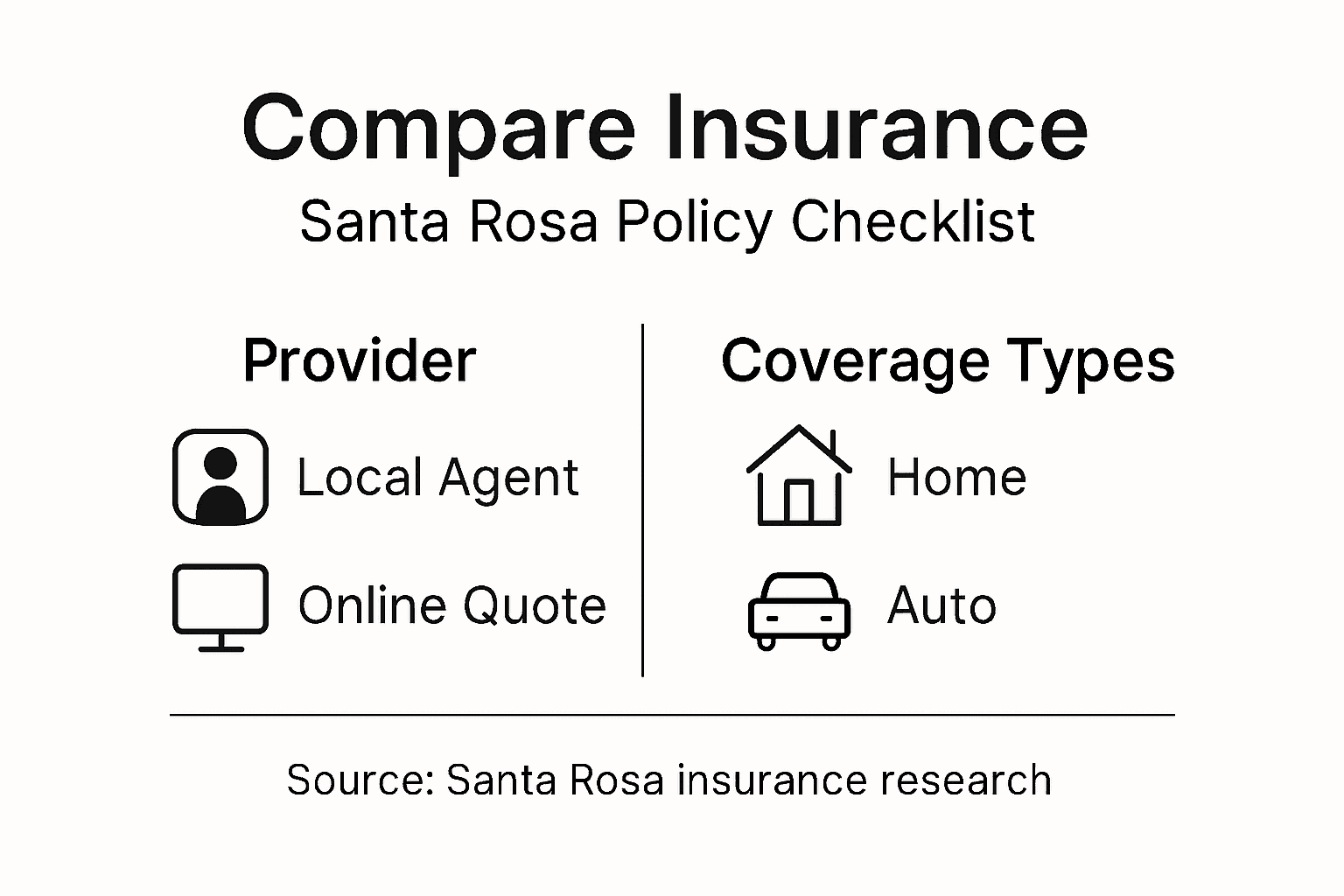
Consider what local agents bring to the table. A local agent knows Santa Rosa’s specific risks, which coverage gaps matter most, and which companies actually handle claims well in your area. They can explain why a certain policy costs more or what hidden benefits you might miss online.
Key factors to compare:
This table outlines the main differences when comparing insurance options locally:
| Comparison Factor | Why It Matters | What to Ask Providers |
|---|---|---|
| Monthly premium | Impacts affordability | What discounts apply to me? |
| Deductible | Affects out-of-pocket costs | How does deductible alter rates? |
| Company reputation | Claims service and reliability | What is your claims response time? |
| Local agent advantages | Personal support, expertise | How do you handle local claims? |
- Monthly or annual premium costs
- Deductibles (what you pay before insurance kicks in)
- Coverage limits and what’s actually protected
- Available discounts (bundling, safety features, loyalty)
- Company reputation for paying claims
- Local customer service availability
A local insurance agent who understands your unique situation can often find discounts you’d miss on your own.
Research shows that comparing available insurance options across different providers helps you understand what coverage is actually accessible in your area. The same principle applies whether you’re looking at health insurance or property and casualty coverage.
Look at bundling options too. Many companies offer discounts when you combine home and auto policies. You might also find savings through professional memberships, safety features in your home, or paying your premium upfront.
Pro tip: Request quotes from at least three different providers, and bring your comparison chart to a local agent consultation. They can explain why certain coverages cost more and identify discounts you qualify for based on your specific situation.
Step 3: Select the Best Policy for Your Situation
You’re down to the final decision. This step is about choosing the specific policy that actually fits your life, not just picking the cheapest option or the one with the most coverage.
Start by evaluating what matters most to you. Is affordability your priority, or do you want maximum protection? Can you handle a higher deductible to lower your monthly payment? Do you need specific riders or add-ons? Your answers shape which policy is truly best.
Review the exclusions carefully. These are the situations insurance will not cover. Some exclusions are standard, but others vary by company. A policy might seem cheap until you realize it doesn’t cover something you assumed was protected.
Check the coverage limits on each option. A policy with a low limit saves money upfront but leaves you exposed if something major happens. Balance your budget with realistic protection. Understanding how to evaluate coverage limits and deductibles ensures you’re making an informed choice based on your actual risk.
Key questions to answer:
- Does this policy cover my specific situation and assets?
- Can I afford the premium every month without struggling?
- Will I be able to pay the deductible if I need to file a claim?
- Does the company have a good reputation for claims handling?
- Are there any riders or add-ons I should consider?
Think about the long term too. Your needs change over time. A policy that works perfectly now might need adjustments in two years. Choose a provider with good customer service so updating your coverage is easy when life shifts.
The best policy is the one you’ll actually keep and maintain because it fits your budget and gives you real peace of mind.
Consider asking about bundling discounts one more time. Many customers leave money on the table by not combining policies with one provider. Even if you ultimately choose different companies, it’s worth confirming you’re getting the best rate.
Once you’ve narrowed it down, take a few days before making your final decision. Sleep on it. Does it still feel right? If yes, you’re ready to move forward.
Pro tip: Before signing anything, call the insurance company directly and ask if there are any additional discounts or adjustments they can offer based on your specific situation. Many companies have flexibility on their standard rates, and a simple phone call could save you hundreds annually.
Step 4: Verify and Maintain Your Insurance Coverage
Getting insurance is just the beginning. The real work is keeping it active, accurate, and ready to actually protect you when you need it. This step ensures your coverage stays valid and aligned with your life.
Start by verifying your coverage is active. Check your policy documents right after enrollment. Look for your policy number, effective date, coverage limits, and deductible. Contact your insurance company directly to confirm they have your correct contact information and that your first payment posted successfully.
Create a simple system for tracking your policies. Keep all documents in one place, either a physical folder or a digital file. Include your policy number, agent contact information, renewal dates, and coverage details. When renewal time comes, you’ll know exactly what you have.
Review your coverage annually. Your needs change. A new vehicle, a home renovation, starting a business, or getting married all affect what insurance you need. Taking time once a year to reassess your situation prevents gaps from developing without your knowledge.
Steps to verify and maintain coverage:
- Contact your insurer to confirm active coverage and correct information
- Store all policy documents in one organized location
- Mark renewal dates on your calendar with reminders
- Report life changes promptly (marriage, new property, business launch)
- Review coverage limits and deductibles annually
- Check for new discounts you might qualify for
Report changes immediately. When you move, buy a new car, or make home improvements, tell your insurance company. These changes can affect your coverage and rates. Updating information protects you from claim denials if something happens.
Insurance that isn’t current is insurance that won’t pay when you need it most.
Understanding how to verify active coverage helps you catch problems before they become expensive mistakes. Knowing your policy status gives you confidence and prevents lapses.
Keep your agent’s contact information handy. When questions arise or you need to make changes, a local agent who knows your situation can help quickly. Don’t wait until you have a claim to reach out.
Pro tip: Set a yearly reminder on your phone for your policy renewal date, and schedule a brief check-in call with your agent two weeks before renewal. This gives you time to ask about new discounts and make any coverage adjustments before your policy renews.
Find Your Perfect Santa Rosa Insurance Solution with Jenkins Insurance Agency Inc.
Navigating insurance choices can feel overwhelming when facing local risks like wildfires or earthquakes. This guide highlights the challenge of selecting the right coverage that truly fits your budget and unique needs. If you want clear, personalized insurance options tailored for Santa Rosa residents and business owners, explore how Jenkins Insurance Agency Inc. can help. Their local expertise and commitment to honest guidance ensure you get the protection you deserve without paying for extras you do not need.

Ready to move from confusion to confidence? Visit Uncategorized – Jenkins Insurance Agency Inc. to learn more about the types of coverage available. Then connect directly with trusted local professionals who understand the nuances of Santa Rosa insurance at Jenkins Insurance Agency Inc.. Don’t wait until risk turns into loss. Take control of your insurance choices today by contacting Jenkins to get started on a solution that works for you.
Frequently Asked Questions
How do I assess my insurance needs in Santa Rosa?
To assess your insurance needs, start by listing your assets, including your home, vehicles, and business equipment. Then, consider specific local hazards like wildfires and earthquakes that could impact your coverage choices.
What factors should I compare when looking at local insurance options?
When comparing local insurance options, focus on monthly premiums, deductibles, coverage limits, and company reputation for claims handling. Create a simple comparison chart to visualize these factors and identify the best policy for your needs.
How can I choose the best policy for my situation?
Evaluate what matters most to you, such as affordability and specific coverage needs. Carefully review exclusion clauses and coverage limits to ensure you have adequate protection that fits your budget.
When should I verify and maintain my insurance coverage?
You should verify your insurance coverage immediately after enrollment and maintain it by reviewing it annually or whenever significant life changes occur. Track your policy details and ensure any changes in your situation are reported promptly to avoid coverage gaps.
What should I do if my insurance needs change?
If your insurance needs change, such as buying a new vehicle or starting a business, contact your insurance provider immediately. This ensures your coverage is updated and reflective of your current situation, preventing potential claim denials later on.
How can I save money on my insurance premiums?
You can save money on your insurance premiums by inquiring about discounts for bundling policies, safety features, or loyalty programs. Request quotes from multiple providers and discuss your specific situation with a local agent to uncover additional savings opportunities.
Recommended
- Step-by-Step Guide to Property Insurance California – Jenkins Insurance Agency Inc.
- Business Insurance Guide Santa Rosa: Secure Your Business – Jenkins Insurance Agency Inc.
- How to Choose Auto Insurance for California Residents – Jenkins Insurance Agency Inc.
- 7 Types of Home Insurance Every Santa Rosa Homeowner Should Know – Jenkins Insurance Agency Inc.