
Many Californians assume their standard homeowners insurance shields them from all natural disasters, but that’s a costly myth. Earthquake and flood damage typically require separate policies, leaving families exposed to California’s unique risks. This guide clarifies homeowners, auto, and life insurance options, helping you personalize coverage for wildfire zones, seismic threats, and your family’s financial security.
Table of Contents
- Introduction To Insurance Types In California
- Types Of Homeowners Insurance And Regional Considerations
- Types Of Auto Insurance And California-Specific Factors
- Types Of Life Insurance And Family Financial Planning
- Common Misconceptions About Insurance Policies
- Comparison And Decision-Making Framework For Insurance Selection
- Practical Insurance Solutions For California Families
- Summary And Next Steps For Informed Insurance Choices
- Get Personalized Insurance Solutions With Jenkins Insurance
Key Takeaways
| Point | Details |
|---|---|
| Standard homeowners policies exclude earthquake and flood damage | You need separate coverage through specialty insurers like the California Earthquake Authority. |
| California auto insurance requires specific minimum liability limits | State law mandates $15,000 per person, $30,000 per accident for bodily injury, and $5,000 property damage. |
| Life insurance should replace 10 to 15 times your annual income | This ensures your family maintains financial stability after your loss. |
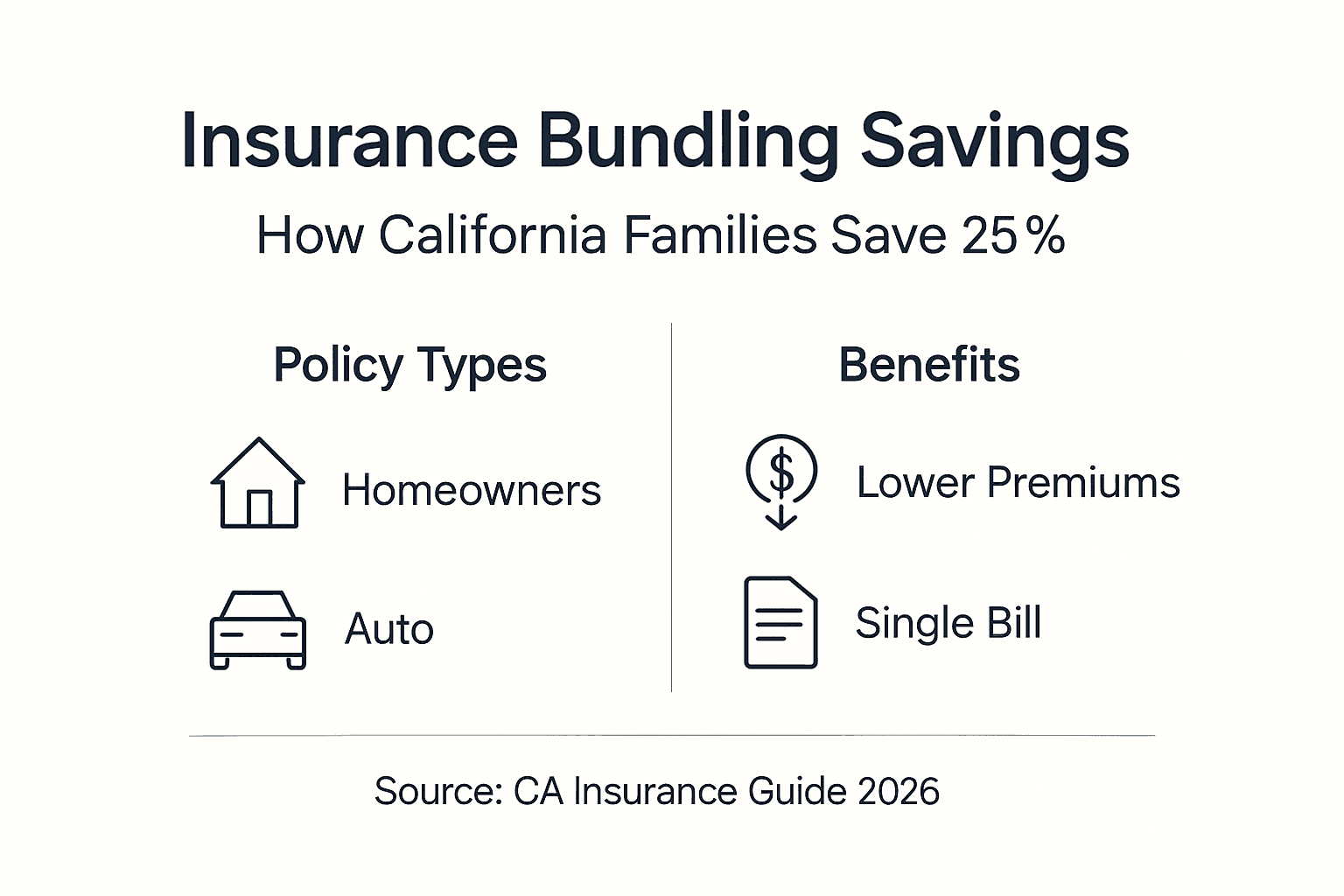
| Bundling home and auto policies can reduce premiums by 10 to 25 percent | Actual savings depend on your insurer and personal risk profile. |
| Local agents tailor policies to California’s wildfire and earthquake risks | They provide ongoing support and policy adjustments as regional threats evolve. |
Introduction to Insurance Types in California
Homeowners, auto, and life insurance form the foundation of financial protection for California families. Each policy type safeguards different assets, from your property and vehicles to your family’s long-term income security. Understanding how these coverages work together helps you build a resilient safety net against unexpected losses.
California’s insurance market operates under unique pressures. Proposition 103 regulates insurance pricing and limits premium increases, protecting consumers from arbitrary rate hikes. Yet, wildfire and earthquake risks create coverage challenges that standard policies often don’t address. The California FAIR Plan emerged to help homeowners in high wildfire risk zones access insurance when traditional carriers withdraw from volatile markets.
Auto insurance laws establish minimum liability coverage of $15,000 per person, $30,000 per accident, and $5,000 property damage to protect drivers and others on the road. These baseline requirements ensure financial responsibility but may not fully cover serious accidents.
Personalizing your insurance portfolio requires assessing your specific situation:
- Geographic location and exposure to wildfires, earthquakes, or floods
- Vehicle types, driving patterns, and household drivers
- Family size, income levels, and financial obligations
- Asset values and replacement costs
- Risk tolerance and budget constraints
The California insurance market faces ongoing challenges as climate events intensify and insurers reassess risk models. Working with knowledgeable professionals helps you navigate this complex environment and secure appropriate coverage for your circumstances.
Types of Homeowners Insurance and Regional Considerations
Standard homeowners insurance policies in California typically exclude earthquake and flood damage, requiring separate specialty policies. Most families purchase HO-3 policies, which cover your dwelling and personal property against named perils while protecting you from liability claims. These policies rebuild your home after fires, windstorms, or theft but leave critical gaps for California’s most common natural disasters.
Wildfire risk dominates insurance conversations across the state. Premiums spike in high risk zones, and some insurers refuse to write new policies in vulnerable areas. The California FAIR Plan steps in when traditional carriers exit, offering basic coverage at higher costs. Annual premiums range from $1,335 to $1,674 statewide but climb significantly in wildfire corridors.
Consider these coverage layers for comprehensive protection:
- HO-3 policy for standard perils like fire, wind, and theft
- Wildfire endorsements or specialized policies for additional protection
- Earthquake insurance through the California Earthquake Authority
- Flood insurance via the National Flood Insurance Program
- Umbrella liability coverage for claims exceeding your base policy limits
Pro Tip: Purchase earthquake insurance through the California Earthquake Authority for comprehensive protection tailored to California’s seismic activity. CEA policies integrate with your homeowners coverage and offer deductible options that fit various budgets.
Regional factors dramatically affect your coverage needs and costs. Sonoma County residents face higher wildfire risk than San Diego families, while Bay Area homeowners prioritize earthquake protection. Understanding homeowners insurance exclusions prevents nasty surprises when filing claims. Review your policy documents carefully and ask your agent to explain coverage boundaries and exceptions.

Types of Auto Insurance and California-Specific Factors
California law requires minimum liability coverage of $15,000 bodily injury per person, $30,000 per accident, and $5,000 property damage for all registered vehicles. This mandatory protection covers others when you cause an accident but doesn’t pay for your own vehicle damage or injuries. Most drivers add collision and comprehensive coverage to protect their investment, especially when financing vehicles.
Uninsured and underinsured motorist coverage protects you when other drivers lack adequate insurance. Given California’s large population of uninsured drivers, this optional coverage provides critical financial backup. Medical payments coverage handles your immediate healthcare costs regardless of fault, while personal injury protection offers broader medical and lost wage benefits.
Your auto insurance premiums reflect multiple risk factors. Insurers evaluate your driving record, credit score, vehicle make and model, annual mileage, and ZIP code. Urban areas with higher accident rates and theft typically see elevated premiums compared to rural communities. Young drivers and those with accidents or violations pay significantly more than experienced drivers with clean records.
Follow these steps when selecting essential auto insurance coverages:
- Calculate your asset protection needs beyond state minimums
- Evaluate your vehicle’s value to determine collision and comprehensive necessity
- Add uninsured motorist coverage matching your liability limits
- Consider medical payments or personal injury protection for healthcare gaps
- Review deductible options balancing out-of-pocket costs with premium savings
- Compare bundling discounts with your homeowners insurance provider
Pro Tip: Bundling your homeowners and auto insurance with the same provider can reduce premiums by 10 to 25 percent, but always compare personalized quotes. Some specialized insurers offer better standalone rates than bundled policies, so evaluate multiple scenarios before committing.
California’s diverse driving environments create unique coverage considerations. Los Angeles commuters face different risks than rural drivers navigating mountain roads. Understanding auto insurance requirements specific to your situation ensures adequate protection without overpaying for unnecessary coverage.
Types of Life Insurance and Family Financial Planning
Life insurance replaces your income when you die, protecting your family’s financial stability during an already difficult time. Term life insurance provides coverage for specific periods, typically 10, 20, or 30 years, with fixed premiums and no cash value accumulation. Whole life insurance lasts your entire lifetime, builds cash value you can borrow against, and costs significantly more than term policies.
Term life insurance coverage is often recommended to be 10 to 15 times your annual income to ensure family financial security. A parent earning $80,000 annually should consider $800,000 to $1.2 million in coverage. This calculation accounts for mortgage payoff, college funding, daily living expenses, and final costs without burdening surviving family members.
Your coverage amount depends on several factors:
- Outstanding debts including mortgages, car loans, and credit cards
- Number of dependents and their ages
- Future education costs for children
- Spousal income and earning potential
- Existing savings and retirement accounts
- Final expenses and estate settlement costs
Term life makes sense for most families building wealth and raising children. You get maximum coverage at affordable rates during your highest financial responsibility years. Whole life suits high earners seeking tax-advantaged savings vehicles and permanent coverage regardless of health changes.
California’s elevated cost of living demands careful life insurance planning. Housing costs, childcare expenses, and education in major metro areas exceed national averages. Your coverage should reflect these regional realities to maintain your family’s lifestyle. Explore life insurance options with local agents who understand California-specific financial pressures and can recommend appropriate coverage levels.
Review your life insurance needs every few years or after major life events like marriages, births, home purchases, or career changes. Your coverage should evolve with your family’s circumstances.
Common Misconceptions About Insurance Policies
Many Californians mistakenly believe standard homeowners insurance covers all natural disasters, but earthquake and flood coverage require separate policies. This dangerous assumption leaves families financially exposed when disaster strikes. Understanding what your policy actually covers prevents devastating surprises during claims.
Three common misconceptions create coverage gaps:
- Comprehensive natural disaster protection: Standard policies exclude earthquakes, floods, landslides, and sometimes wildfire damage depending on your location and carrier. You need additional policies or endorsements for complete protection.
- Lowest premium equals best value: Cheap insurance often means restrictive coverage, high deductibles, or weak customer service. The least expensive policy may cost you significantly more during claims when coverage falls short.
- Guaranteed bundling savings: While combining home and auto insurance typically reduces premiums, bundling isn’t always cheaper. Some standalone specialists offer better rates than bundled policies from generalists.
Insurance contracts contain complex exclusions and limitations that affect your claims. Water damage from burst pipes receives coverage, but groundwater seepage doesn’t. Your policy might cover wildfire damage but exclude smoke damage from distant fires. Reading policy documents and asking specific questions clarifies these boundaries.
Insurer financial strength matters as much as coverage details. Companies with weak ratings may delay claims payments or struggle during widespread disasters affecting many policyholders simultaneously. Check ratings from A.M. Best, Moody’s, or Standard & Poor’s before purchasing policies.
Schedule annual policy reviews with your agent to catch coverage gaps as your situation changes. Home renovations, new vehicles, or increased income alter your protection needs. Regular check-ins ensure your insurance keeps pace with your evolving risks and assets.
Comparison and Decision-Making Framework for Insurance Selection
| Insurance Type | Coverage Scope | Common Exclusions | Premium Factors | California Considerations |
|---|---|---|---|---|
| Homeowners | Dwelling, personal property, liability | Earthquake, flood, landslides | Location, home value, deductible, claims history | Wildfire risk zones, coastal exposure, FAIR Plan availability |
| Auto | Liability, collision, comprehensive, medical | Intentional damage, racing, wear and tear | Driving record, vehicle type, location, coverage limits | Uninsured motorist rates, urban congestion, minimum liability laws |
| Life | Death benefit, optional living benefits | Suicide (first 2 years), material misrepresentation | Age, health, coverage amount, policy type | Cost of living adjustments, family size, debt levels |
Selecting appropriate insurance requires systematic evaluation:
- Assess your specific risks based on location, assets, and family situation
- Understand policy exclusions and limitations before purchasing coverage
- Compare deductibles balancing premium savings against out-of-pocket claim costs
- Evaluate bundling opportunities but verify actual savings with quotes
- Research insurer financial strength and customer service ratings
- Consult local agents familiar with California’s unique risk landscape
- Review coverage annually as circumstances change
Pro Tip: Partner with a local insurance agency to continuously tailor coverage to changing family needs and California risk factors. Local agents monitor wildfire maps, earthquake activity, and regulatory changes affecting your policies, proactively recommending adjustments before gaps emerge.
Your decision framework should prioritize adequate protection over premium savings. Underinsurance costs far more than slightly higher premiums when disasters strike. Finding the right balance requires honest assessment of your assets, risks, and financial capacity. Compare choosing auto insurance approaches with types of home insurance to develop comprehensive protection strategies.
Practical Insurance Solutions for California Families
Local insurance agents bring irreplaceable value to California families navigating complex coverage decisions. They understand regional risks intimately, from Sonoma County’s wildfire corridors to the Bay Area’s earthquake zones. This geographic expertise helps them recommend appropriate coverage layers that generic online tools miss.
Working with agencies like Jenkins Insurance combines personal service with access to national carriers’ product portfolios. You get competitive pricing from major insurers plus customized guidance addressing your specific situation. Local agents build lasting relationships, learning your family’s evolving needs and proactively adjusting coverage as circumstances change.
Specific services local agents provide include:
- Comprehensive risk assessments evaluating your property, vehicles, and family situation
- Bundling analysis comparing standalone versus combined policy savings
- Claims advocacy helping you navigate paperwork and insurer communications
- Annual policy reviews catching coverage gaps before problems emerge
- Market updates on insurer changes, rate adjustments, and new product options
California’s dynamic risk environment demands ongoing insurance management. Wildfire maps change annually as climate patterns shift. Insurers adjust coverage territories and pricing models responding to loss trends. Your agent monitors these developments, recommending policy updates that maintain robust protection.
Consider the property insurance guide perspective when evaluating comprehensive family coverage. Your home represents your largest asset, but auto and life insurance protect equally critical financial interests. Coordinating these policies through a single trusted advisor simplifies management and often uncovers savings opportunities.
Summary and Next Steps for Informed Insurance Choices
California families need homeowners, auto, and life insurance tailored to unique regional risks and personal circumstances. Standard homeowners policies exclude earthquake and flood damage, requiring separate specialty coverage. Auto insurance demands state-mandated liability minimums plus additional protections against uninsured drivers. Life insurance replaces 10 to 15 times your income, securing your family’s financial future.
Wildfire exposure, seismic activity, and elevated living costs shape California insurance decisions differently than other states. Bundling policies saves 10 to 25 percent for many families but requires comparison shopping to verify actual savings. Local agents provide invaluable expertise navigating these complexities and maintaining appropriate coverage as risks evolve.
Take these steps to optimize your insurance portfolio:
- Assess your exposure to California-specific risks like wildfires and earthquakes
- Review existing policies identifying coverage gaps and exclusions
- Compare quotes from multiple insurers for standalone and bundled options
- Consult local insurance professionals for personalized recommendations
- Schedule annual policy reviews adapting to life changes and regional developments
Get Personalized Insurance Solutions with Jenkins Insurance
Protecting your California home and family requires more than generic policies. You need coverage addressing wildfire threats, earthquake risks, and your unique financial situation. Jenkins Insurance specializes in tailoring homeowners insurance solutions that close dangerous gaps in standard policies.

Our local agents help you bundle auto insurance policies with your home coverage, unlocking discounts up to 25 percent while simplifying policy management. We combine national carrier resources with personal service, ensuring you get competitive rates and expert guidance. Our life insurance plans secure your family’s financial future with coverage matching California’s cost of living realities. Contact Jenkins Insurance today to receive comprehensive policy assessments and solutions protecting what matters most to your family.
FAQ
What types of insurance are most important for California families?
Homeowners, auto, and life insurance form the essential protection foundation for California families. Homeowners policies safeguard your largest asset while liability coverage protects against lawsuits. Auto insurance meets legal requirements and covers accident costs. Life insurance replaces your income, ensuring your family maintains financial stability after your death.
Are earthquake and wildfire damages covered by standard homeowners insurance in California?
Standard homeowners policies typically cover wildfire damage to your dwelling and possessions but exclude earthquake damage entirely. You need separate earthquake insurance through carriers like the California Earthquake Authority. Some wildfire-prone areas require additional endorsements or specialty policies for complete protection.
How can bundling insurance policies save me money in California?
Bundling home and auto insurance with the same carrier typically reduces premiums by 10 to 25 percent through multi-policy discounts. Actual savings depend on your insurer, coverage needs, and risk profile. Compare bundled quotes against standalone policies from specialized carriers to verify you’re getting the best value.
Why is working with a local insurance agent important in California?
Local agents understand California’s wildfire corridors, earthquake zones, and regulatory landscape affecting your coverage options. They provide personalized service, ongoing policy reviews, and claims advocacy that online tools can’t match. Their regional expertise helps you navigate complex coverage decisions and maintain appropriate protection as risks evolve.
Recommended
- What Does Bundling Really Save You? Real-Life Examples – Jenkins Insurance Agency Inc.
- How to Choose Auto Insurance for California Residents – Jenkins Insurance Agency Inc.
- Step-by-Step Guide to Property Insurance California – Jenkins Insurance Agency Inc.
- Auto Insurance for Business Owners in California – Jenkins Insurance Agency Inc.