
Operating company vehicles in Santa Rosa means facing risks that personal auto insurance simply does not address. For local business owners, understanding the difference between regular policies and true business auto insurance is more than a formality—it is about real protection and legal compliance. With California now requiring minimum liability coverage of $30,000 per person, $60,000 per accident, and $15,000 for property damage, staying current ensures you avoid fines, registration issues, and major financial losses. Discover how the right coverage keeps your vehicles and business future secure.
Table of Contents
- What Auto Insurance For Business Owners Means
- Essential Coverage Types For Company Vehicles
- California’s Legal Requirements And 2026 Updates
- Determining Costs And Managing Risks Effectively
- Avoiding Common Pitfalls In Business Auto Policies
Key Takeaways
| Point | Details |
|---|---|
| Business auto insurance | Protects businesses from liabilities and damages related to company vehicles. |
| Coverage requirements vary | Determine specific liability and protection needs based on industry and vehicle usage. |
| Stay updated on legal requirements | California has raised minimum insurance coverage requirements; regularly review policies. |
| Manage risks effectively | Implement safety programs and assess driver records to help lower premiums and mitigate risks. |
What Auto Insurance for Business Owners Means
Auto insurance for business owners is different from regular personal auto insurance. When you use vehicles for business purposes, your personal policy typically won’t cover them fully. You need business auto insurance to protect your company legally and financially.
Many business owners in Santa Rosa operate with company vehicles. These might be delivery vans, service trucks, or vehicles used to visit clients. Unlike personal auto policies, business auto insurance covers liability when employees or contractors cause accidents while performing job duties.
Business Owner’s Policies (BOPs) bundle property and liability protection, but they don’t include auto coverage. You’ll need a separate auto insurance policy for your vehicles. This keeps your business protected across multiple areas of risk.
Business auto insurance typically covers:
- Third-party liability (bodily injury and property damage caused by your vehicles)
- Collision and comprehensive coverage for your own vehicles
- Medical payments for injuries to drivers and passengers
- Uninsured motorist protection
- Commercial vehicle damage
Here’s the key difference: if an employee causes an accident while making a delivery, your personal auto insurance likely won’t pay for it. Your business auto policy will cover the liability, protecting your company assets from being sued directly.
Business vehicles aren’t a “side use” of personal insurance—they’re a distinct liability that requires dedicated coverage.
Your specific needs depend on your industry. A contractor with work trucks has different requirements than a consultant who occasionally visits clients. The coverage amounts matter too. California requires minimum liability coverage, but your actual business needs might be higher.
Many business owners overlook this detail until they face an accident. Then they discover their personal policy excluded business use, leaving them personally liable. That’s why working with a local team helps. We can assess your specific operations and recommend the right coverage for your situation.
You also need to think about who drives company vehicles. Employee drivers increase your liability exposure. Part-time workers, contractors, and even clients in your vehicles all affect your insurance requirements.
The cost of business auto insurance varies based on vehicle type, usage, driver records, and coverage limits. It’s an expense, but it’s much cheaper than covering an accident yourself or facing a lawsuit without protection.
Pro tip: Review your current vehicle usage regularly. If your business operations have changed, your insurance needs may have too—talk with our team about adjusting your coverage.
Essential Coverage Types for Company Vehicles
Business auto insurance isn’t one-size-fits-all. Different coverage types protect different risks your company vehicles face. Understanding what each type covers helps you choose the right protection for your Santa Rosa business.
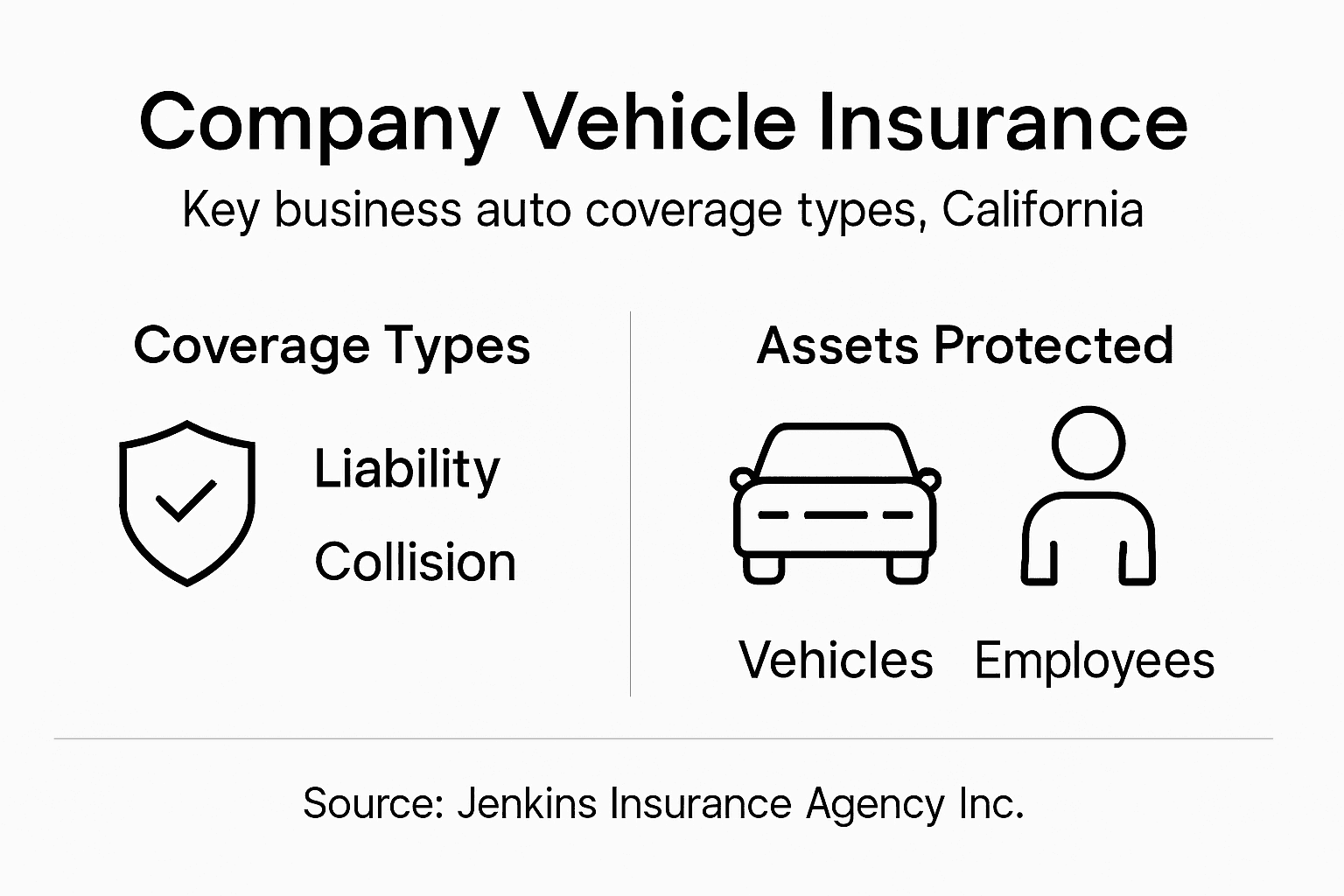
Liability coverage is the foundation. California requires minimum limits of $30,000 per person and $60,000 per accident for bodily injury, plus $15,000 for property damage. However, these minimums often aren’t enough for business operations. If your driver causes a serious accident, you could face lawsuits far exceeding these limits.
Liability covers:
- Medical expenses for injured third parties
- Repair costs for damaged property
- Legal fees if you’re sued
- Lost wages for injured people
Physical damage coverage protects your own vehicles from damage and theft. This includes collision, comprehensive, and fire and theft insurance. Collision covers accidents with other vehicles or objects. Comprehensive covers weather damage, vandalism, theft, and other non-collision events.
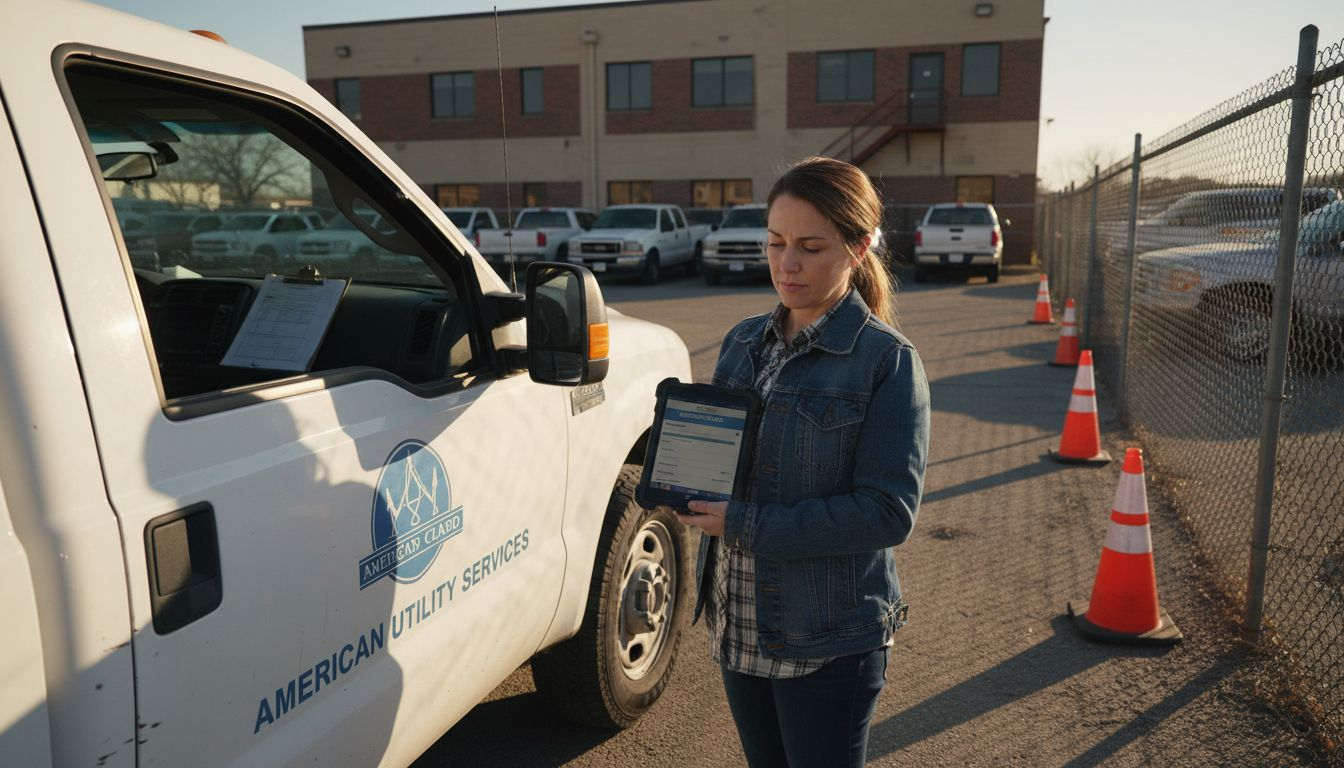
Your company vehicles are business assets. If a delivery van gets hit or vandalized, you need coverage to repair or replace it. Without physical damage coverage, you’re paying out of pocket for every incident.
Medical payments coverage helps when your drivers or passengers get hurt, regardless of fault. It covers hospital bills, rehabilitation, and funeral expenses. This is often overlooked but valuable for protecting your team.
Uninsured motorist protection covers accidents caused by drivers without insurance. On California roads, that happens more than you’d think. This coverage protects your business when an uninsured driver hits your vehicle.
Coverage limits should match your actual business risk, not just meet California’s minimum requirements.
Your specific needs depend on your industry. A contractor with multiple heavy trucks needs different coverage than a consultant with one sedan. Vehicle type, annual mileage, employee driver records, and cargo all affect what you need.
Work with our team to assess your operations. We evaluate your fleet, driving patterns, and liability exposure to recommend appropriate limits and coverage options. This prevents gaps that leave your business vulnerable.
Pro tip: Document all company vehicles, their current condition, and replacement costs—this information helps us calculate the right physical damage limits to protect your actual business assets.
Here’s a quick look at how different types of business vehicle coverage impact your risk and finances:
| Coverage Type | What It Protects | Business Impact |
|---|---|---|
| Liability Coverage | Third-party injury/damage | Shields assets from lawsuits |
| Physical Damage | Your own vehicles | Minimizes repair/replacement cost |
| Medical Payments | Drivers and passengers | Reduces out-of-pocket expenses |
| Uninsured Motorist | Accidents with uninsured | Prevents uninsured loss exposure |
| Comprehensive | Non-collision losses | Safeguards assets from vandalism |
California’s Legal Requirements and 2026 Updates
California auto insurance rules have changed significantly. Starting January 1, 2025, the state raised minimum liability requirements for the first time since 1967. If you own business vehicles in Santa Rosa, these new rules affect you directly.
The updated minimum liability coverage now requires:
- $30,000 per person for bodily injury
- $60,000 per accident for bodily injury
- $15,000 for property damage
These limits replaced much lower thresholds that hadn’t been adjusted in decades. The change reflects rising costs of medical care and vehicle repairs in California. Your old policy might not meet the new minimums, even if it once was compliant.
California liability requirements now apply to all commercial vehicles, and insurance companies must report coverage electronically to the DMV. This automatic reporting system tracks which businesses maintain proper insurance and which don’t.
Failure to maintain required coverage carries serious consequences. Your vehicle registration gets suspended. You face potential fines and legal liability if an uninsured vehicle causes an accident. For business owners, this could mean losing the ability to operate your fleet.
The rules can vary based on factors like vehicle weight, cargo type, and passenger capacity. A heavy truck carrying freight faces different requirements than a passenger van. Renting vehicles adds another layer—lessors have specific insurance responsibilities too.
Meeting the minimum isn’t the same as protecting your business. These state requirements are floors, not ceilings.
Beyond state minimums, you might need additional coverage. Federal regulations apply if you transport hazardous materials or operate across state lines. Motor Carrier Permits require specific insurance endorsements depending on your cargo and operations.
Your industry matters too. Contractors, service providers, and delivery businesses all have unique exposure levels. What works for one business won’t work for another.
We recommend reviewing your current policies against these 2025 requirements now. Don’t wait for registration renewal time or an accident to discover gaps. Changes in business operations, new vehicles, or expanded service areas might require higher limits than you currently carry.
Pro tip: Schedule a policy review with our team immediately to verify your current coverage meets California’s 2025 requirements and protects your actual business operations.
Determining Costs and Managing Risks Effectively
Business auto insurance costs vary widely. You might pay $260 per month or $1,400 per month. The difference comes down to your specific situation and how well you manage risk.
Several factors drive your premium:
- Vehicle type and age
- Annual mileage and usage patterns
- Driver records and experience
- Coverage limits and deductibles
- Business industry and operations
- Fleet size
Commercial auto insurance costs depend heavily on the coverage you choose. Selecting higher liability limits costs more but protects your business better. Adding medical payments, uninsured motorist coverage, or physical damage protection increases your premium but fills critical gaps.
The cheapest policy isn’t always the best deal. A $260 monthly policy with minimal coverage might leave you exposed to catastrophic losses. A $1,400 monthly policy with comprehensive protection keeps your business truly safe.
Here’s how to manage costs while protecting your business:
- Choose coverage limits based on your actual liability exposure, not just minimums
- Assess your vehicle replacement value and insure accordingly
- Implement safety programs to reduce accident frequency
- Train drivers on defensive driving and safety protocols
- Maintain accurate records of vehicle maintenance and inspections
Risk mitigation reduces claims and often lowers your premiums over time. Insurance companies reward businesses that actively prevent accidents. Good driver records, safety training, and vehicle maintenance all demonstrate responsible risk management.
Compare the cost drivers and risk factors influencing your business auto insurance premium:
| Premium Driver | How It Affects Cost | Risk Factor Example |
|---|---|---|
| Vehicle Type & Age | Newer/heavy vehicles cost more | Fleet of new service trucks |
| Driver Records | Clean records lower expenses | All drivers accident-free |
| Annual Mileage | More miles increase rates | Daily delivery routes |
| Business Industry | High-risk work raises premiums | Construction vs. consulting |
Your premium reflects your actual risk profile. A well-managed fleet with trained drivers costs less than an unmanaged one.
Your industry matters too. A contractor carrying heavy equipment faces different exposures than a consultant making client visits. A delivery business with daily driver interactions needs more protection than a business with occasional vehicle use.
Don’t just accept the first quote. Work with an agent who understands your specific operations. We evaluate your fleet size, routes, driver experience, cargo, and business model to recommend coverage that fits your actual needs and budget.
Annual reviews help keep your coverage aligned with your business. If you added vehicles, expanded operations, or changed your service area, your insurance needs changed too.
Pro tip: Request a comprehensive risk assessment from our team—we’ll identify exposure areas you might be overlooking and recommend cost-effective coverage adjustments that actually reduce your overall liability.
Avoiding Common Pitfalls in Business Auto Policies
Business owners often make mistakes with auto insurance that cost them dearly later. These aren’t intentional errors—they’re simply oversights that compound over time. Knowing what to avoid protects your Santa Rosa business from unnecessary exposure.
The biggest mistake is underestimating your coverage needs. Many owners select the absolute minimum liability limits California requires. Then an accident happens, and damages exceed those limits by hundreds of thousands of dollars. Your business assets become personally liable.
Common pitfalls include:
- Choosing minimum liability limits without considering actual exposure
- Skipping optional coverages like comprehensive and uninsured motorist protection
- Failing to assess employee driver records before adding them to policies
- Not updating policies when business operations change
- Assuming one policy covers all vehicle types and uses
- Neglecting to document vehicle values and condition
Selecting appropriate coverage levels requires understanding your specific vehicle types, usage patterns, and actual liability exposure. A contractor with heavy equipment trucks needs vastly different coverage than a consultant visiting clients.
Employee driver records matter more than many owners realize. One driver with multiple violations can drive up your entire fleet’s premium. Worse, that driver might cause an accident, and you’ll face both the claim and increased premiums.
Another critical mistake: failing to update your policy as your business evolves. You started with one van. Now you have three. You added a second driver. You expanded service areas. Each change affects your risk profile and coverage needs.
Policies don’t automatically adjust when your business changes. You must proactively communicate with your agent.
Policies purchased years ago might not align with current operations. Coverage limits that were adequate five years ago might be insufficient today. Vehicle types change. Usage patterns shift. Service areas expand.
Missing optional coverage is expensive in hindsight. Comprehensive and uninsured motorist protection seem optional until you need them. Then you discover they’re not covered, and you’re paying out of pocket.
Many owners also fail to document their vehicles properly. When you need to file a claim, you can’t remember if that equipment was on the vehicle. Documentation prevents disputes and speeds claims.
Pro tip: Schedule a comprehensive policy review with our team at least annually—we’ll ensure your coverage matches your current operations, driver roster, and vehicle fleet, closing gaps before they become costly problems.
Protect Your Business Vehicles with Expert Auto Insurance Solutions
Understanding the unique challenges business owners face with auto insurance is critical. This article highlights how standard personal policies do not cover business use adequately and how neglecting proper business auto insurance can expose your company to costly lawsuits and financial loss. If you operate vehicles for deliveries, client visits, or employee transport in California, you need customized coverage that fits your actual risk and meets updated state minimums.
At Jenkins Insurance Agency Inc., we specialize in helping Santa Rosa business owners navigate these complexities. Our knowledgeable team provides personalized Business Insurance solutions tailored to your fleet size, vehicle type, and driver profiles. With local expertise and trusted affiliation with Farmers Insurance, we help you secure liability, physical damage, medical payments, and uninsured motorist coverage customized to your business’s operations.

Don’t wait until an accident reveals costly gaps in your coverage. Contact Jenkins Insurance Agency Inc. today at https://jenkinsinsuranceagencyinc.com for a complimentary policy review and risk assessment. Protect your assets, comply with California’s 2025 insurance requirements, and give your business the confidence to operate safely and securely.
Frequently Asked Questions
What is business auto insurance?
Business auto insurance is a specialized policy designed to cover vehicles used for business purposes, offering liability protection and coverage for physical damage that personal auto insurance typically does not provide.
What coverage types are included in business auto insurance?
Business auto insurance typically includes liability coverage for third-party injury and property damage, physical damage coverage for your own vehicles, medical payments for drivers and passengers, and uninsured motorist protection, among other types.
Why do business owners need to separate personal and business auto insurance?
Personal auto insurance often excludes coverage for business-related incidents. Business auto insurance protects your company’s assets and ensures you are legally compliant, covering liabilities that arise during business activities.
How can I determine the right coverage limits for my business auto insurance?
Determine coverage limits based on your actual business risks, including your industry, vehicle types, and employee driving records. Consult with an insurance agent to assess your operations and recommended limits that reflect your unique exposure.
Recommended
- Why Business Owner Insurance Matters Locally – Jenkins Insurance Agency Inc.
- Why Insure Your Business: Protecting Sonoma County Owners – Jenkins Insurance Agency Inc.
- Business Insurance Benefits for Sonoma County Owners – Jenkins Insurance Agency Inc.
- The Best Small Business Insurance Plans in Sonoma County – Jenkins Insurance Agency Inc.
- Best Rental Insurance for Agents – Expert Comparison 2025 – Rental Income Insurance